

The captain eases off the throttle and points at something drifting a few hundred yards out: an old palm trunk, covered in barnacles. Most people would never look twice. He steers straight for it.
The first lure hasn’t even settled when the water behind the log lights up neon green and gold. That’s a mahi-mahi, and where there’s one, there are usually more.
Gold, Green and Blue: The Fish That Changes Color
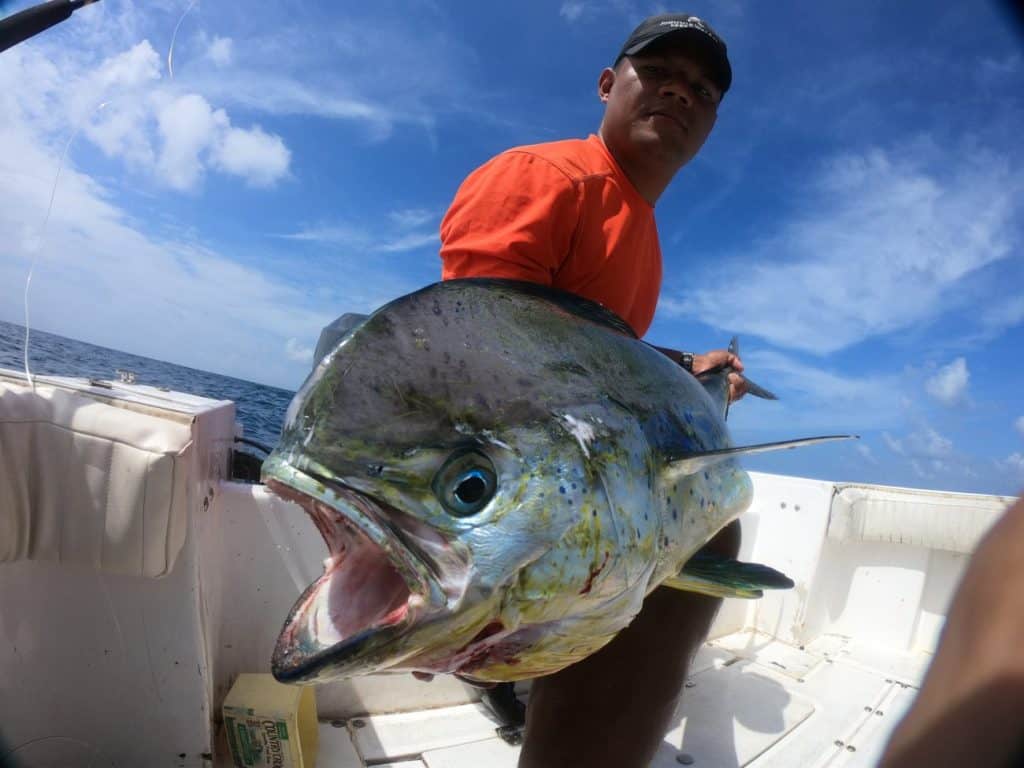
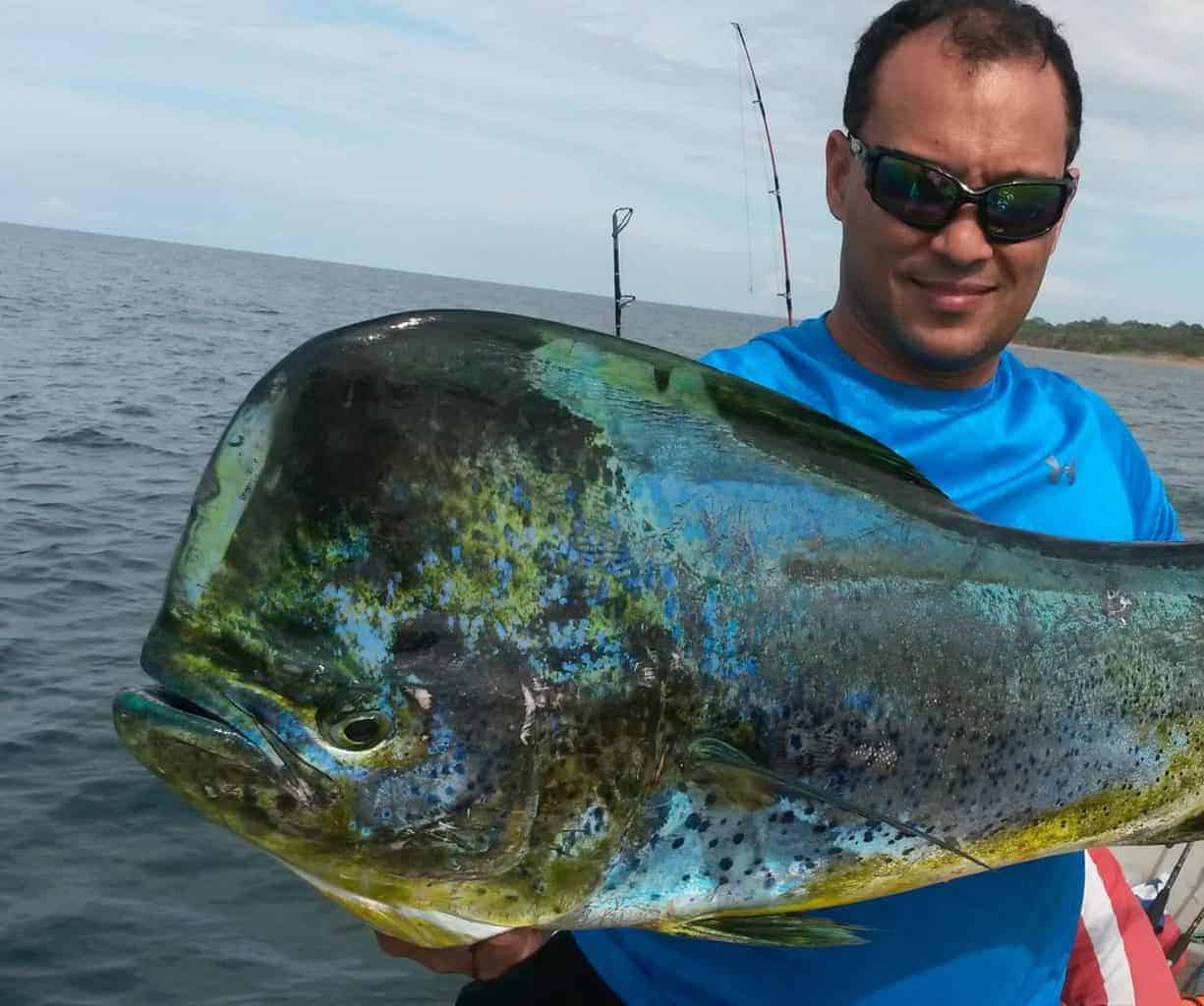
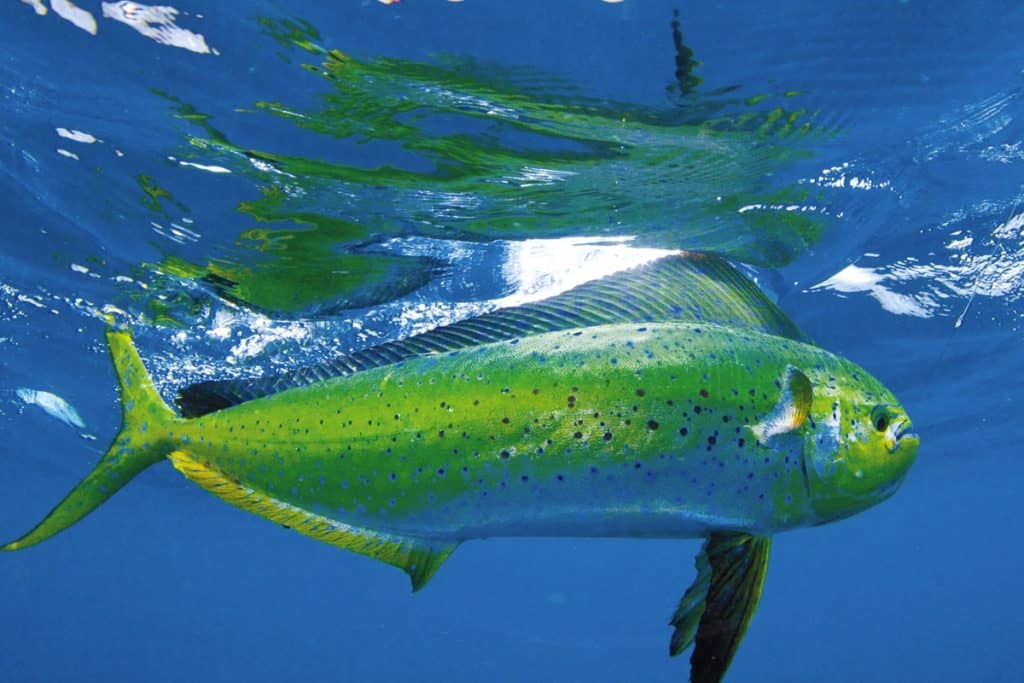
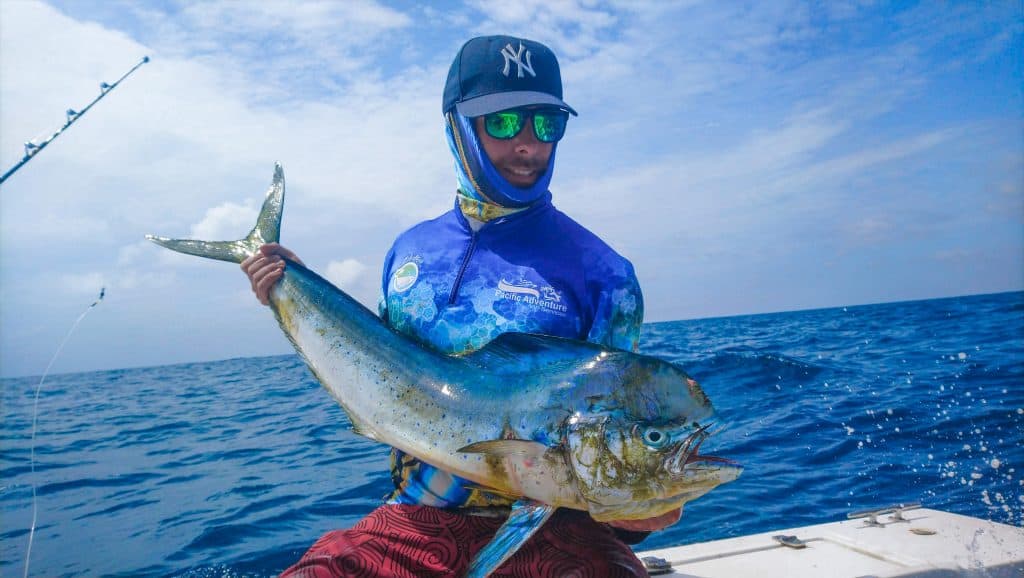
Few fish put on a show like the mahi-mahi (Coryphaena hippurus). Its skin is full of color cells wired to its nervous system, so it flashes from electric blue to green to gold while it fights. Once it’s out of the water, the colors fade to silver within minutes.
You can tell males from females at a glance. Males, called bulls, have a tall, square forehead. Females have a rounded one. And both of them jump, again and again, the moment they feel the hook.
Not a Dolphin, Just Very Strong
In English it’s also called dolphinfish, which confuses everyone, but it has nothing to do with dolphins. “Mahi-mahi” means “very strong” in Hawaiian, and in Spanish it’s dorado, “golden.” Both names are earned.
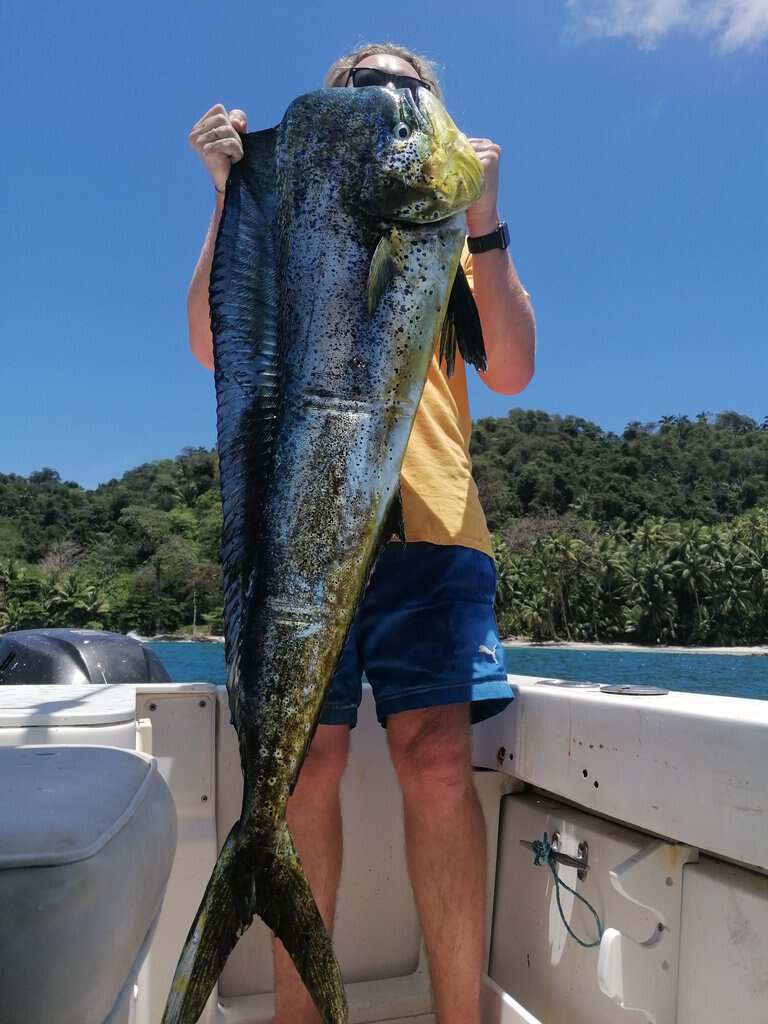
It also lives fast. A mahi grows incredibly quickly, can breed within months of hatching and rarely lives past four or five years. That makes it tougher against fishing pressure than most big fish, but we still release most of what we catch. The all-tackle world record, 87 lb (39.5 kg), came from Costa Rica, just up the coast.
Why Captains Hunt for Floating Junk
Mahi gather under anything that floats: logs, palm fronds, lines of seaweed, even lost buoys. Small fish hide in the shade, and the mahi hang around to eat them. So on a mahi day, your captain is scanning the surface for debris and for birds diving on bait.
Once a school is found, the action can be nonstop. A classic trick: keep the first hooked fish in the water, because the rest of the school tends to follow it right up to the boat.
Where to Catch Mahi-Mahi in Panama
Mahi roam the whole Pacific coast of Panama, from the edge of Coiba National Park to the blue water off Cebaco Island, Mariato and the Tuna Coast of Pedasi. These are the four ways to fish for them with us. For every spot in the country, see our guide to Panama’s best fishing spots.
When Mahi-Mahi Run in Panama
Mahi come with the rain. On our side of the Pacific, the best months run from May to mid-December, and the same season brings wahoo, so one day can give you both.
From July to October you’re also in humpback whale season, so keep the camera handy between bites. Heading to Coiba? Our guide on how to get to Coiba covers every route, step by step.
Who Can Fish for Mahi?
Anyone who can hold a rod. Besides the skipper, a second captain rides along to rig the lines, coach you through the fight and handle the fish, so beginners land mahi too. Four anglers max, and nobody on board but your group.
Paperwork? None. Panama asks every angler for a sport fishing license, but when you book with an authorized operator like us, the captains’ tourism license already covers a temporary one for you.
Want the full picture of species and seasons? Read our guide to sport fishing in Panama.
Mahi Follow the Rain. We Follow the Mahi.
We only go out with reservations, one private group per boat. Message us your dates and we’ll share what’s biting that week.
Frequently Asked Questions
When is mahi-mahi season in Panama?
On Panama’s Pacific coast, mahi-mahi are most common in the rainy season, from May to mid-December. That’s also a good time for wahoo, and between July and October you may spot humpback whales on the same trip.
Where can I catch mahi-mahi in Panama?
Some of the best areas are Coiba National Park, including Jicarita and Jicaron at its southern tip, the waters around Cebaco Island and Mariato, especially near Piedra del Sombrero, and the Tuna Coast off Pedasi, around Isla Iguana and Los Frailes.
Is mahi-mahi a dolphin?
No. Mahi-mahi is a fish, also called dolphinfish or dorado. It has nothing to do with dolphins, which are mammals. “Mahi-mahi” means “very strong” in Hawaiian.
Why does mahi-mahi change color?
Mahi-mahi have color cells connected to their nervous system, so they can flash blue, green and gold, especially while fighting. Out of the water, the colors fade to silver within minutes.
Do I need a fishing license to catch mahi-mahi in Panama?
Not if you fish with us. Panama requires a sport fishing license for every angler, but authorized operators like Pacific Adventure Tours cover their guests through the captains’ tourism license, so there’s nothing for you to buy or file.