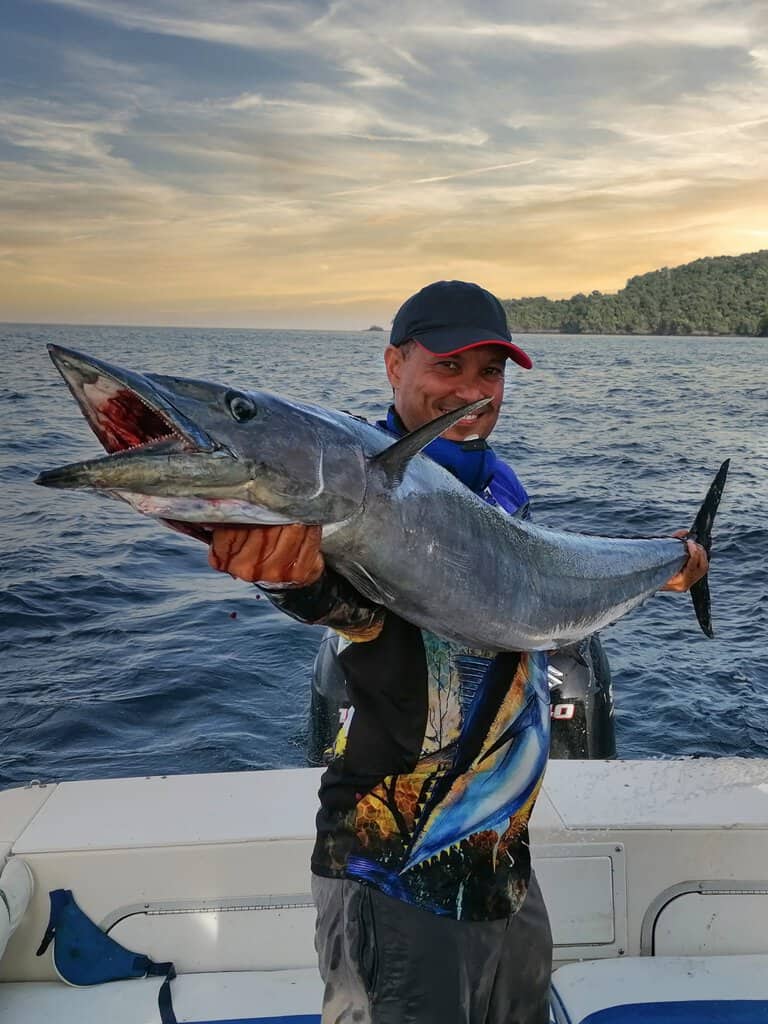


The boat is trolling past a rocky drop-off in Coiba National Park at first light. Nobody’s talking. Then one reel starts to scream, and the line melts off the spool faster than anyone on board can say “wahoo.”
That first run is why anglers travel for this fish. Here’s what makes it special, where it lives in Panama, and when to come looking for it.
Meet the Wahoo: A Torpedo With Teeth
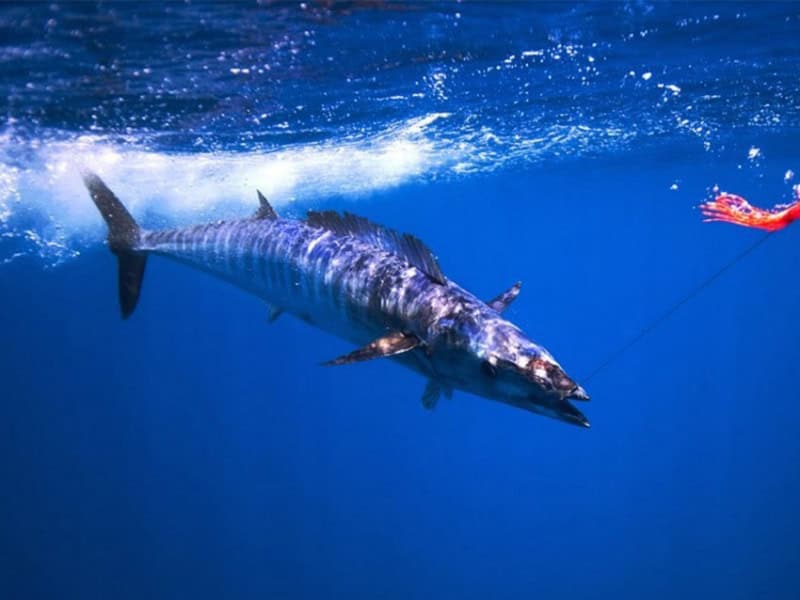
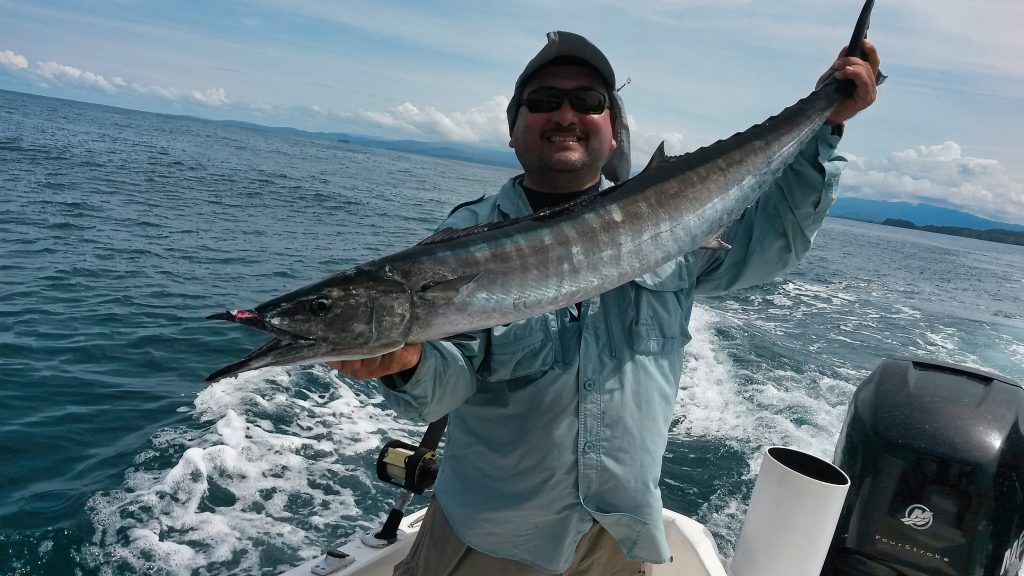
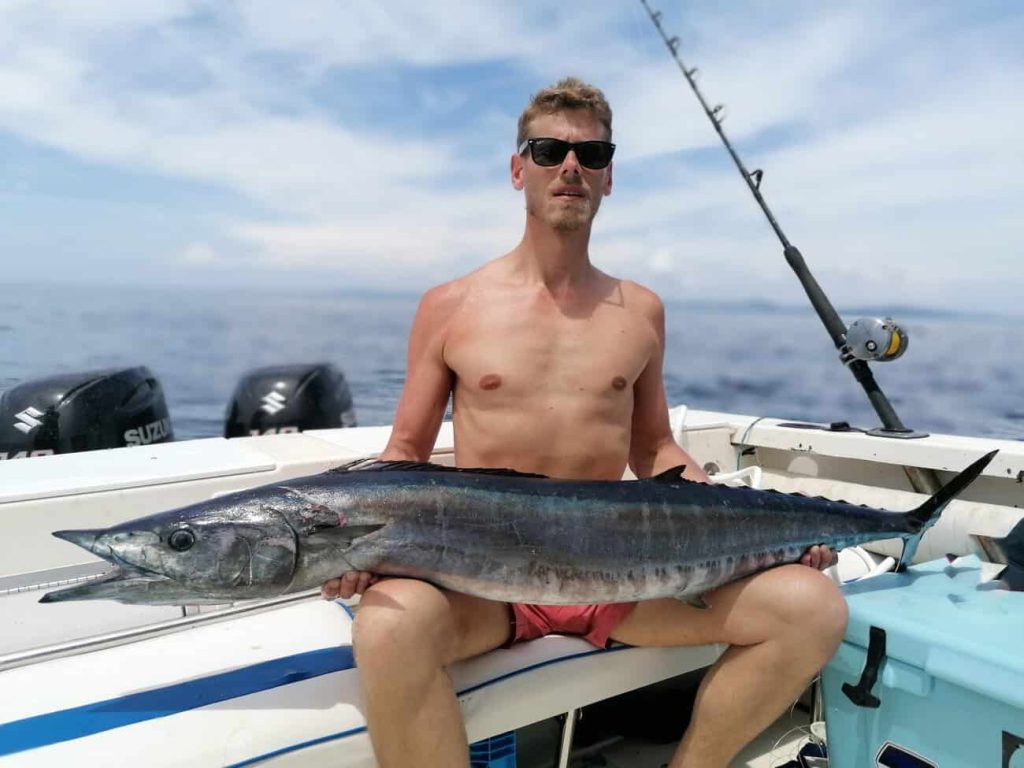
The wahoo (Acanthocybium solandri) is one of the fastest fish in the sea, with bursts close to 80 km/h (50 mph). Long, narrow body, a pointed snout and a mouth full of triangular, serrated teeth that go through a light leader like it’s thread.
Look at its sides when it comes on board: 24 to 30 cobalt-blue bars that fade soon after it leaves the water. Most of the time it hunts alone or in twos and threes, but where the bait is thick, wahoo can gather in schools of a hundred or more.
Why Hawaiians Call It “Good to Eat”
In Hawaii the wahoo is called ono, which means “good to eat,” and its firm white meat earned the name. The story goes that “wahoo” comes from an old spelling of Oahu. Nobody has proven it, but it’s a good one for the ride home.
It’s a close cousin of the king mackerel. We release most of what we catch. If you’d like to take a fish home for dinner, ask your captain what’s allowed in the area you are fishing that day.
Where to Catch Wahoo in Panama
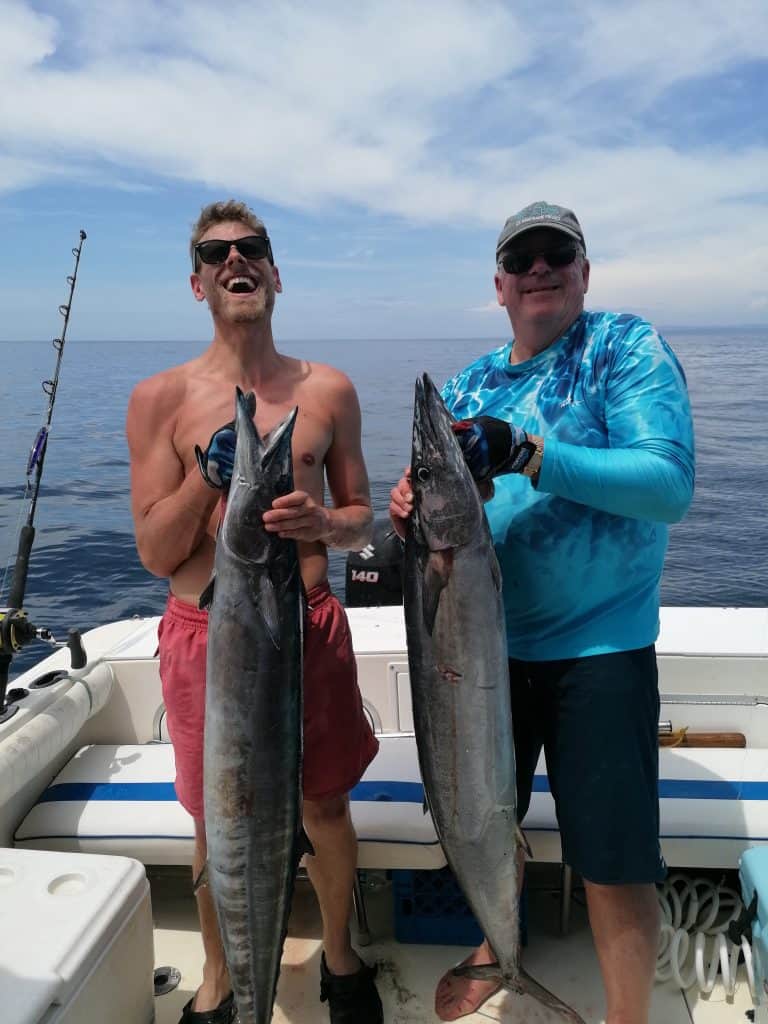
Panama’s Pacific has wahoo from Coiba to the Tuna Coast. These are the four spots we fish most: two inside Coiba National Park and two around Cebaco and Mariato. For the full map, see our spot-by-spot guide to Panama’s best fishing spots.
When Wahoo Bite in Coiba and Cebaco
You can hook a wahoo any month of the year, but the hot stretch runs from July to November, in the middle of the rainy season. That’s also when mahi-mahi show up, so a single day can bring both.
And there’s a bonus: July to October is humpback whale season on Panama’s Pacific coast, so keep an eye on the horizon between bites.
Planning a trip to Coiba? Read how to get to Coiba. Santa Catalina is the closest town to the park, and our boats also leave from El Bongo, five minutes from Puerto Mutis.
How We Fish for Wahoo
Wahoo feed early, so the day starts early: trolling along drop-offs, pinnacles and rocky points as the sun comes up. Around the rocks of Mariato, captains also slow-troll live bait close to the structure.
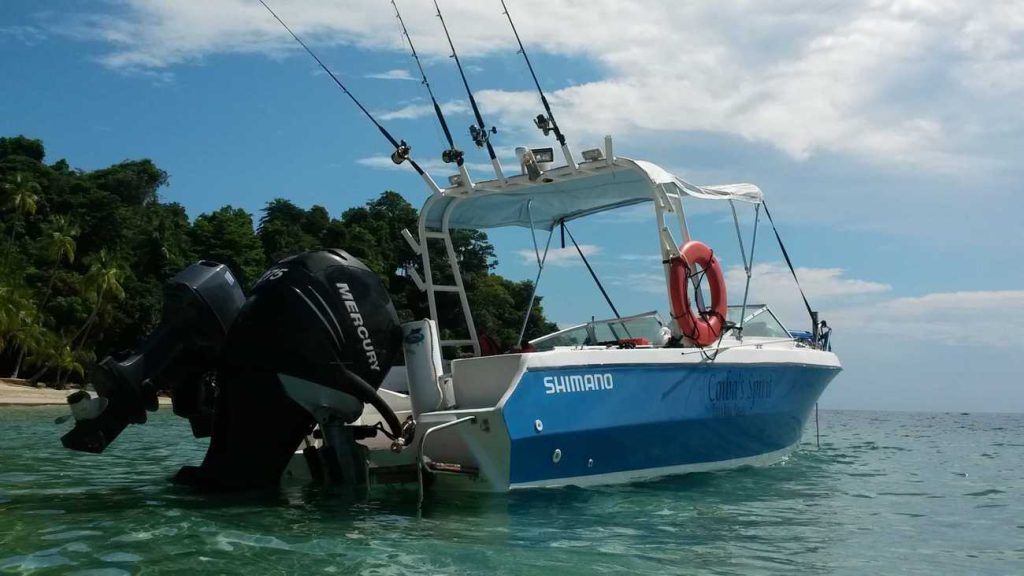
Every boat carries a skipper and a fishing captain who helps you with the rod, so anyone aboard can fish, even on their first day offshore. Up to 4 anglers per boat.
One thing you don’t have to worry about: everyone who fishes in Panama needs a sport fishing license, unless they fish with an authorized company like us. Our captains’ tourism license covers your temporary license, so there’s no paperwork on your side.
Want the bigger picture? Our guide to sport fishing in Panama covers every species and season. For more than one day on the water, the two-day Cebaco & Mariato trip lets you sleep on the island and be at the spots at sunrise, and for marlin and big tuna there’s our Hannibal Bank charter.
Wahoo Don’t Make Appointments (We Do)
Every trip is private and booked in advance. Tell us your dates and we’ll tell you what’s biting.
Frequently Asked Questions
When is the best time for wahoo fishing in Panama?
Wahoo bite all year in Coiba, Cebaco and Mariato, but the best months are July to November, during the rainy season. Those months also overlap with humpback whale season, from July to October.
Where can you catch wahoo in Coiba National Park?
Two of the best spots are Wahoo Rock, on the east side of Isla Canal de Afuera, and the outer edge of Jicarita, at the southern tip of the park. Outside the park, Piedra del Sombrero near Cebaco Island and Punta Mariato are also excellent.
How fast can a wahoo swim?
A wahoo can reach close to 80 km/h (50 mph) in short bursts, which makes it one of the fastest fish in the sea. That first run can empty a lot of line in a few seconds.
Do I need a fishing license to catch wahoo in Panama?
Everyone who fishes in Panama needs a sport fishing license, unless they fish with an authorized company like Pacific Adventure Tours. Our captains’ tourism license covers the temporary licenses of our guests, so you don’t need to do any paperwork.
Why is the wahoo called “ono”?
Ono means “good to eat” in Hawaiian, and the wahoo’s firm white meat earned the name. The story goes that the word “wahoo” comes from an old spelling of Oahu, though that has never been proven.