

Coiba National Park · Jicarita & JicaronPrivate Boat · Up to 4 Anglers
On Jicaron, the monkeys use stone tools. Offshore, the tuna travel with dolphins. You’ve got one day, a private boat and a captain who knows where both happen.
One day, one private boat and the reefs of a UNESCO marine park. This is our Coiba fishing day trip, and you choose how far south it goes.
Leave from our home dock at the Club Nautico de Veraguas in El Bongo, next door to Puerto Mutis, or from Santa Catalina, the closest town to the park. The classic day fishes the pinnacles, channels and rocky points north of Coiba. The upgrade runs all the way to Jicarita and Jicaron, the two southernmost islands of the park, where the water gets wild and the fishing usually gets better.
Pick the classic day or go all the way south. Both are private, and both include gear, captain and your Coiba fishing permit. The extra $200 pays for fuel. What you get back is the corner of the park most visitors never reach.
Ask our captains where they’d fish with one day left, and they point south.
Jicaron is the second-largest island in Coiba National Park, a steep, forested block of rock with almost nowhere to land. Its isolation shows in its wildlife. On one stretch of the island, white-faced capuchin monkeys crack crabs, snails and coconuts with stones used as hammers. Only the males do it, and only there: not on Coiba, not on Rancheria. Smithsonian scientists called it the first record of habitual stone-tool use in this group of monkeys.
The birds tell the same story. Researchers have counted 115 bird species on Jicaron and 53 on tiny Jicarita, including ten subspecies found nowhere else, and half of the islands’ plants are different from the mainland’s.
Your job is simpler: drop a lure along those rocky walls and hold on.
One day, eight species worth knowing. Seasons shift every year; your captain will tell you what’s biting the week you come.
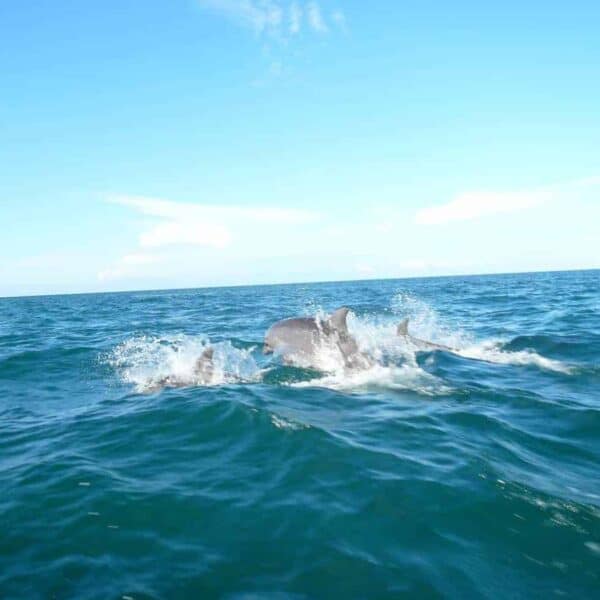
In the eastern tropical Pacific, large yellowfin school with spotted and spinner dolphins, a partnership not seen in other oceans. When the captain spots dolphins, everybody grabs a rod.
Right before attacking a school of sardines, a sailfish darkens almost to black and flashes stripes, then raises its sail to corner the bait.
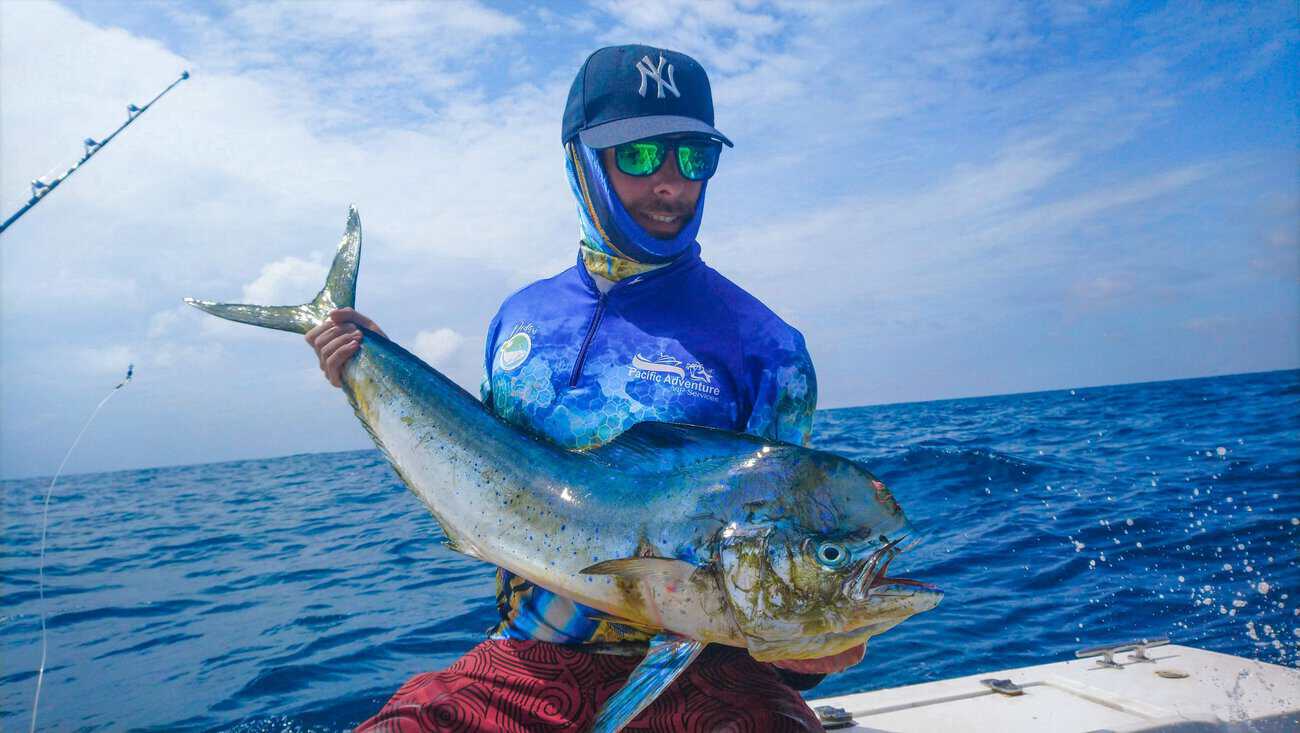
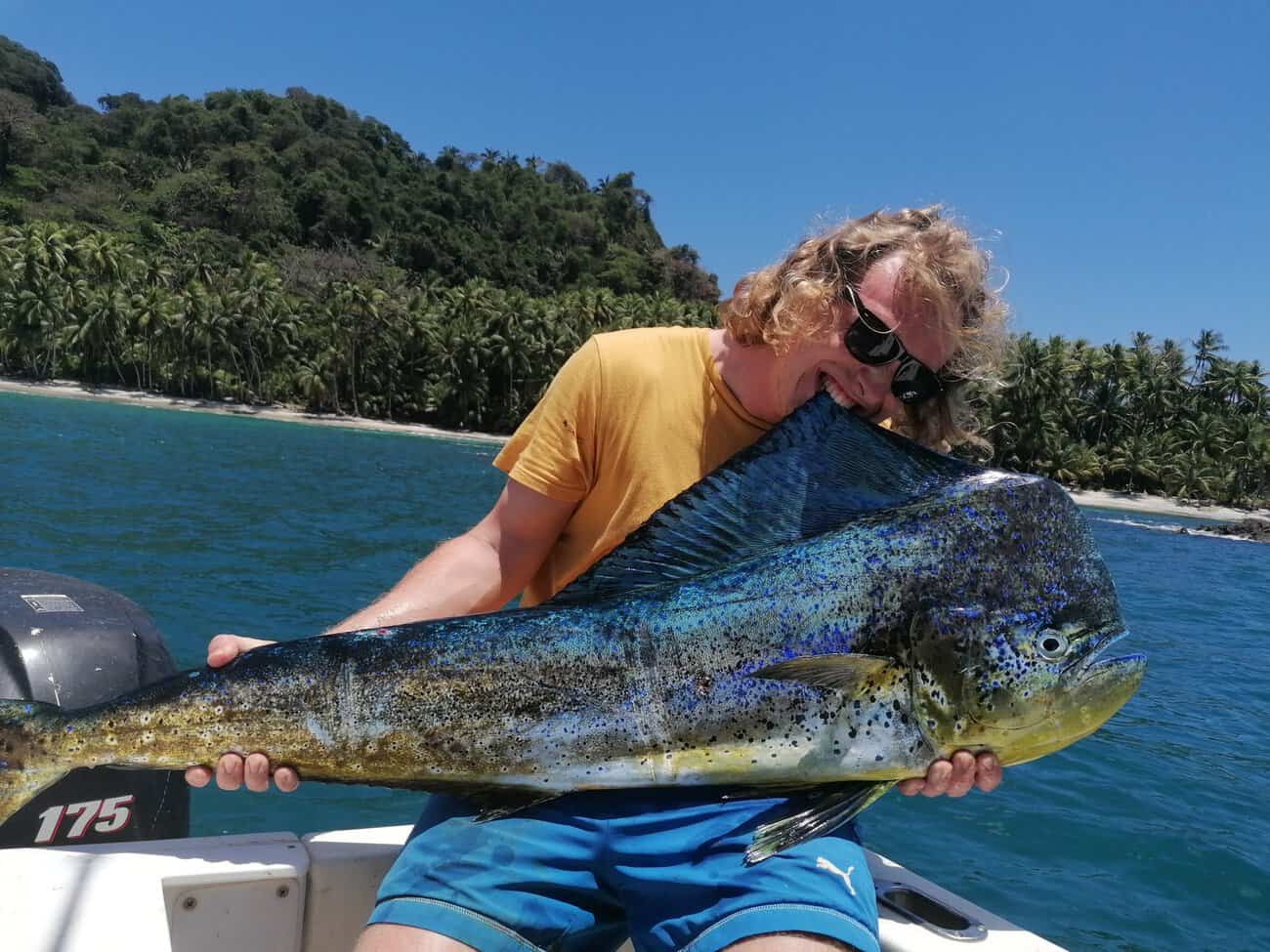
Mahi live fast: they grow quickly and rarely reach 5 years old. They love hiding under anything that floats, so in Coiba a drifting log is a fishing spot.
One of the fastest fish in the sea, close to 80 km/h (50 mph). There’s even a rock named after it here: Piedra de Wahoo, off Isla Canal de Afuera.
The only species in its family on Earth, and it lives only in the eastern Pacific, from California to Peru. Around Jicaron’s points, it’s the photo everyone wants.
Adults patrol rocky reefs down to 60 m (200 ft); the heaviest on record weighed 35.7 kg (78 lb). On our boat, every cubera goes back.
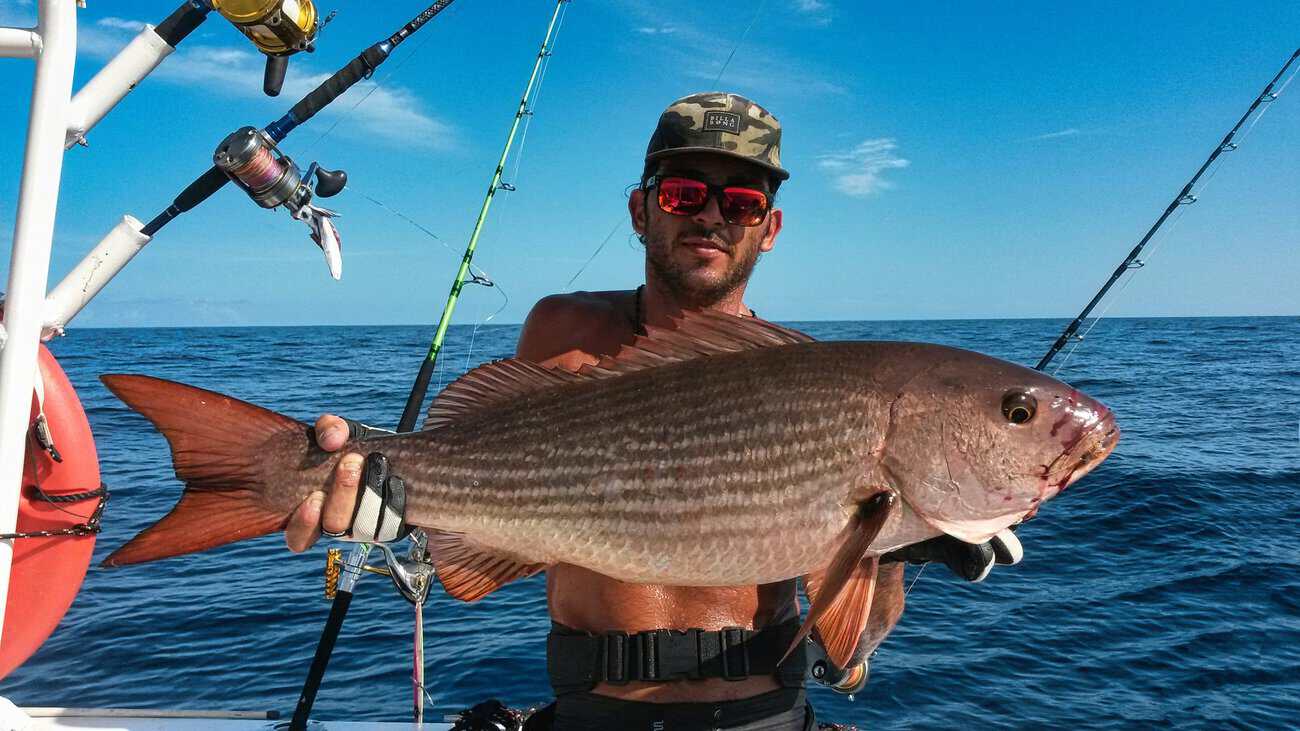
Every year, red snappers gather to spawn around Coiba, a ritual scientists monitored for six years. It’s one reason the park has seasonal closures for snapper and mahi.
Groupers are born female, and the biggest ones turn male. Take out the giants and a reef runs short of males. That’s why we let the big ones go.
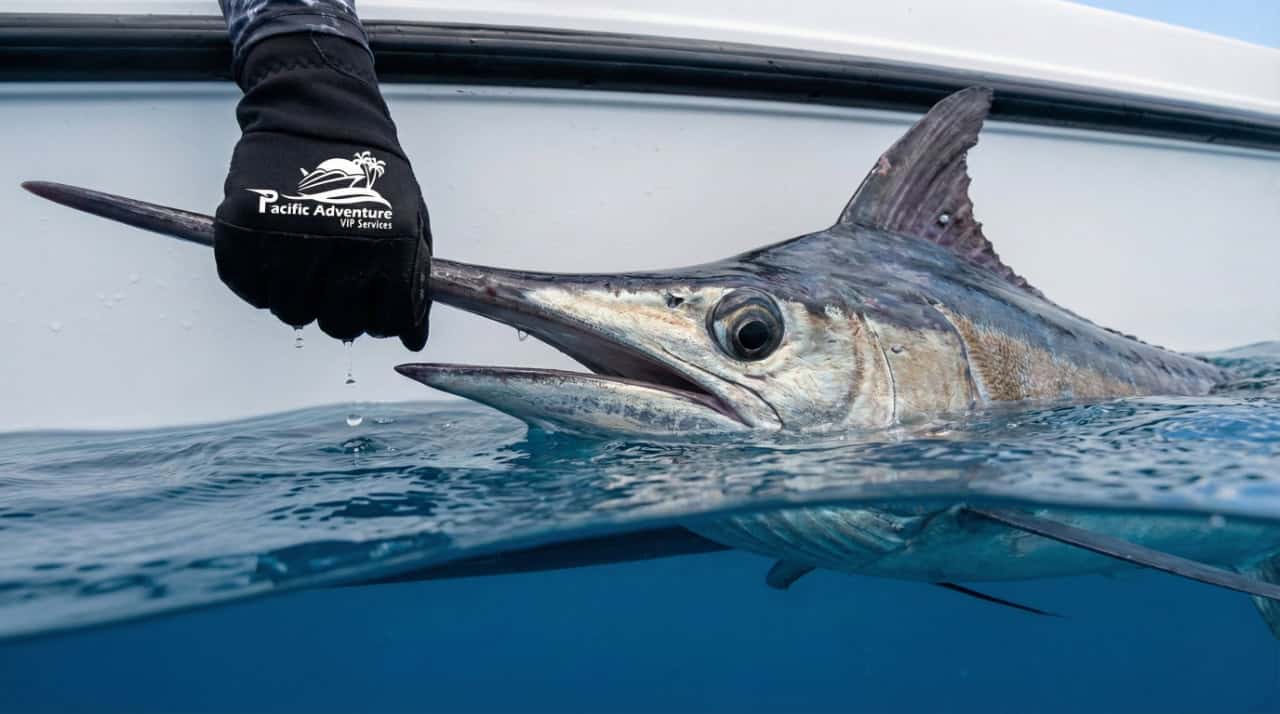
Black marlin are the only marlin whose pectoral fins stay rigid and can’t fold against the body. Out at Jicarita & Jicaron there’s a chance of one: a bonus, not a promise. Every billfish goes back.
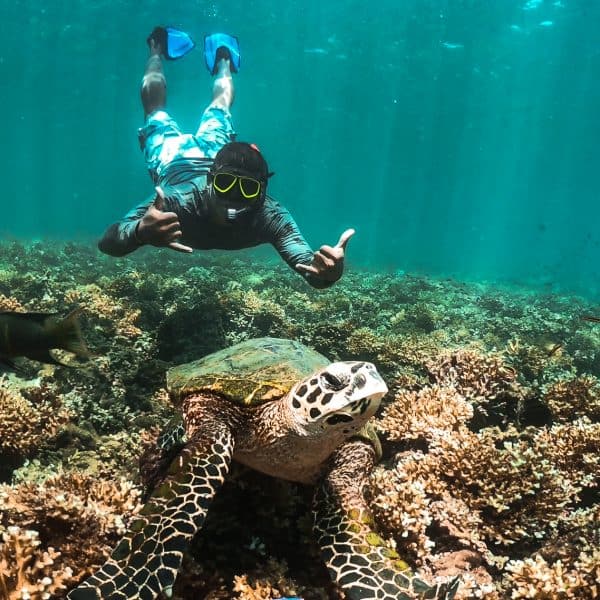
Not just fishing? See our month-by-month wildlife calendar for whales, whale sharks and sea turtles too.
Where: pinnacles, channels and rocky points north of Coiba, like Piedra de Wahoo and Bajo Veinte.
What bites: yellowfin, mahi, wahoo, snappers, groupers, sailfish in season.
Why go: more fishing time, shorter run.
Where: the two southernmost islands of the park, at the far end of Coiba.
What bites: all of that, plus roosterfish on the rocky points and a chance at marlin.
Why go: usually our best fishing day, in the wildest corner of the park.
For 85 years, Coiba was a place people tried to leave. From 1919 to 2004, the island was a penal colony. But anglers had already noticed what was swimming around it. In 1974, while the prison was still running, the first fishing camp on the island opened its doors, and word about Coiba’s fish started traveling.
The prison closed. The park arrived (UNESCO World Heritage since 2005). And the fish stayed. Some places are now off-limits so the reef can recover, like Granito de Oro, once Coiba’s most famous snorkel spot and now closed for conservation. We think that’s great news: protected reefs are why the fishing around them is still this good.
Fishing inside a national park comes with rules, and they’re the reason Coiba still has fish.
New to all this? Read our guide to sport fishing in Panama and see how to get to Coiba.
Lunch on board: bring your own, or order a chicken or tuna wrap ($10 each).
We release most of what we catch and every threatened species. Billfish, roosterfish and cubera always go back to the water. We keep disposable plastics off the boat and bring every piece of trash back to the mainland.
Your own food and drinks, reef-safe sunscreen, clothes that cover you from sun or rain, and your original passport. More tips in what to wear and bring on a boat tour.
The final route depends on tides, weather and where the fish are that day. If the captain cancels before departure for safety, we reschedule, usually for the next day.
El Bongo: our home dock at the Club Nautico de Veraguas, Gulf of Montijo, next to Puerto Mutis. About 2.5 hours to Jicarita.
Santa Catalina: the closest town to the park. About 1.5 hours to Jicarita.
Another port works better for you? Just ask.
We recommend 6:00 am from El Bongo and 7:00 am from Santa Catalina, and we agree on the exact time with you. We’re usually back around 5:00 pm.
One day in Coiba usually ends with someone asking, “Can we come back tomorrow?” Make it two or three days on Hannibal Bank, home of the black marlin. Hannibal Bank fishing charter →
Rather fish closer and add a beach? See our Cebaco & Mariato fishing trip.
Yes, sport fishing is allowed with a MiAmbiente fishing permit, which is included in your Coiba trip. Some areas are closed, and some species have seasonal bans, so your captain plans the route around them.
The classic Coiba day fishes the reefs and points around Coiba with a shorter run. Jicarita & Jicaron go to the far south of the park, the wildest corner of Coiba, with more chance of roosterfish. It costs $200 more for fuel and is usually our best fishing day.
Santa Catalina is the closest town to the park: about 1.5 hours to Jicarita. From El Bongo, the run to Jicarita takes about 2.5 hours. The classic Coiba day means a shorter ride and more time fishing.
Everyone who fishes in Panama needs a sport fishing license, unless they fish with a licensed operator like us: our captains’ tourism license covers our guests’ temporary licenses. The Coiba fishing permit from MiAmbiente is included too, so there’s no paperwork for you.
Coiba fishes all year. December to April is prime time for sailfish and roosterfish; the rainy season (May to December) brings mahi and wahoo. Yellowfin are around all year.
Yes. No experience needed: the crew teaches you, and all the gear is included. Minimum age is 12.
Yes. The boat seats 7 adults comfortably and up to 4 fish at the same time, and anyone can take a turn: besides the skipper, a fishing captain comes along to help every guest.
If you have one day, go to Jicarita & Jicaron: more variety and more hours with your lines in the water. Hannibal Bank is the home of the black marlin, but it’s a long way out. On a single day you spend more time riding than fishing, so we recommend it as a 2-day trip. See our Hannibal Bank fishing charter.
Yes. We usually leave from El Bongo (Gulf of Montijo, next to Puerto Mutis) or Santa Catalina, but we can pick you up wherever works best.
If the captain cancels before departure for safety, we reschedule, usually for the next day.
We leave El Bongo around 6:00 am or Santa Catalina around 7:00 am. The exact time is agreed with you.
First stops on the pinnacles north of Coiba, or the run south to Jicarita & Jicaron. Early hours are prime time for trolling.
Bring your own food, or order a chicken or tuna wrap ($10 each).
More fishing, depending on tides, weather and what you’d like to target. Back at your port around 5:00 pm.
Pinnacles, channels and rocky walls, from the north of Coiba to its far south. The final route depends on tides, weather and where the fish are that day.
Two rocky pinnacles northeast of Coibita. Even at high tide, their tops sit at twenty fathoms (about 38 m, 124 ft), which is where the name comes from. Strong currents, a forest of sea fans at 40 m, and home to big groupers, snappers and jacks.
A rocky slope that drops to sand at 28 m (91 ft), washed by eastbound currents. Groupers, snappers, jacks and barracudas, and the wahoo that gave it its name.
On Isla Canal de Afuera, rock formations step down to the bottom of the channel at 26 m (85 ft). When the current sweeps the channel, the jacks show up.
A rocky drop-off covered in hard coral, east of Coibita. At low tide the rocks almost break the surface, so the captain picks the tide carefully.
Steep rocky points and boulder walls; roosterfish, cubera and snappers close to shore.
The last rock before open ocean; yellowfin, wahoo and mahi on the outer edge, and a chance at marlin.