

Gulf of Montijo · Veraguas, PanamaPrivate Boat · $450 per Boat
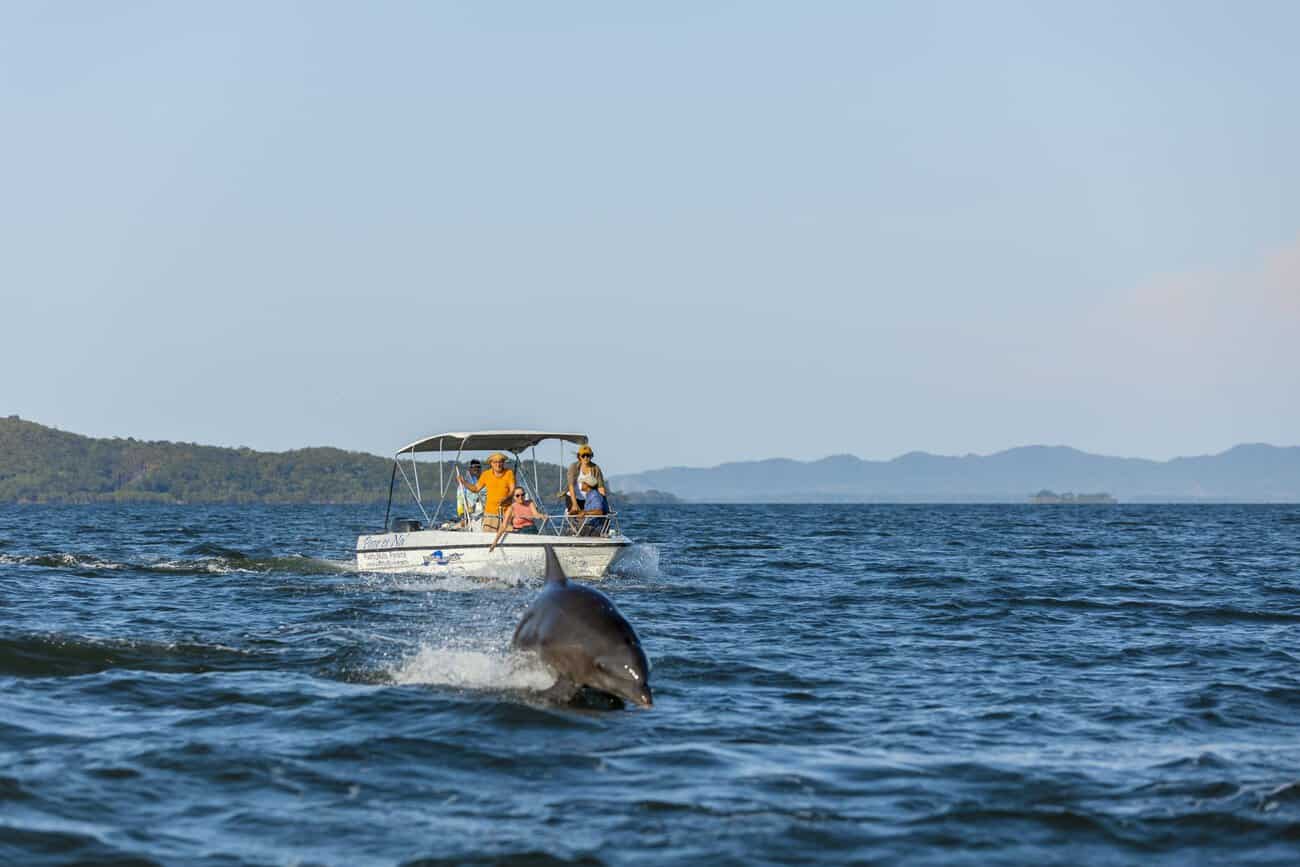
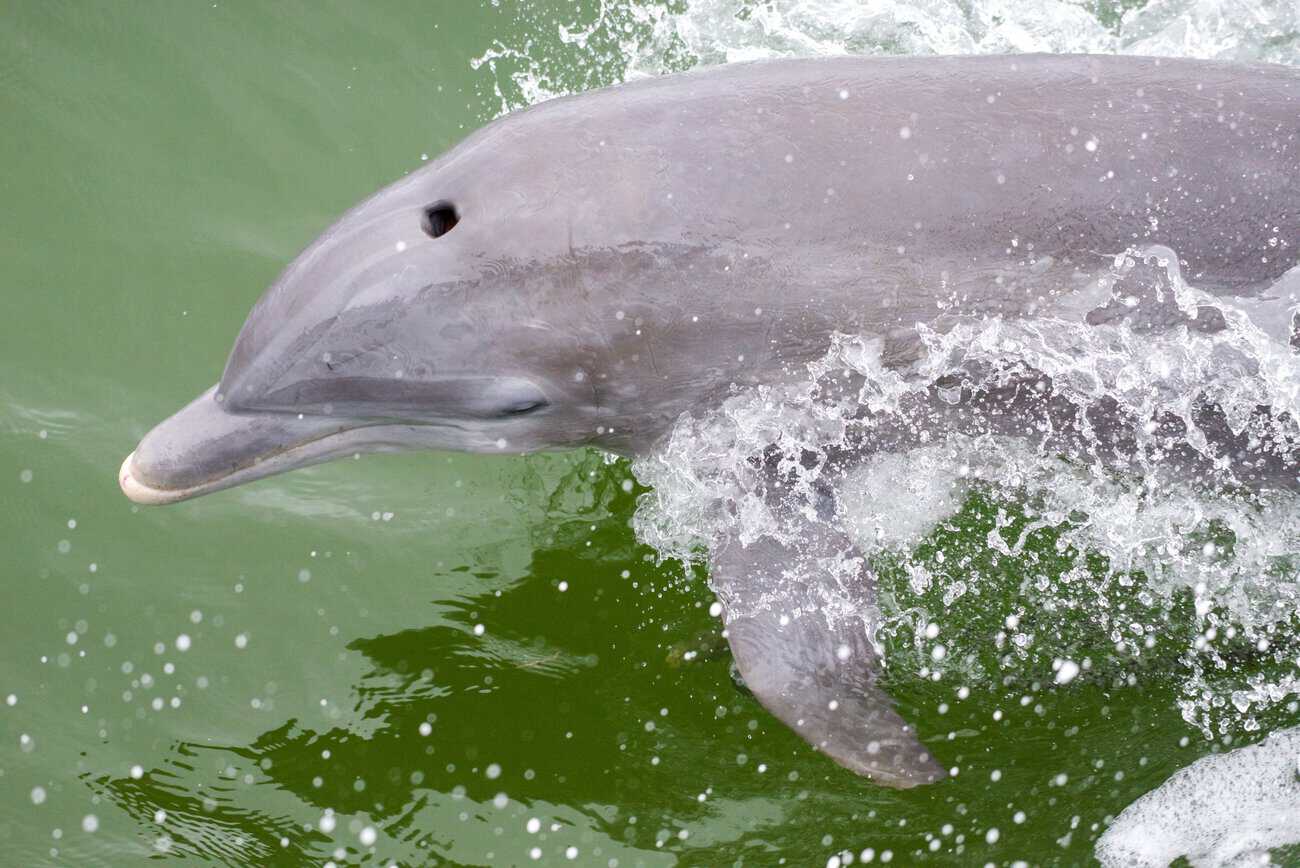
At high tide they slip up the rivers. On the way out, they herd the fish like cowboys. Today you get a front-row seat to lunch: a private boat for your group only, a wild family of more than 80 bottlenose dolphins that lives here all year, and a lazy swim at Tres Islas before heading home.
6:52 am. The captain eases off the throttle and the engine drops to a murmur, then to nothing. For a few seconds, all you hear is water lapping at the hull.
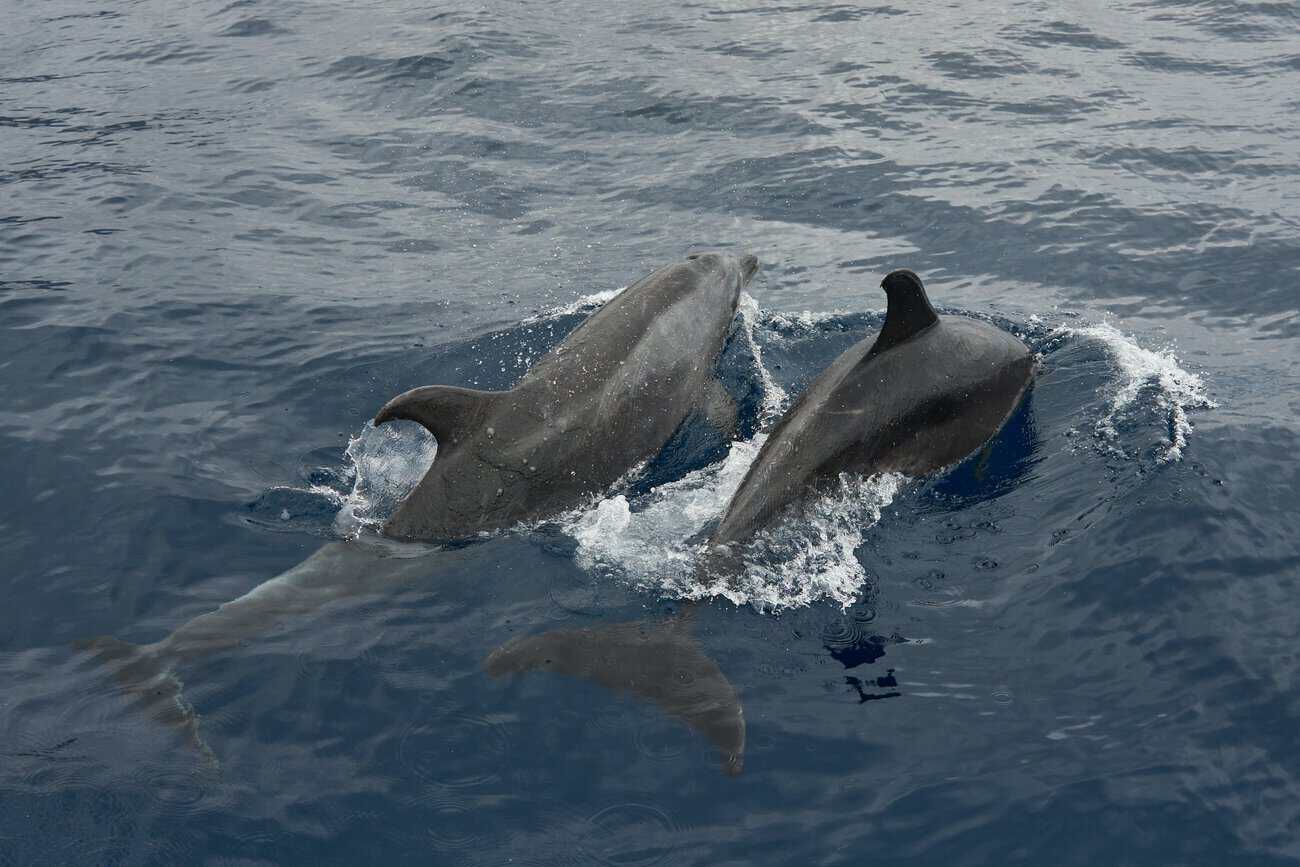
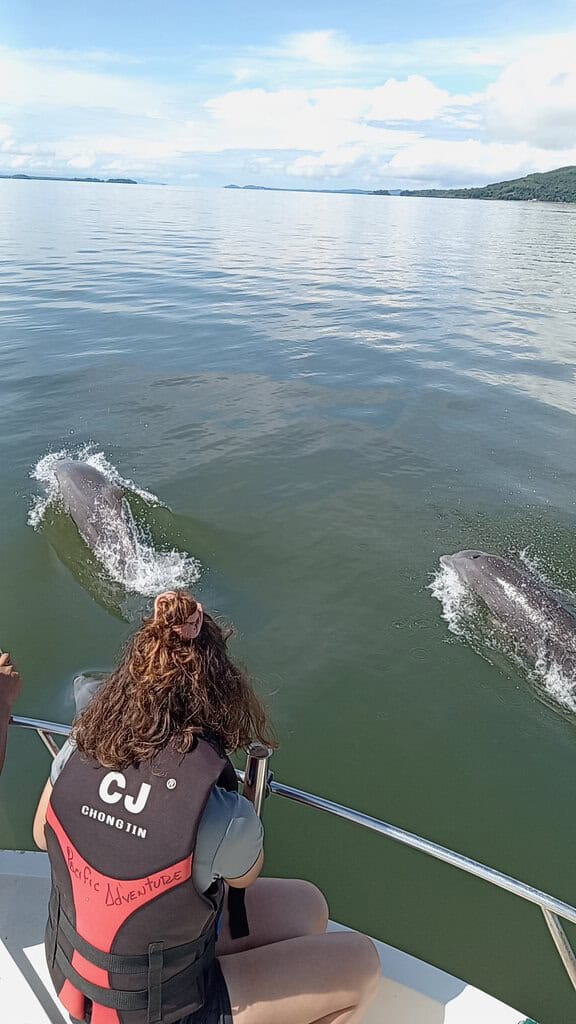
Then: pfffff. A blow off the left side. Another one. Two dorsal fins, and right behind them a tiny one, glued to its mother’s side. Nobody on the boat says a word. Nobody needs to.
And this is our secret weapon: a hydrophone. Once the engine is off, we lower an underwater microphone over the side and the gulf starts talking. Dolphins chat in whistles and clicks, and suddenly you’re not just watching the family, you’re listening in on the conversation. It turns a dolphin tour into an immersive, multisensory morning. What you hear depends on the day and on how close they are.
This is dolphin watching the Gulf of Montijo way: a private boat for up to 6 guests, leaving from Club Náutico de Veraguas in El Bongo, 5 minutes from Puerto Mutis, into Panama’s largest Ramsar wetland, where a family of bottlenose dolphins lives all year round.
Yes, and in the Gulf of Montijo they don’t just pass through: more than 80 bottlenose dolphins live here all year round.
Here’s their routine. When the tide comes in (and here it can rise up to 6 meters), the family slips up the rivers that feed the gulf. As the water drains out, they round up the fish like cowboys driving cattle, pushing the school toward open water, where everybody sits down to eat.
Early morning is their favorite time, which is why we suggest leaving around 6:30 am. Your captain reads the tide and the water and follows the clues: diving birds, a ripple, a sudden splash. Want the full dolphin trivia? Here are the 99 things most people never learn about dolphins.
The dolphins get top billing, but they share the stage. The Gulf of Montijo is a Ramsar Wetland of International Importance, the largest in Panama, and its birds are a big part of the reason: residents that never leave, plus migrants from the north and from the south that use the gulf to rest, feed and even raise their young. The gulf is a stop on the Pacific Americas Flyway, the shorebirds’ highway between the two Americas.
The resident bottlenose family stars in the show, and pantropical spotted dolphins drop in too, especially near the mouth of the gulf. Look for calves riding in their mom’s slipstream.
Herons, egrets, roseate spoonbills and pelicans live here all year. Then the travelers check in: migratory birds flying north to south, and south to north, stop here to rest, refuel and, some of them, to nest. A bird hotel that never closes.
Now and then one is sunbathing on a muddy bank. Your guide knows where they like to rest.
Near the dolphins we throttle down to low speed and low revs, so the boat glides instead of roars. If they want a closer look at us, that’s their call.
Ever. Wild dolphins should stay wild, and that’s the whole point.
Every sighting follows Panama’s whale and dolphin watching rules and the international guidelines for responsible cetacean watching.
Our captains and guides are specialized in responsible whale and dolphin watching: they know when to approach, when to wait and when to leave the family alone.
The Gulf of Montijo rises and falls up to 6 meters every six hours, and the dolphins live by that rhythm. That’s why there’s no fixed route: your captain plans the morning around the tide, the dolphins and what your group feels like doing.
Most days look like this: mangrove channels first, then the search for the family, beach time at Tres Islas and, if you like, lunch on Isla Leones. Plan on 4 to 6 hours, and if you’re having the time of your life, we won’t rush you back.
Same dolphins, a completely different morning.
Kids from 7 years old is our recommendation from experience, not a rule.
The Gulf of Montijo is a protected wetland. MiAmbiente charges an entrance fee of US$5 for foreigners and US$3 for Panamanian adults, paid online before the trip at reservasap.miambiente.gob.pa (we also send you the link with your booking confirmation).
That fee helps take care of the mangroves and the brackish water where the dolphins raise their calves. Around 10,000 people live around the wetland, and at least 6 in 10 of them make their living from it.
Long sleeves, a hat, biodegradable sunscreen, sunglasses with a strap, your original passport in a waterproof case and a camera with a good zoom. More tips in what to wear and bring on a boat tour.
Will I get seasick? The gulf is sheltered water, so it’s a gentle ride. There’s no restroom on board, so plan a stop before we leave.
It’s your boat: you pick the start time, how long we stay with the dolphins and how long you float at Tres Islas. If the weather turns unsafe before departure, we reschedule, usually for the next day.
Our home dock at Club Náutico de Veraguas in El Bongo, 5 minutes from Puerto Mutis and about 30 minutes from Santiago de Veraguas.
We suggest leaving around 6:30 am: it’s the dolphins’ favorite hour and the light is pure gold. Not a morning person? No problem. It’s a private tour, so it can start whenever suits you; the dolphins just might be busy elsewhere.
From July to October, humpback whales arrive in the waters around Cebaco and Coiba, along with spotted dolphins by the hundreds. That’s a different trip, out in the open ocean: see the whale and dolphin watching tour.

Who’s Behind the Wheel?
Dolphins are the stars, but the captain sets the tone. Ours are licensed, ATP-certified and trained in responsible wildlife watching. See for yourself before you book.
Yes. Panama has dolphins on both coasts, and in the Gulf of Montijo, on the Pacific side of Veraguas, more than 80 bottlenose dolphins live all year round. You don’t need a lucky season to meet them; you need a calm morning and a little patience.
Bocas del Toro’s Dolphin Bay is the famous one. If you’d rather watch wild dolphins without a line of boats, the Gulf of Montijo is a quieter option: a resident family, sheltered water and a private boat just for your group. Tours leave from El Bongo, 5 minutes from Puerto Mutis.
Not on our tours, and we think that’s the best part. Swimming with, chasing or feeding wild dolphins stresses them and changes how they behave. We slow down, keep our distance and follow national and international rules for responsible watching, so the dolphins choose how close they want to come.
Any month of the year. Early morning is their favorite time, which is why we suggest leaving around 6:30 am. They keep their own schedule, though, so the captain adjusts the route to the tide and the water on the day.
No, and anyone who promises it is fibbing. These are wild animals with their own plans. Our odds are good because the family lives here and we take our time searching, but nature gets the final say.
Often, yes. Dolphins talk to each other with whistles and clicks, and we carry a hydrophone, an underwater microphone, so you can listen in from the boat. Seeing them and hearing them at the same time is a whole different experience. What you hear depends on the day and on how close the family is.
Kids love it, and 7+ is our recommendation from experience, not a rule. The gulf is sheltered water with no open-ocean swell, a good pick if anyone in the family has a nervous stomach. Kids’ life jackets are on board.
Plan on 4 to 6 hours. The boat is private and costs US$450 for up to 6 guests, with captain and certified guide, drinking water and ice. If you’re having a great time, we won’t rush you back.
Yes. Tide permitting, there’s beach time at Tres Islas, with warm water and palm shade. On the way back you can add a seafood lunch cooked by Las Aventureras on Isla Leones. It’s optional and not included in the boat price: US$20 per person, book ahead.
Drive west to Santiago de Veraguas (about 250 km, 3.5 to 4 hours outside rush hour), then 24 km, around 30 minutes, to Club Náutico de Veraguas in El Bongo, 5 minutes from Puerto Mutis. We send you the exact pin when you book.
Yes. The Gulf of Montijo is a protected wetland, and MiAmbiente charges US$5 for foreigners and US$3 for Panamanian adults. It’s paid online before the trip at reservasap.miambiente.gob.pa, and we also send you the link with your booking confirmation.
Board at our home dock in El Bongo, 5 minutes from Puerto Mutis. Early is the dolphins’ favorite hour. Prefer to sleep in? It’s your boat: you pick the time.
Cruise with the tide past herons, spoonbills and pelicans in Panama’s largest Ramsar wetland.
Diving birds, a ripple, a splash: your captain knows the signs and the family’s favorite hangouts, like the mouth of the San Pablo River and the channel between Perdomo and Leones islands. Finding them can take a while, so we never rush it.
Tide permitting, we drop anchor for a swim in warm water and a nap under the palms.
Lobster, fried fish and coconut rice cooked by Las Aventureras. Not included in the boat price: US$20 per person, book ahead.
Or later. If you’re having the time of your life, we’re in no hurry.
The Gulf of Montijo is an estuary: more than 1,000 streams and 45 rivers, like the San Pablo, San Pedro and Tebario, carry fresh water down from the mountains of Veraguas into a sheltered bay that the tide fills with seawater twice a day. That brackish mix, protected from the full force of the waves, is what makes it such a rich place to live. It’s also part of the Eastern Tropical Pacific Marine Corridor and the Mesoamerican Biological Corridor, so what happens here matters far beyond Panama.
Scientists call bottlenose dolphins a sentinel species. They live for decades, sit at the top of the food chain and carry in their bodies whatever is going on in the water around them; when something’s wrong in the sea, dolphins are among the first to show it. So when a family of more than 80 decides to stay, calves and all, it says a lot about this place.
Long-lived and top of the food chain: if the dolphins are thriving, the water usually is too.
Mangroves and brackish water raise the fish the family eats. Why the gulf is the ocean’s nursery.
Researchers from Panama’s International Maritime University (UMIP) study this family to help protect it.
Fresh seafood cooked by the fisherwomen of Isla Leones. Book ahead.
Mud between your toes: collect black clams in the mangroves with the women of Montijo.
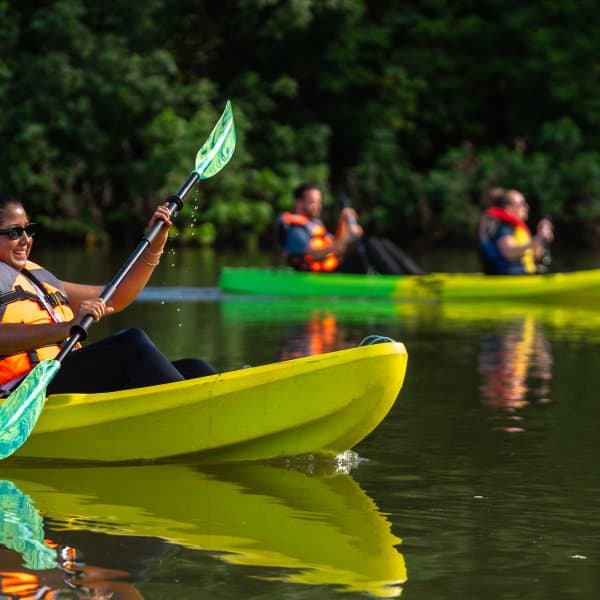
Come back for The Bird Awakening, a silent kayak paddle at first light.
SUP boards, snorkel gear and the inflatable island. Just ask for them when you book.