

Premios Verdes 2026 · 500 Best ProjectsKayak Edition · $45 per Person
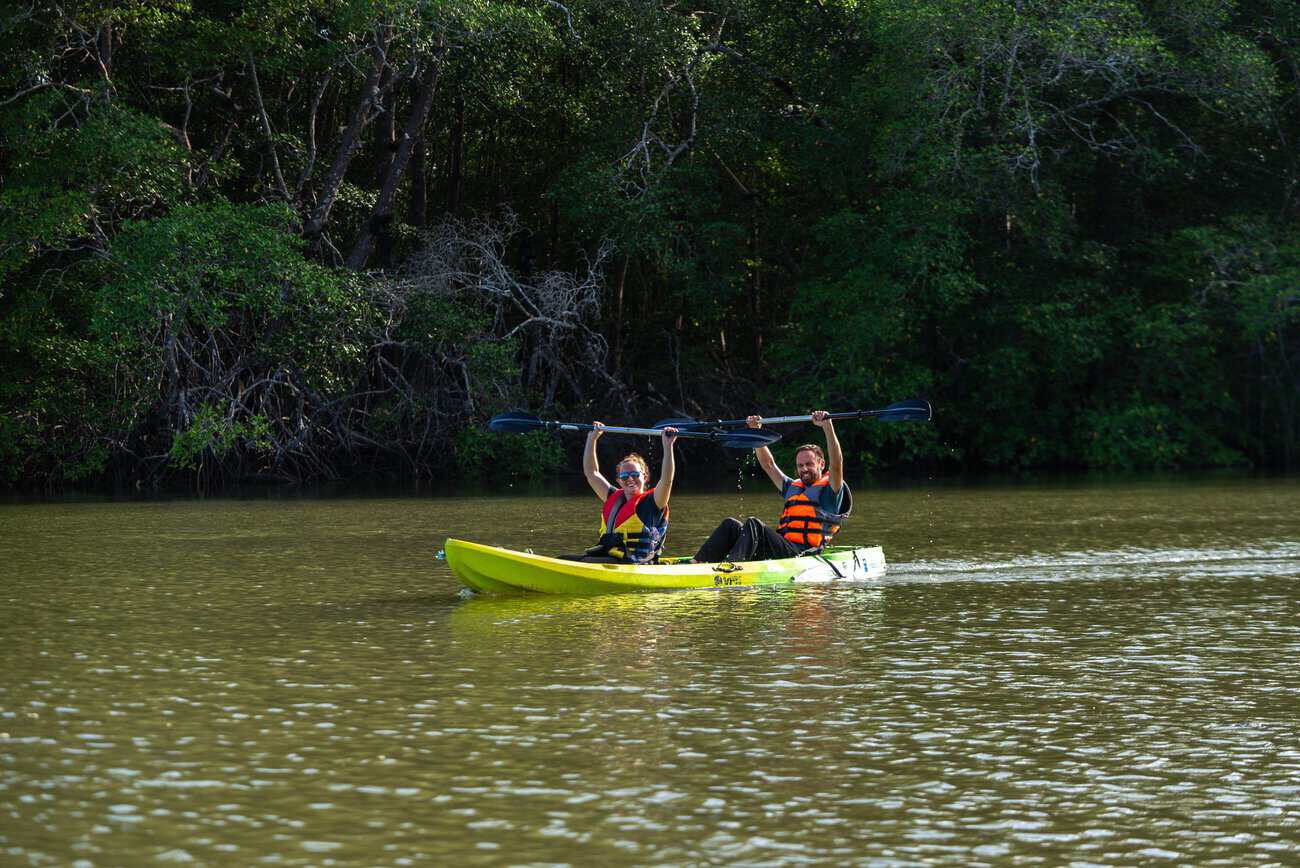
No engine, no noise. Just your paddle, the mangroves and the Gulf of Montijo waking up around you. An award-winning sunrise paddle up the San Pedro River, with local guides who grew up in these channels.
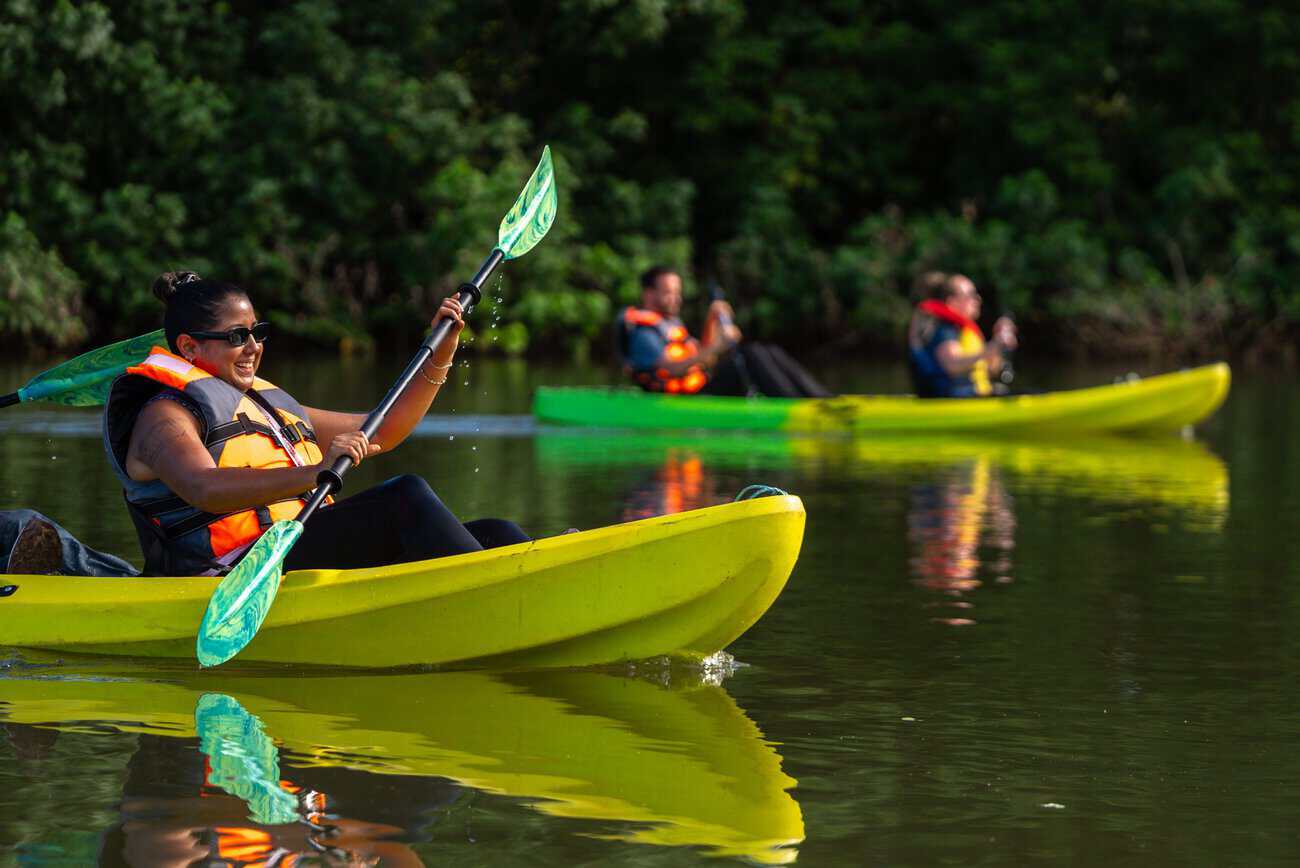
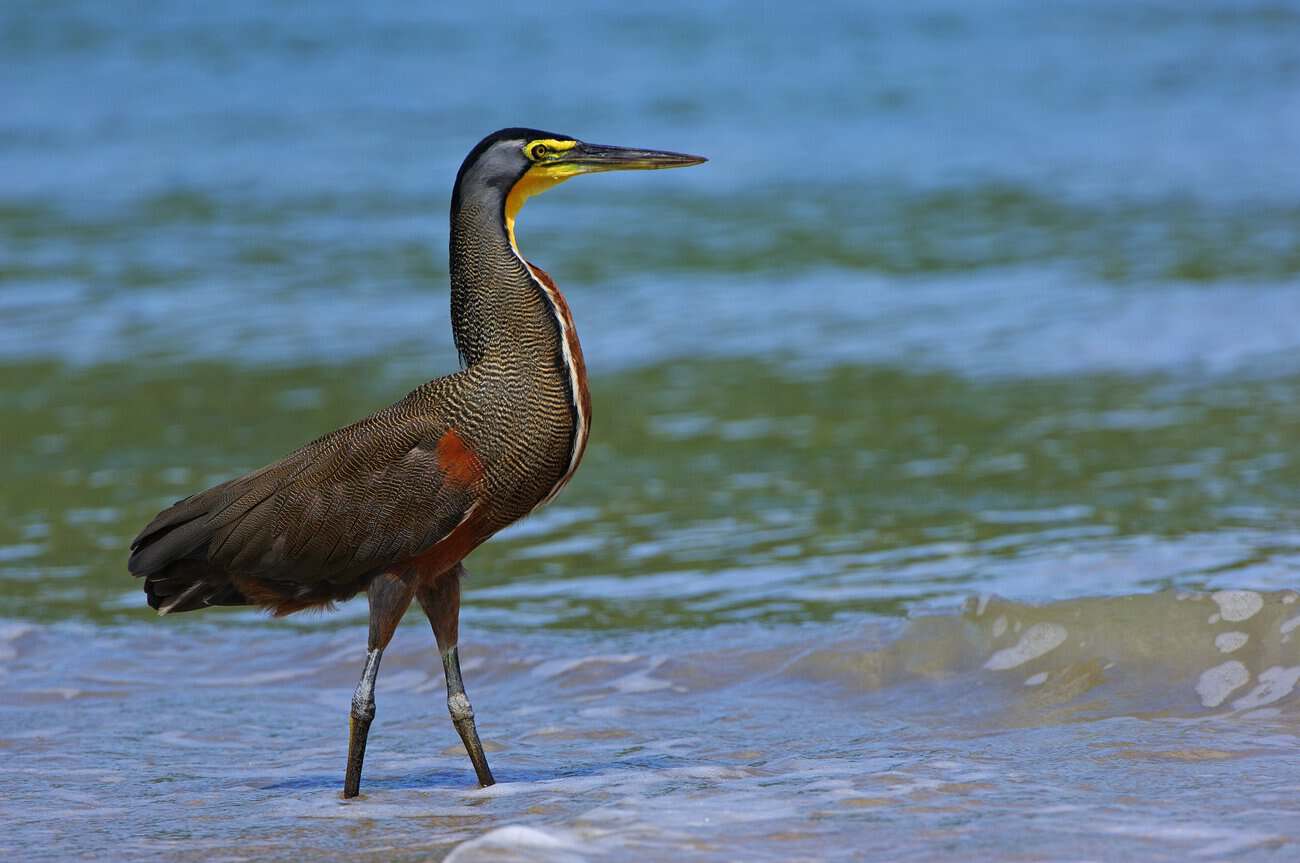
6:00 am. The river is flat as glass and the mist is still sitting on the water. Your first paddle stroke is the loudest sound for a mile. On a mangrove root a few meters away, a tiger heron doesn’t even flinch. It just watches you glide by.
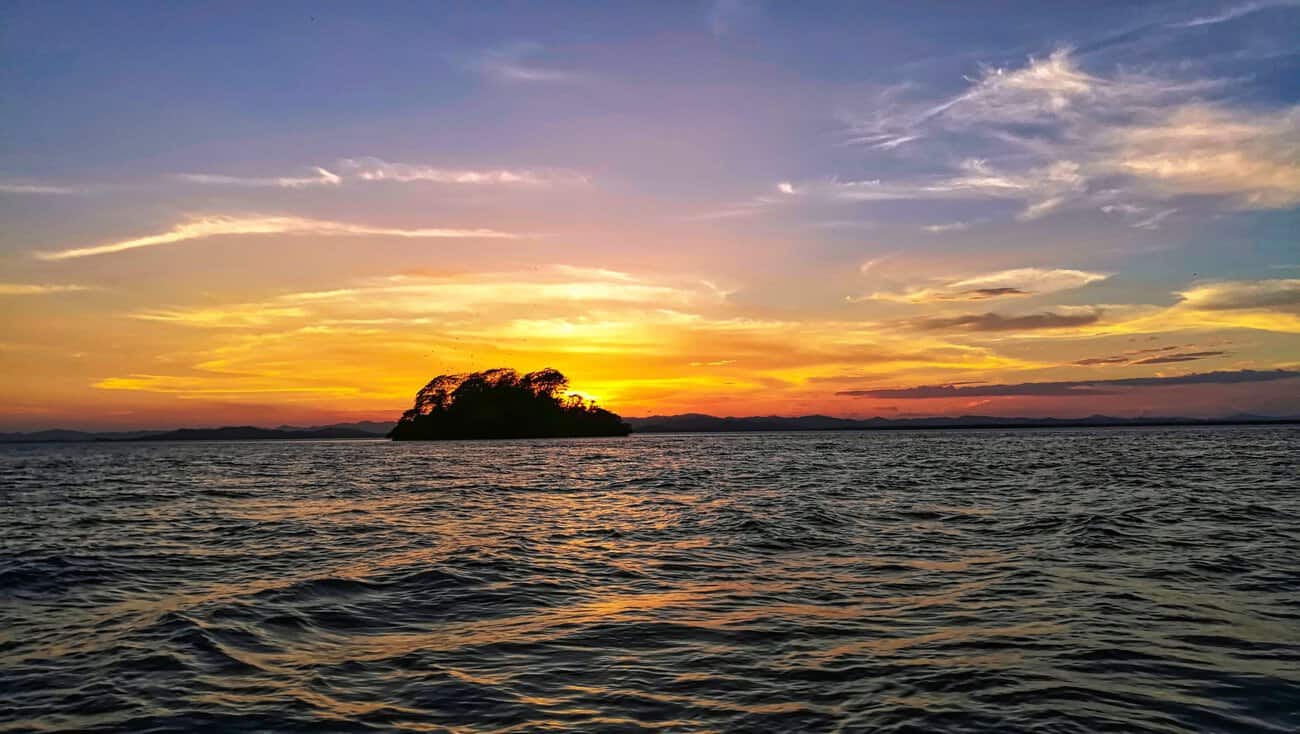
Then the sun comes up behind the trees, the mist lifts, and the gulf starts waking up: wings overhead, crabs clicking on the mud, a troop of howler monkeys calling from somewhere upriver.
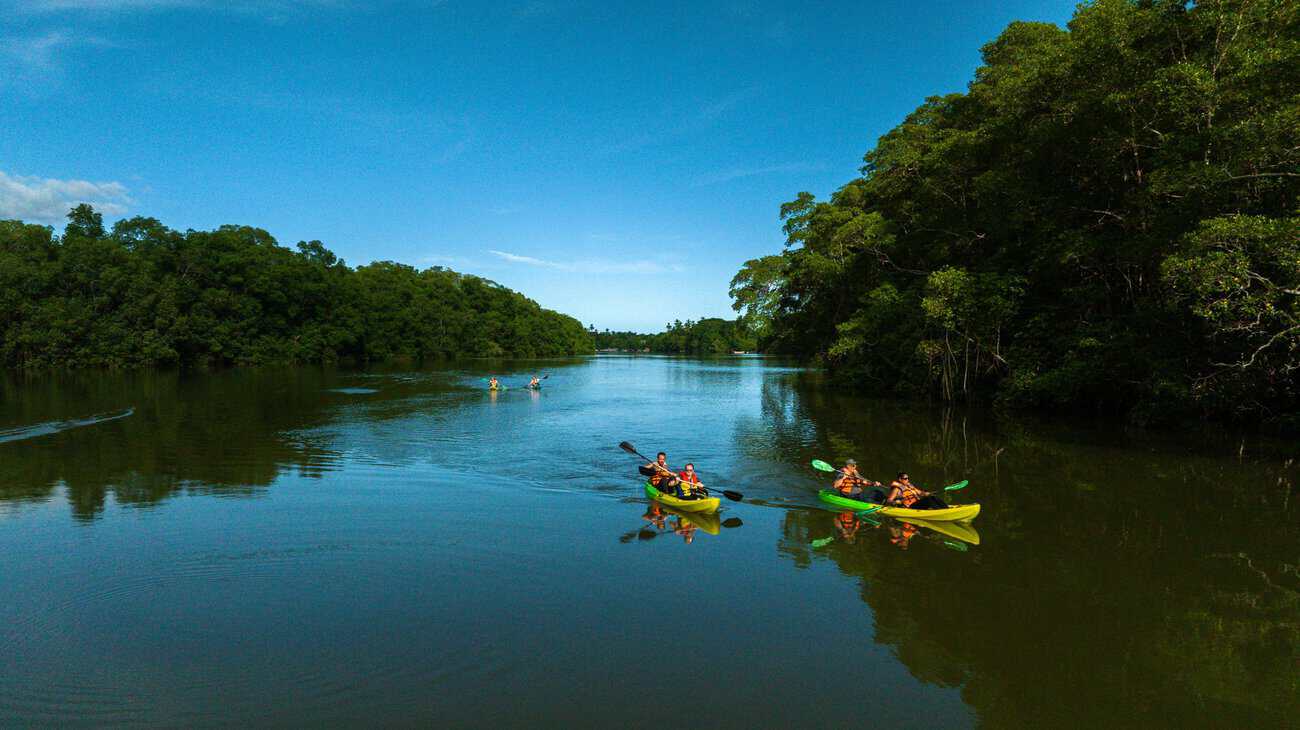
This is The Bird Awakening, Kayak Edition: a quiet paddle up the San Pedro River, one of the main rivers that feed the Gulf of Montijo, Panama’s largest Ramsar wetland. We leave from Club Náutico de Veraguas in El Bongo, 5 minutes from Puerto Mutis, with a local guide in the lead and a support boat close behind.
For years, the need to survive tied the families of the gulf to cutting, burning and over-fishing the mangroves. Breaking that habit was the hardest part. Our goal was simple: turn local families into the guardians of the place they live from.
The Bird Awakening started on motorboats, to cover long distances and bring in more communities. But more and more travelers kept asking us for the same thing: less noise, less fuel, a smaller footprint. So the tour evolved into a kayak. Zero emissions, no wake, no engine scaring the birds away.
What you get is a full sensory immersion. You arrive looking to disconnect, and you leave connected to something bigger. Every paddle supports local guides, women and young people of the gulf, and helps fund the protection of Panama’s Pacific.
No two mornings are the same, but this is who usually shows up for the sunrise. Early morning and late afternoon are the best times.
The gulf is a true bird hotel for resident and migratory birds. At sunrise they leave the mangroves to feed, right over your head.
You’ll probably hear them before you see them: the deep roar of the howlers carries for miles over the river at dawn and dusk.
Look up into the branches: iguanas climb out early to warm up in the first rays of sun.
The mud between the roots is busy with crabs, especially when the tide is going out.
Don’t be surprised to see one sunbathing on a muddy bank. Your guide knows where they like to rest, and how to keep a safe distance.
Your guide explains why mangroves raise the ocean’s baby fish and fight climate change, locking away up to four times more carbon than a rainforest.
Mist on the water, the first birds, the first light. Worth every minute of the alarm clock.
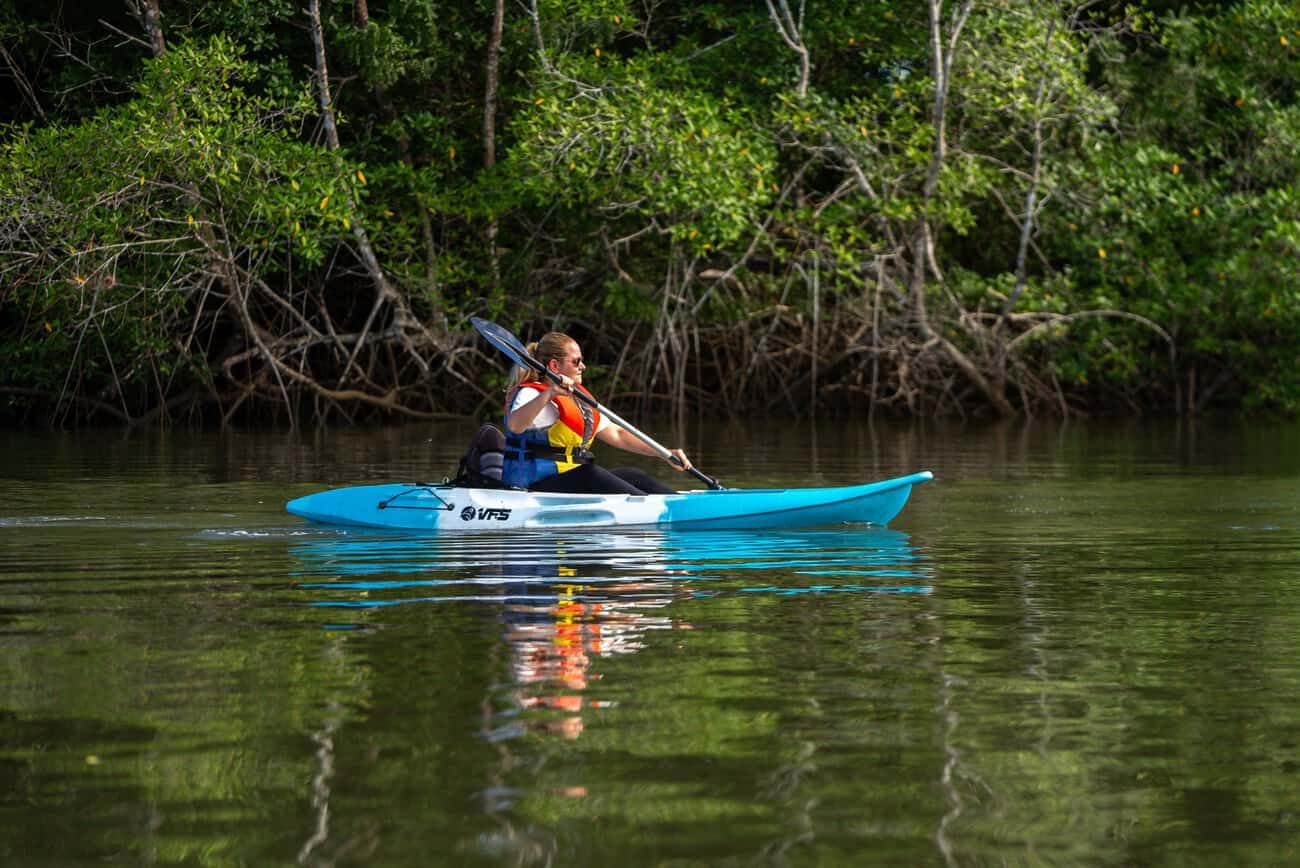
No fuel, no engine noise, no wake. Just you, a paddle and a local guide.
Two hours of paddling at your own pace, as far upriver as you feel like going.
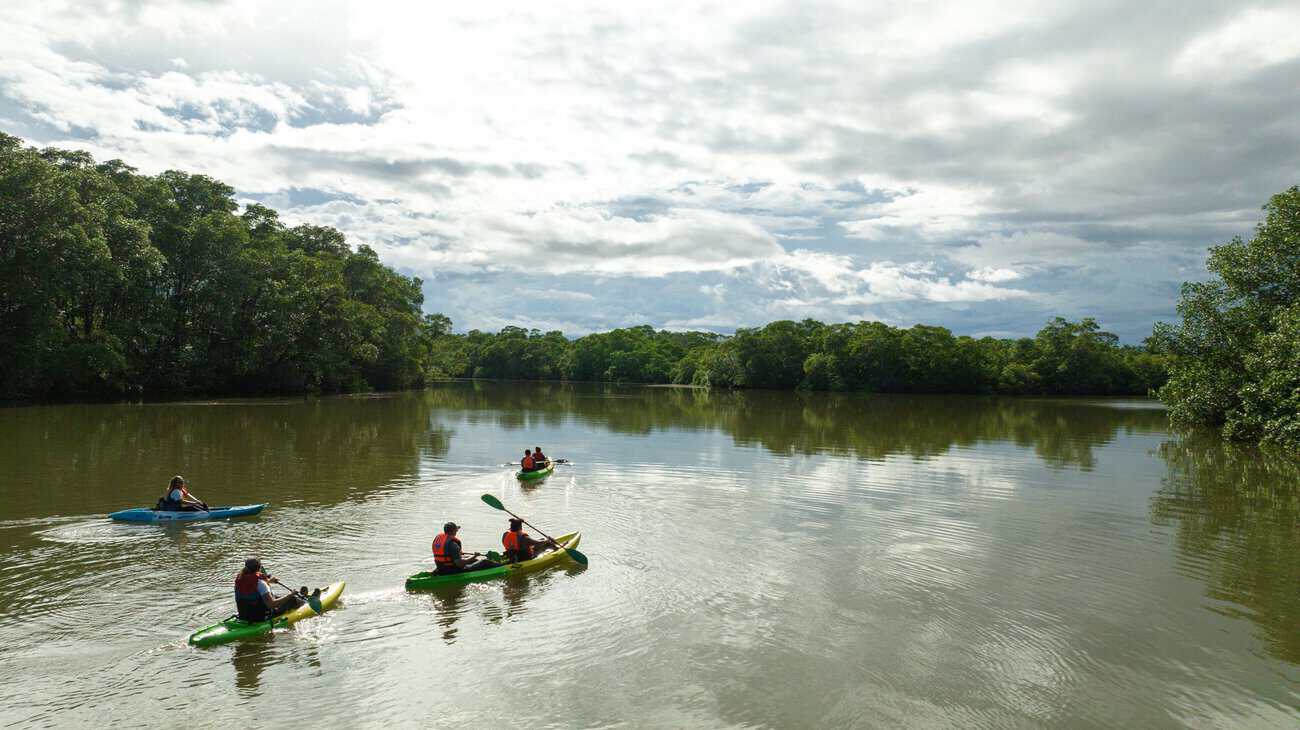
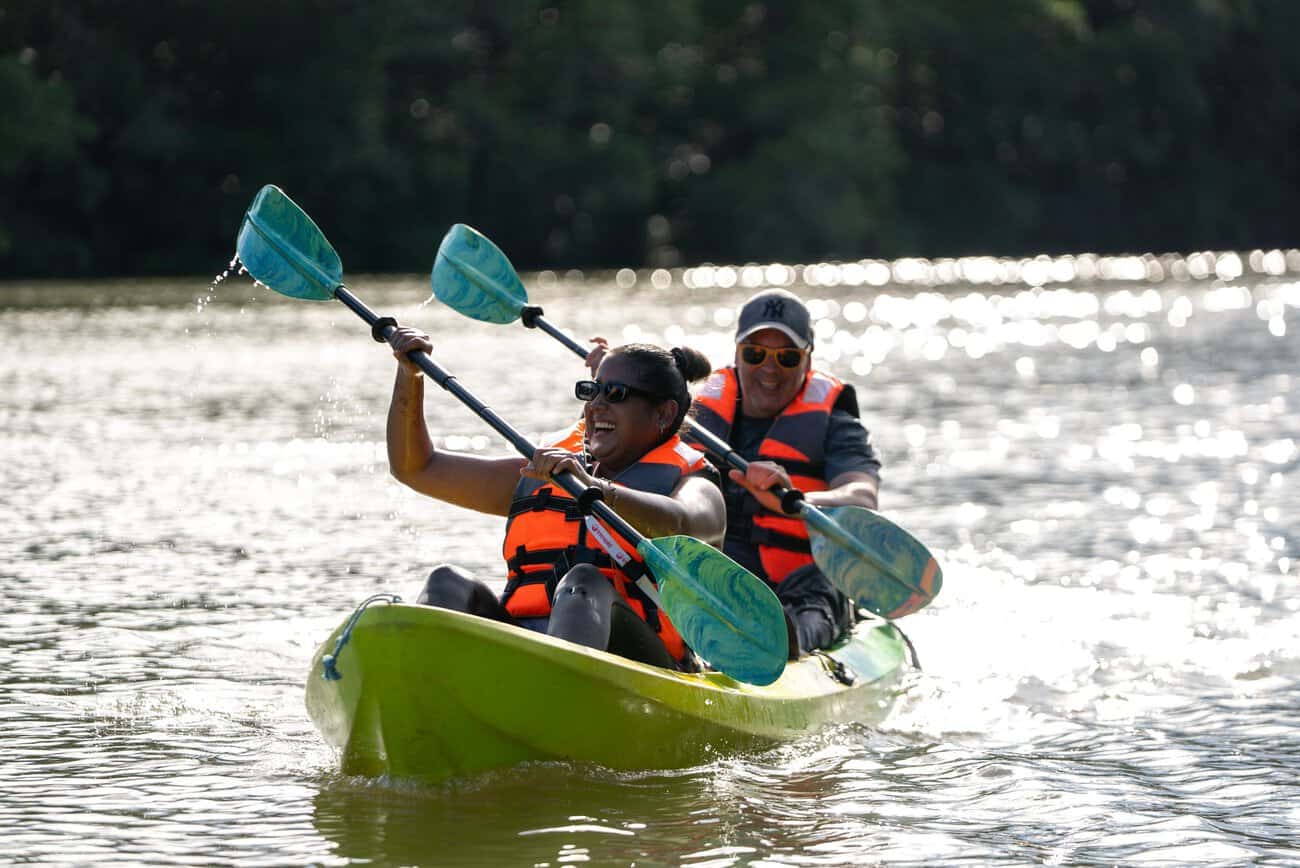
Double kayaks are made for sharing the moment. Kids from 7 can paddle with an adult.
The Gulf of Montijo rises and falls up to 6 meters every six hours, and the San Pedro River breathes with it. The good news: we can paddle with any tide. When the tide is coming in, the river carries you upstream almost on its own. When it’s going out, you’ll work a little harder on the way back, but nothing a beginner can’t handle.
We paddle upriver as far as you like, slip into some of the smaller side channels where the motorboats can’t go, and then glide back to the club. About two hours in total, though honestly, we’re not strict about the clock.
Same river, a completely different morning.
Kids from 7 years old paddle in a double kayak with an adult.
This experience runs on muscle, not fuel, and it keeps the river quiet for the animals that live in it. Your fee pays local guides from the gulf’s communities, including women and young people, and helps fund the work of protecting the mangroves.
The Bird Awakening was selected among the 500 Best Projects of Premios Verdes 2026, the largest social and environmental awards in Latin America and the Caribbean.
Light clothes that can get wet, a hat, reef-safe sunscreen, insect repellent, sunglasses with a strap and a dry bag for your phone. More tips in what to wear and bring on a boat tour.
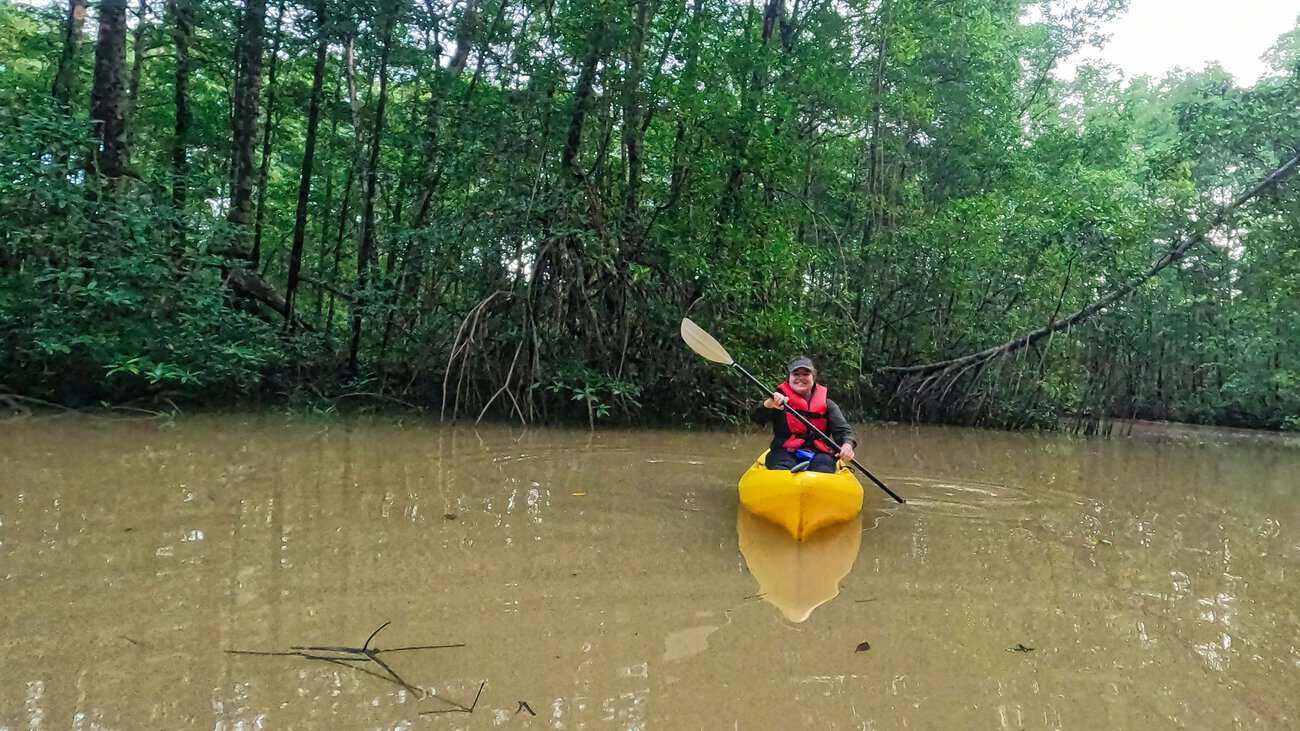
How hard is it? Easy to moderate. No experience needed: your guide gives you a quick lesson before you start. When the tide is going out, the way back takes a little more effort.
We go as far upriver as you like and come back when you’re ready. If the weather turns unsafe before departure, we reschedule, usually for the next day.
Our home dock at Club Náutico de Veraguas in El Bongo, right on the San Pedro River, 5 minutes from Puerto Mutis and about 30 minutes from Santiago.
We can leave from 6:00 am, any day and with any tide. Early morning is the best time for birds; late afternoon, close to dusk, is great for hearing the howler monkeys. Not a morning person? No problem: the tour can start at any time of day, and we’ll be there.
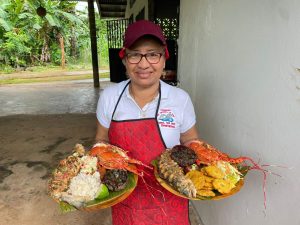
After the paddle, some of our guests jump on the boat and head to Isla Leones for lunch with Las Aventureras, the fisherwomen of the gulf. The two experiences are booked and charged separately. See the Isla Leones mangrove & seafood tour.
A guided sunrise kayak tour up the San Pedro River, one of the main rivers of the Gulf of Montijo in Panama. You paddle through the mangroves at first light to see and hear the birds, monkeys and wildlife waking up, with a local guide and zero emissions.
$45 per person. It includes the double kayak, paddle, life jacket, a local guide, and water and sodas to keep your energy up.
About 2 hours. We paddle upriver as far as you like and come back to the club, and we’re not strict about the clock.
Whenever you like. We suggest 6:00 am, the best time for birds, or late afternoon to hear the howler monkeys, but the tour can start at any time of day. Not everyone wants an early alarm, and that’s fine with us.
No, your guide gives you a quick lesson before you start. It’s an easy to moderate paddle; when the tide is going out, the way back takes a little more effort.
A support boat follows the group, ready to help if anyone tips into the water.
Yes, from 7 years old, paddling in a double kayak with an adult.
Both. You can book it private for your group or join other travelers. We have 8 double kayaks, so we can take up to 16 paddlers.
Herons, pelicans, frigatebirds and other resident and migratory birds, howler monkeys, iguanas, mangrove crabs and, sometimes, crocodiles resting on the banks.
At Club Náutico de Veraguas in El Bongo, on the San Pedro River, 5 minutes from Puerto Mutis.
Yes. After the paddle you can take the boat to Isla Leones for lunch with Las Aventureras. The two tours are booked and charged separately.
Life jackets on, a quick paddling lesson and a safety briefing. A support boat stays close behind the whole way.
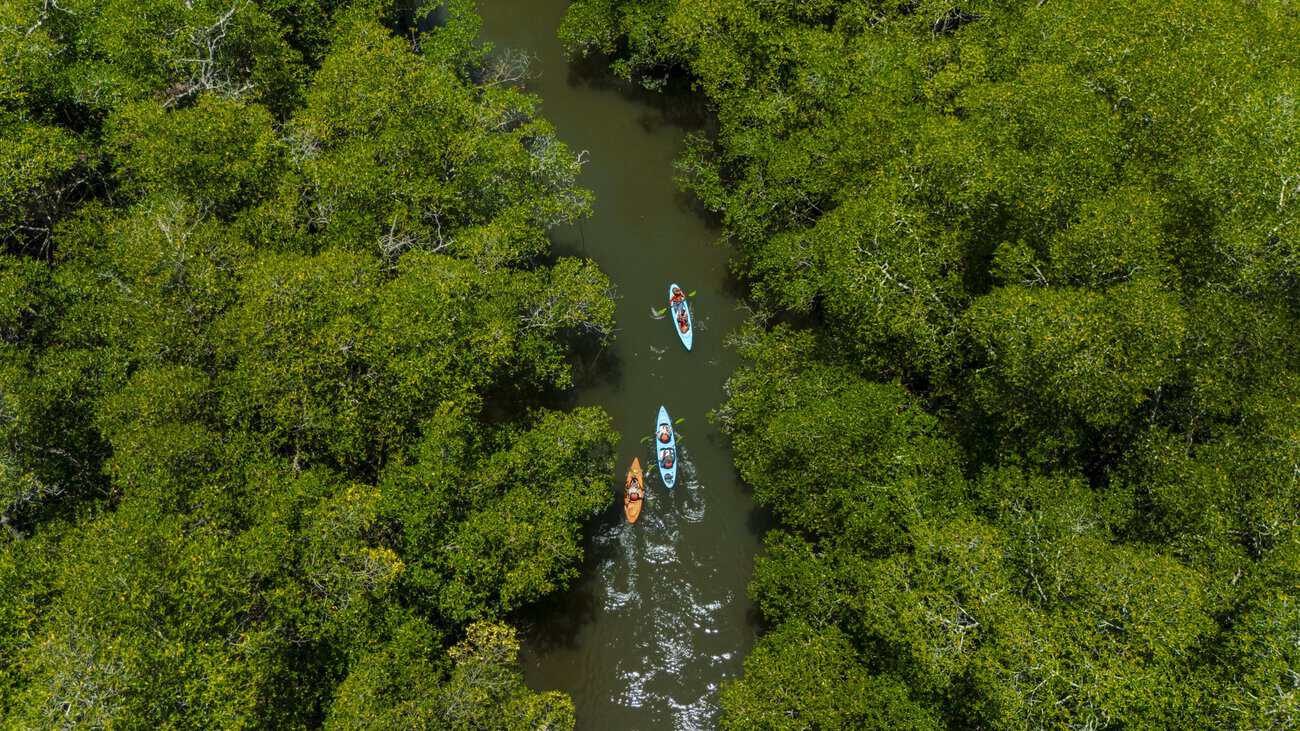
Glide up the San Pedro River as the mist lifts and the birds leave the mangroves.
Slip into the narrow creeks where motorboats can’t go. Listen for the howler monkeys.
Turn around whenever you like and paddle back to the club.
Or keep going: take the boat to Isla Leones for lunch with Las Aventureras (booked separately).
Fresh water from the highlands of Veraguas meets the Pacific tide in the San Pedro River, one of the arteries that feed the Gulf of Montijo, a Ramsar wetland of international importance and the biggest in Panama. Every time the tide rises, the ocean pushes salt water up every one of those arteries, so even in the rivers the water isn’t fresh: it’s brackish, half river and half sea. That mix lets far more species shelter and grow among the mangrove roots, and it’s why the gulf works as the ocean’s nursery.
Our home dock in El Bongo, right on the river.
Wide, calm water lined with mangroves, where the birds leave to feed at sunrise.
Narrow creeks under the mangrove canopy, the quietest corners of the gulf. Why it’s called the ocean’s nursery.
Two hours of nature with no fuel and no engine noise. The birds, and the planet, thank you.
Your guides grew up paddling these creeks. Your fee supports families who live from the gulf.
Continue to Isla Leones for lunch with Las Aventureras and plant a mangrove.
Keep your voice low, don’t feed the wildlife, pack out what you bring and give crocodiles their space.