

Panama’s Third-Largest IslandPrivate Boat · Your Group Only
White-sand beaches at Tintorera, sea turtles on the coral and dolphins on the way, with a bilingual guide and the whole boat to yourselves.
Cebaco is the big, quiet island at the mouth of the Gulf of Montijo, and this private tour takes you there on your own boat, with your own bilingual tour guide.
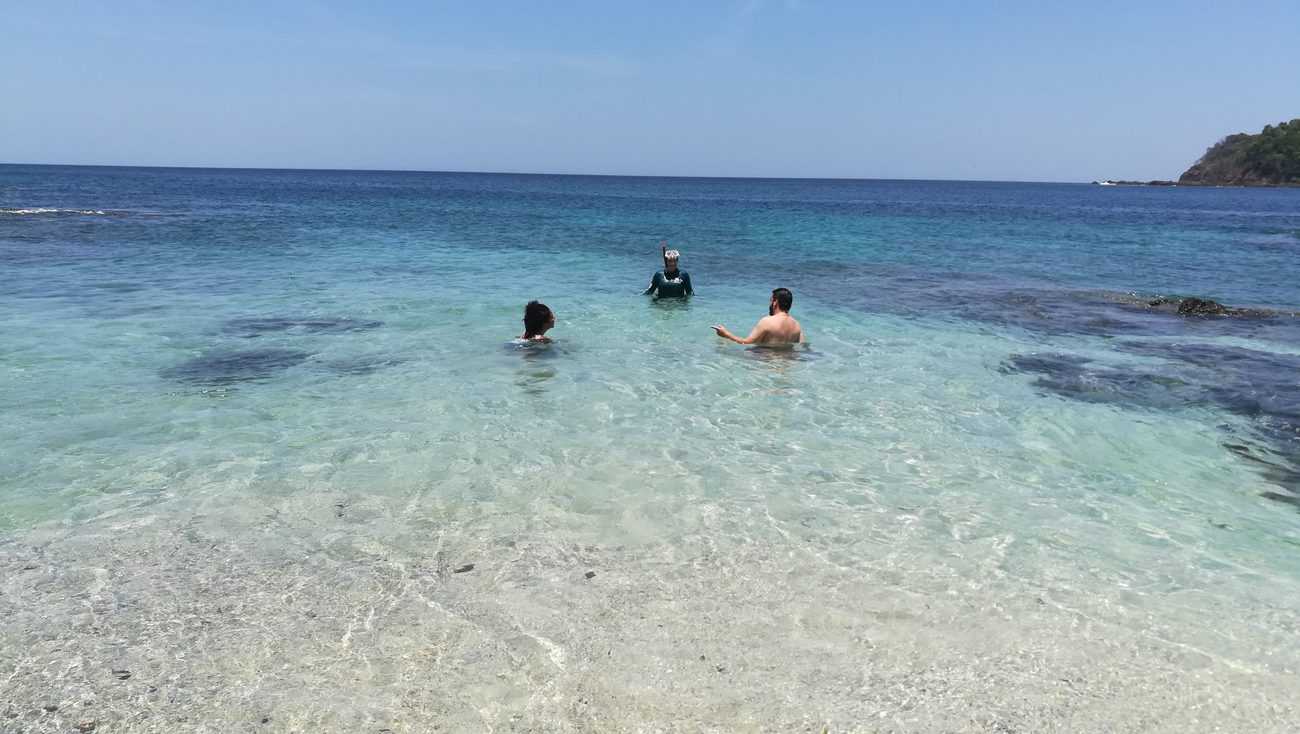
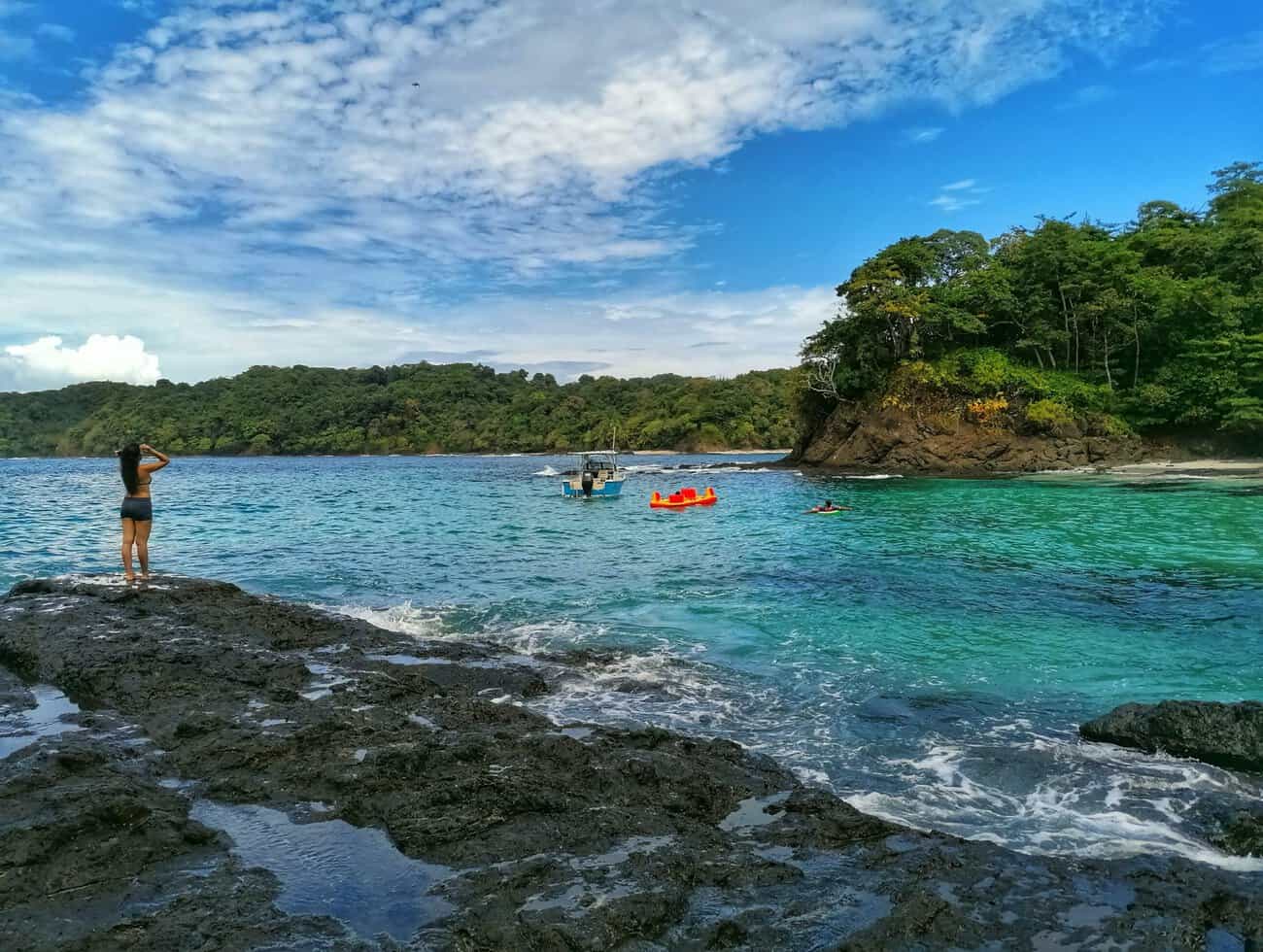
You can leave from Santa Catalina, about 30 minutes away, or from our private home dock at the Club Náutico de Veraguas in El Bongo, crossing the Gulf of Montijo, Panama’s largest RAMSAR wetland. From El Bongo it’s a two-for-one: an hour among the mangroves of the gulf and, if you like, a seafood lunch with the fisherwomen of Isla Leones. Most days we head to Tintorera, the islet at Cebaco’s southern tip, with small white-sand beaches, crystal-clear water and coral right off the shore. The boat is yours alone, so your guide plans every stop with you: more snorkeling, more beach, a walk across the island or a long lunch in the shade.
Cebaco is Panama’s third-largest island, after Coiba and Isla del Rey: about 8,000 hectares of forest, volcanic cliffs and hidden coves at the mouth of the Gulf of Montijo. Fewer than 500 people live here, in small fishing and farming villages like El Jobo and Platanares, almost all of them on the west coast, looking across the water at Gobernadora Island.
The island has lived through booms and busts. The elders remember when Cebaco was one of the richest islands in Panama for mahogany, and the sea of Montijo was full of fish. Local legend says its name comes from Cemaco, an Indigenous chief from the days of the Spanish conquest.
And it has a story we love. In 2008, when someone tried to sell the last community forests of Chaperno and Punta Campana, the people of Platanares formed a committee and saved them, with the backing of the Montijo town council. Today Cebaco sits in the buffer zone of Coiba National Park, inside a special conservation zone, and the calm water around Cebaco and Gobernadora is where humpback whale mothers rest with their calves from July to October.
Cebaco is quieter than Coiba, and the sea around it is just as alive. What you meet depends on the day, the tide and the visibility, but these are the regulars on our trips. And now and then, a white-tip reef shark or a young hammerhead: the Gulf of Montijo is one of their nurseries, and we’re definitely not on their menu. Planning around the seasons? Check our wildlife calendar, month by month.
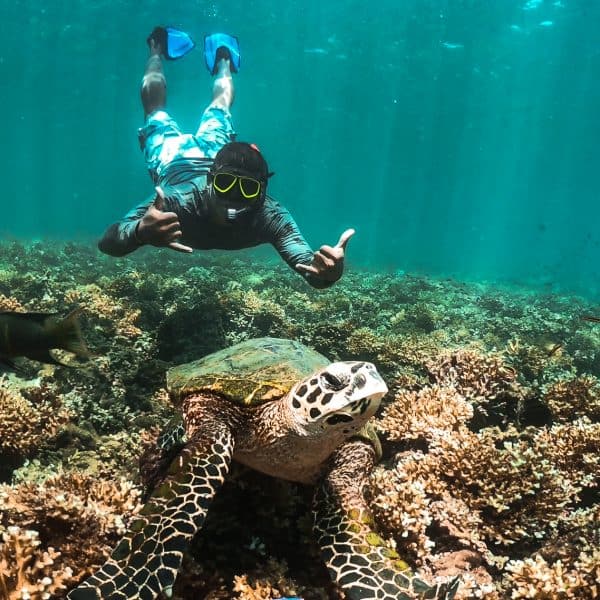
Feeding and resting over the coral around Tintorera.
Colorful reef fish over Tintorera’s coral, right off the beach.
Mothers and calves resting in the calm water around Cebaco and Gobernadora.
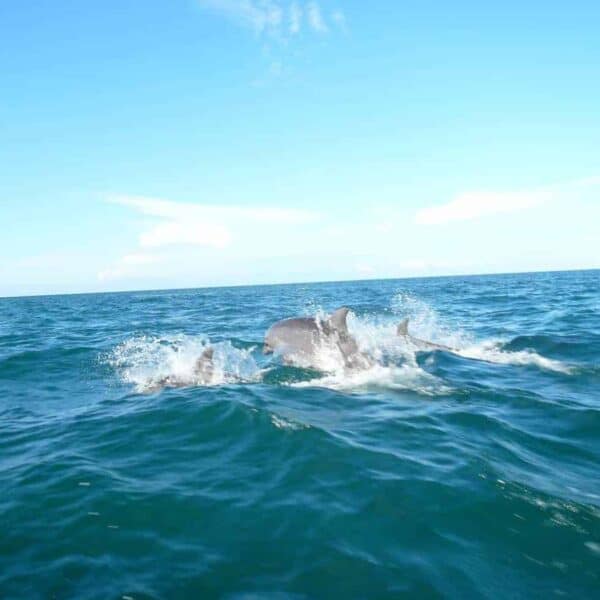
The Gulf of Montijo is home to more than 80 resident bottlenose dolphins, and they love to ride along on the crossing.
Frigatebirds and brown pelicans over the mangrove islands on the way.
Hundreds of them on the beach. Kids love spotting the one with the biggest shell.
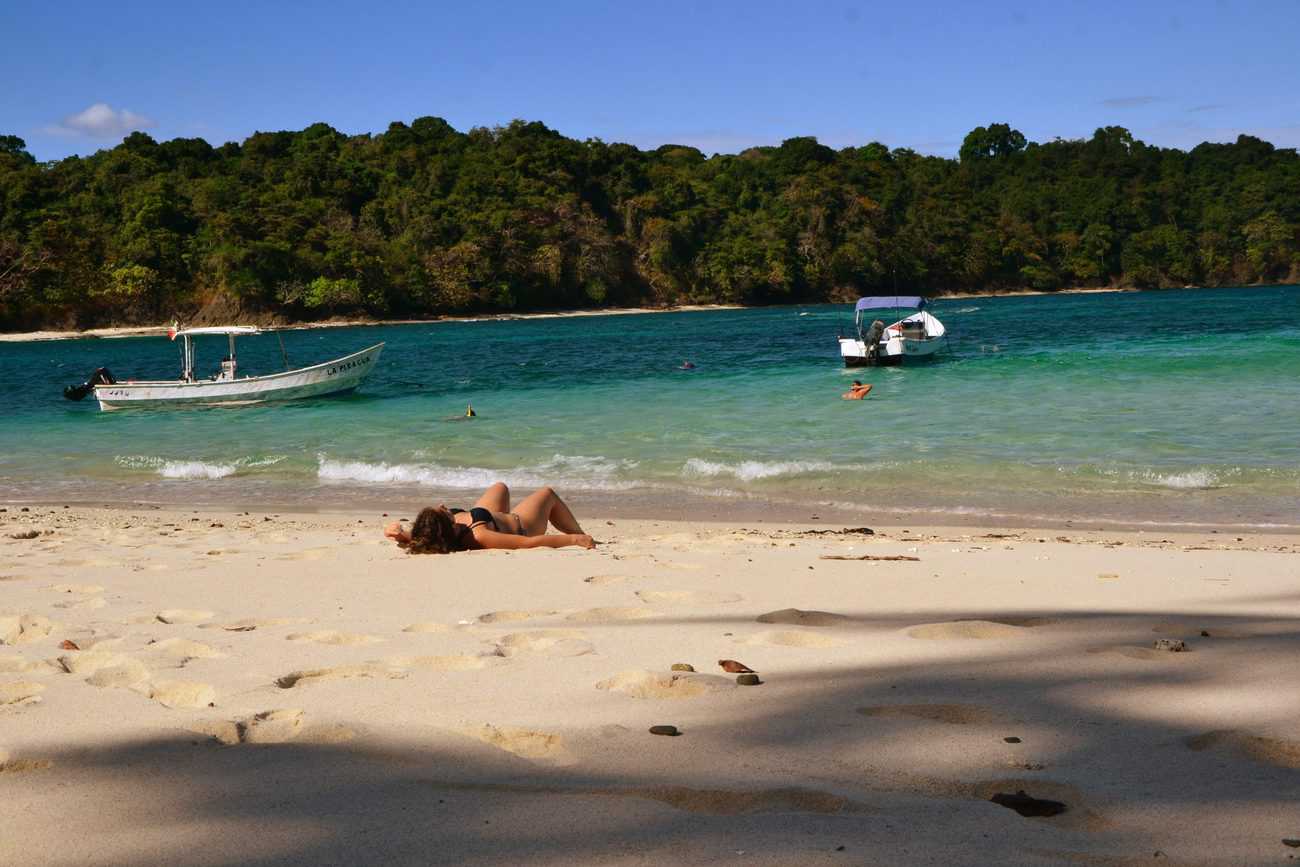
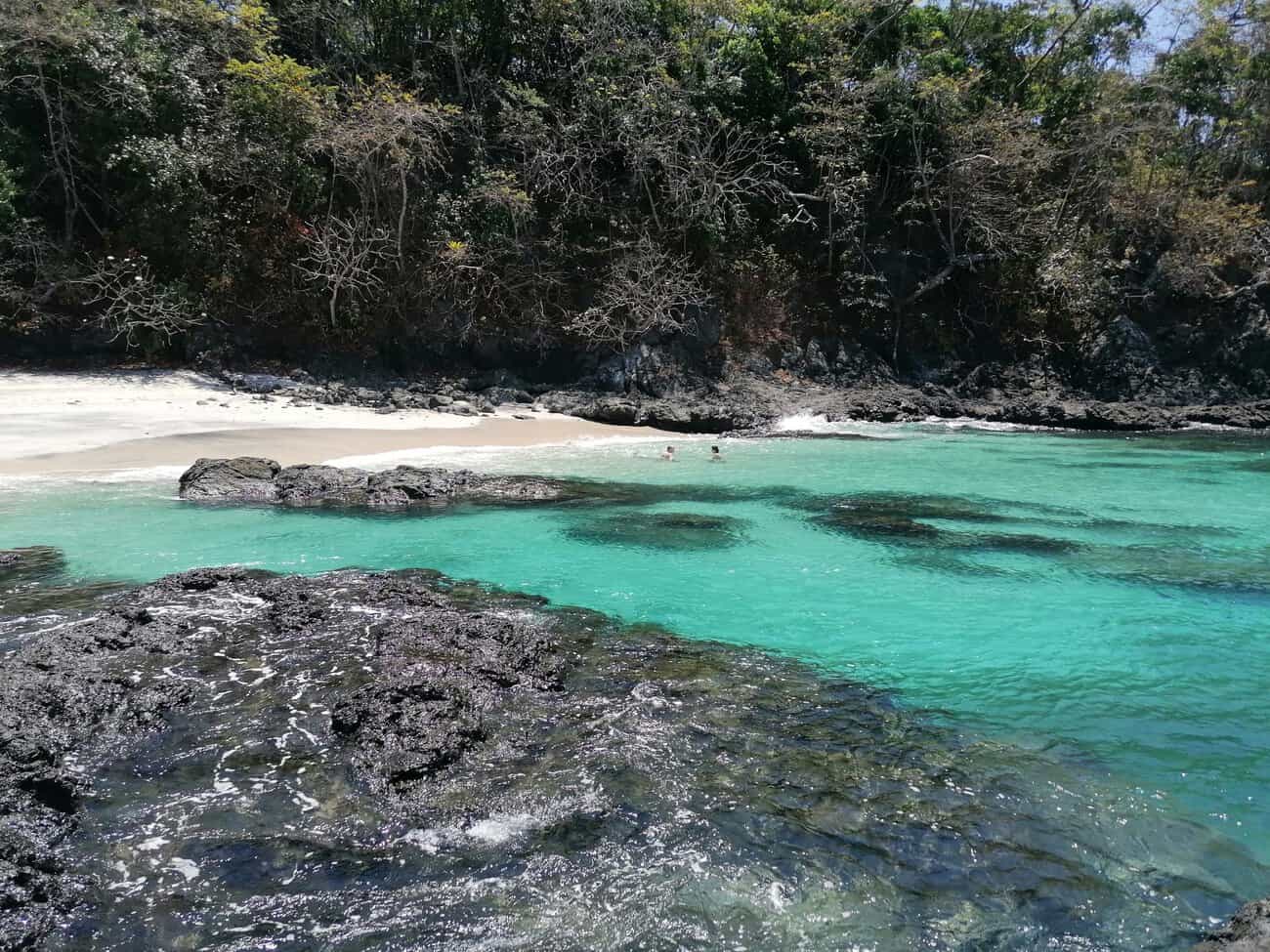
Little white-sand beaches, warm turquoise water and shade under the palms, with no one else around most days.
The boat is only yours. Kids from 7 get their own gear and life jackets, and the day bends around them.
Forest down to the sand, sea turtles on the coral, dolphins in the gulf, and an island most travelers never get to see.
About 30 minutes from Santa Catalina or 1 h 15 min from El Bongo, so you spend your day on the island, not on the water.
We start in the shallow water off Tintorera’s beaches, with your guide right next to you all the way. And if the reef isn’t your thing, swap it for the coast-to-coast trail or a lazy afternoon on a white-sand beach.
It’s the difference between visiting Cebaco and having it to yourselves.
The water toys are included, but they only come aboard if you ask for them when you book. We keep the boat light, so just tell us which ones your group wants.
Cebaco isn’t a national park: its beaches stay wild because the people who live here take care of them. Disposable plastics stay off our boat, and every piece of trash comes back with us to the mainland. We ask you to wear reef-safe sunscreen, and in the water your guide shows you how to enjoy the coral and the sea turtles without touching or chasing them. When a spot is crowded with boats, we move on: better for you and better for the reef. And when you choose lunch with Las Aventureras, your money goes straight to the families of Isla Leones.
Long-sleeve swim shirt, biodegradable sunscreen, water shoes, a light raincoat, and your original ID or passport in a waterproof case: we check every guest’s original documents before we sail, no exceptions. We keep disposable plastics off our boat; bring your reusable water bottle.
Out here, Mother Nature calls the shots. Every morning your captain and guide look at the tides, the wind and the water clarity, then plan the stops with you around what your group feels like: more snorkeling, more beach, the coast-to-coast trail, or simply kicking back and doing nothing at all. Most days we head to Tintorera, at Cebaco’s southern tip; when the wind picks up, we tuck into Playa El Jobo instead. If another boat is already at a spot, we move on, so you get the beach or the reef all to yourselves. Think of the highlights above as a menu, not a fixed script: you’ll always get beach time, snorkeling, lunch your way and your own private boat, just never the exact same route twice.
Set with you. We recommend 6:30 am from El Bongo to make the most of your day and reach Tintorera before the midday heat. Leaving from Santa Catalina, Playa Reina or Palo Seco? We’ll set the time together.
On Isla Leones, in the heart of the Gulf of Montijo, a group of fisherwomen known as Las Aventureras now share the Gulf’s catch with visitors, a new income that helps their families get ahead. Their Adventurer’s Platter comes on a rustic wooden board: lobster in their secret sauce, crispy fried fish, coconut rice, potato salad, sweet plantains and black shells in coconut cream. Almost everything on it is caught or harvested by the community.
Price: US$20 per person
Where: Isla Leones, Gulf of Montijo
Rather stay on the beach? Choose our beach BBQ instead
Ask About Lunch on Isla Leones
No. Snorkeling is about relaxing and discovering, not effort: you float on the surface and watch the reef and the life below. Your guide gives you a short lesson and all the gear, and we carry life jackets for everyone, so even hesitant swimmers can enjoy it. In the water, your guide stays with the group at all times, and the captain follows you closely with the boat.
Snorkeling is not recommended during pregnancy or for people with heart or respiratory conditions or high blood pressure. If in doubt, please check with your doctor before booking.
Most days we head to Tintorera, also called Caleta Caiman, the islet at Cebaco’s southern tip: small white-sand beaches, crystal-clear water and coral right off the shore. When the wind picks up, we move to Playa El Jobo, on the sheltered side of the island. Your captain plans the day with you around the tide and the weather.
Very likely, though nature never comes with a guarantee. Sea turtles feed over the coral around Tintorera, colorful reef fish are there every day, and dolphins often join us on the crossing. From July to October, humpback whale mothers and their calves rest in the calm water around Cebaco and Gobernadora.
The tour runs all year. Visibility is usually best from January to April, with a shorter window in June and July. Dolphins are around all year, and humpback whales from July to October. The rainy season, when the island is at its greenest, is the best time to see the waterfalls that spill over the trails. Want to know more about the island first? Read Cebaco Island, a paradise to discover.
No. Cebaco sits in the buffer zone of Coiba National Park, at the edge of the Gulf of Montijo, inside a special conservation zone. It isn’t managed by MiAmbiente, so there’s no park fee to pay on this tour.
Yes. The boat, the captain and your bilingual guide are for your group only, up to 6 guests, and the price is per boat, not per person: US$650. Because for us, it’s not just where you go, it’s who you go with.
Up to 6 adults, comfortably seated, with room to move around and stretch your legs throughout the trip. Traveling with a bigger group? We can run two boats together.
Your safety comes first, and the weather is the one thing no one can control. Panama is one of the rainiest countries in the world, and even the best forecasts can be wrong. Your captain checks the sea conditions before departure. If they aren’t safe, we move your tour to a new date, usually the next day, at no extra cost. Once the tour has started, nature can still change its mind. If it does, your captain will adjust the route, the timing or both, together with you, to keep everyone safe. In that case, we don’t offer refunds or new dates. For other changes or cancellations, see our booking terms.
Yes. We recommend it from 7 years old: from that age, kids usually enjoy the boat ride and the snorkeling the most. It’s a recommendation based on our experience, not a rule. Younger children are welcome at their parents’ discretion and responsibility. We carry kids’ snorkel gear and life jackets. Coming with little ones? Tell us their ages when you book, and we’ll plan the day around them.
About 1 h 15 min each way from El Bongo, crossing the Gulf of Montijo, or about 30 minutes from Santa Catalina. You can also leave from Playa Reina or the Palo Seco port, for an extra US$100 per boat.
Yes. Santa Catalina is about 30 minutes from Cebaco by boat, the shortest crossing of all. Tell us where you’re staying when you book.
Lunch isn’t included, so you can choose what suits your group. Bring your own, or add a beach barbecue: we grill it on a quiet beach on the island, whichever the tide allows and has no one else around.
Or try the Adventurer’s Platter with Las Aventureras on Isla Leones · $20 per person: lobster, fried fish, coconut rice, plantains and black shells in coconut cream.
The BBQ options include a courtesy drink. Please confirm your choice at least one week before your tour. We keep disposable plastics off our boat, so please pack any food in reusable containers and take your trash back with you. We carry water and ice for everyone: bring a reusable bottle to refill.
A long-sleeve shirt to swim in (it stops sunburn and protects you from anything in the water that might sting), biodegradable sunscreen to protect the corals, shoes you can get wet that don’t slip, a light raincoat, and a reusable water bottle. Always bring your original ID or passport, in a waterproof case: we check every guest’s original documents before we sail, no exceptions. A dry bag for your phone helps too. If you get seasick easily, take your pill before we sail.
Yes. A trail crosses the island from one coast to the other at its narrowest point: about 3 km and around 2 hours, with some very steep stretches. Good shoes and plenty of water, and you’ll see both sides of Cebaco in one walk.
From July to October, when humpback whales arrive from Antarctica to give birth and raise their calves in Panama’s warm water. The calm sea around Cebaco and Gobernadora is one of their favorite places to rest.
Yes, as a separate private fishing trip: inshore fishing around Cebaco Island, from US$1,200 per boat, for up to 4 anglers. Ask us on WhatsApp and we’ll plan it with you.
Yes. Cebaco isn’t a protected area, so pets are allowed on this tour. We don’t really recommend it, though: it’s a long day of sun, sea and boat rides, and some beaches have little shade. If you do bring your dog, tell us when you book and bring water, shade and a leash.
Yes. There are a few places to stay on the island, like Hostal Familiar Cebaco Island and BioCebaco Eco Villas. Tell us where you’re staying and we’ll plan the day with you. For more ideas, read our Cebaco Island guide.
Set with you. We recommend 6:30 am from El Bongo to reach Tintorera before the midday heat. Leaving from Santa Catalina, Playa Reina or Palo Seco? We’ll set the time together.
About 1 h 15 min from El Bongo, past the mangrove islands of the Gulf of Montijo where dolphins often swim alongside, or about 30 minutes from Santa Catalina. From July to October, keep an eye out for humpback whales.
Tintorera’s little white-sand beaches and coral, or Playa El Jobo if the wind picks up. Add the waterfall or the coast-to-coast trail if you feel like it: your captain and guide plan it with you around the tide.
Bring your own lunch in reusable containers, or add our beach barbecue when you book: Premium Beach BBQ, burgers, grilled skewers, or vegetarian and vegan options, from $10 per person. Or make lunch part of the adventure with the Adventurer’s Platter by Las Aventureras on Isla Leones, $20 per person.
We head back mid-afternoon with salty hair, sandy feet and, often, dolphins for company on the way. And Cebaco always leaves you an excuse to come back, whether it’s the humpback whales from July to October or the trail you didn’t have time for.
Conditions change with the sea and the tide, so your guide picks the spots that are safe and fun for your group each day. These are our favorites.
Type: Islet with small white-sand beaches and coral
Depth: Shallow
Current: Varies with the tide
You’ll see: Sea turtles, colorful reef fish and, now and then, a white-tip reef shark or a young hammerhead
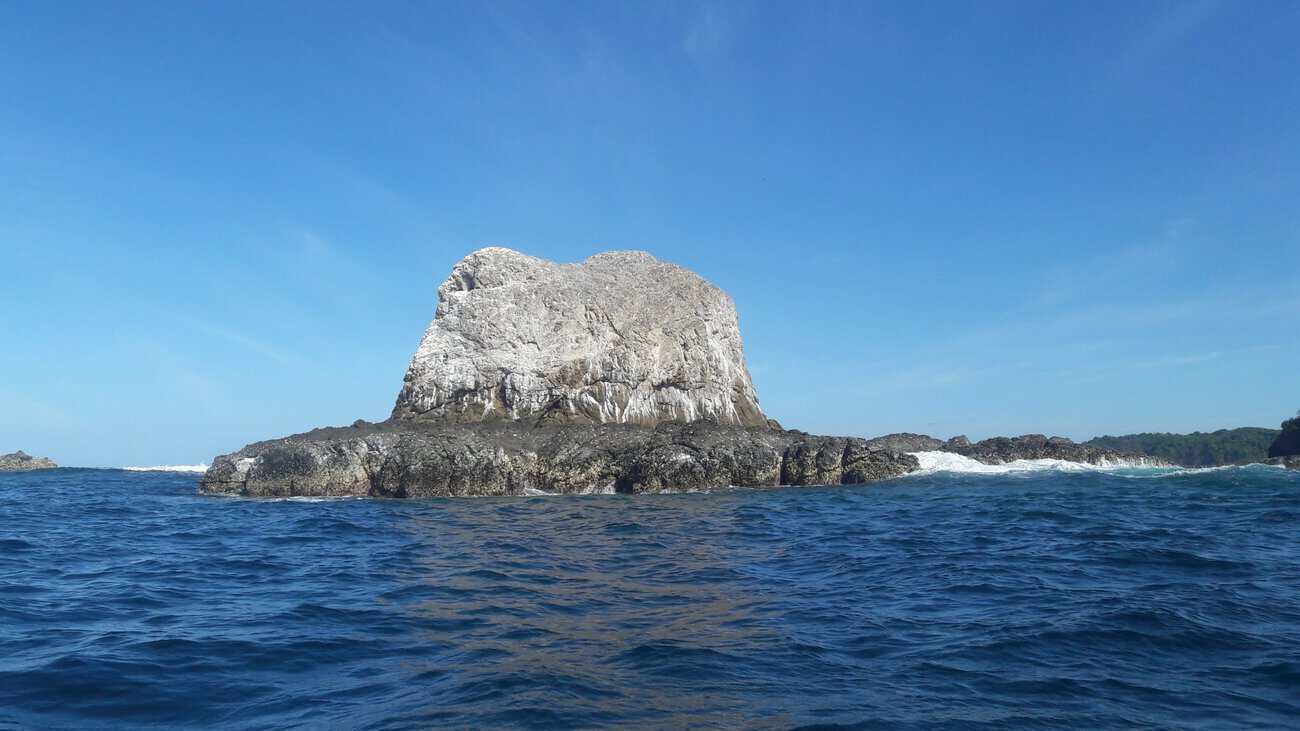
Type: An underwater mountain; only its tip shows above the sea, shaped like a hat
Depth: Open water
Current: Varies with the sea
You’ll see: One of Cebaco’s most curious landmarks, the reef life gathered around it, and a favorite fishing spot for tuna, snapper, wahoo and mahi-mahi
Type: Sheltered dark-sand beach
Best for: Swimming and relaxing when the wind picks up
You’ll see: The quiet side of Cebaco, with the forest right down to the sand
Coast to coast at the island’s narrowest point, from the school past El Centro and the old airstrip to Playa Grande. Steep climb at the start
Empty beaches, low cliffs, palms and almond trees, brown pelicans offshore and iguanas rustling in the leaves
From Platanares to the beaches of El Balso, Chaperno and Divorcio, passing the wildlife reserve of Divorcio
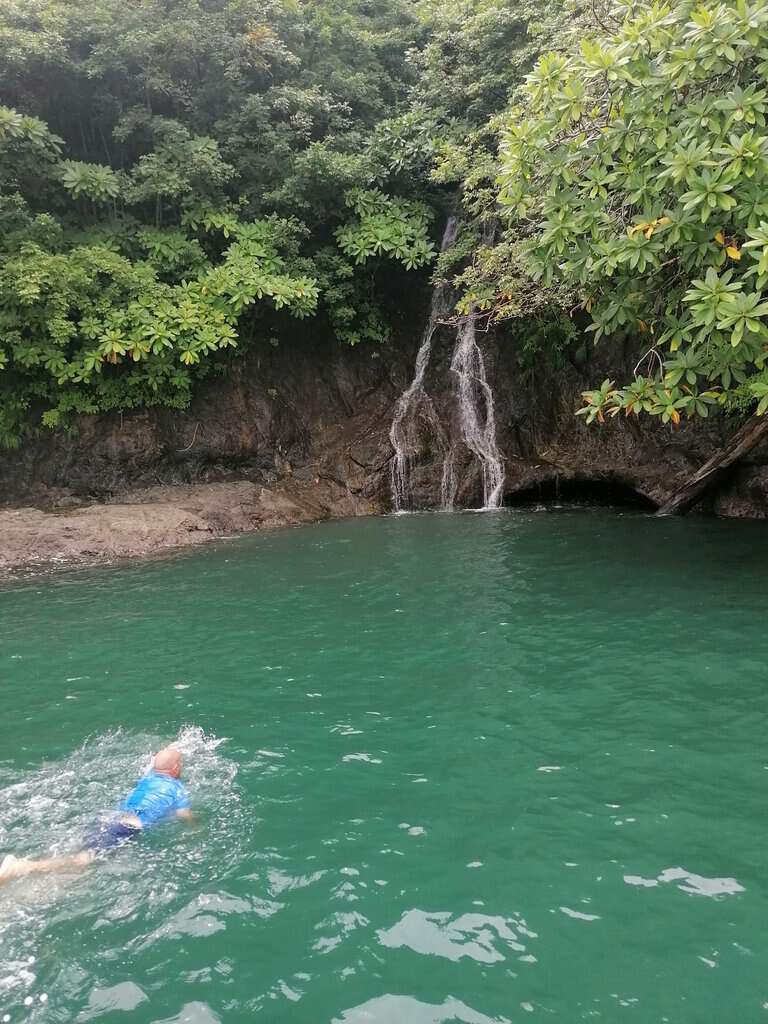
A freshwater waterfall in Cebaco’s forest, reached by boat. Best in the rainy season, when more waterfalls spill over the trails