

Cebaco & Mariato · 2 Days, 1 NightAll-Inclusive · Up to 4 Anglers
Day trippers spend sunrise riding to the fishing grounds. You’ll spend it with a line in the water. Two days, one night on the island, and every meal covered.
Two full fishing days, one night on an island and every meal taken care of: this is our all-inclusive fishing package for Cebaco and the Mariato coast.
Day one starts at our home dock in El Bongo, next to Puerto Mutis, or in Santa Catalina. You fish until the afternoon and finish at your room on Cebaco or Gobernadora, with fried fish and patacones waiting. Day two starts with an early breakfast and a short ride to the fishing grounds, and you keep fishing until past noon before heading back.
Where exactly? That depends on the season, the latest reports and the experience of our captains. A private boat for up to 4 anglers, a skipper plus a fishing captain to help everyone aboard, and live bait we catch on the way.
A one-day trip has a hidden cost: the ride. From El Bongo to Cebaco is about an hour and a quarter, and that hour usually lands right on the best light of the morning.
Stay the night and the math changes. On day two you leave from the island, minutes from the marks, so the first cast happens at dawn instead of halfway through the morning. You also get two tide changes instead of one, and two chances to be in the right place when the bite turns on.
Same boat, same crew, twice the fishing window.
Nine fish worth knowing before you go. No promises: the sea decides, the captain reads it.
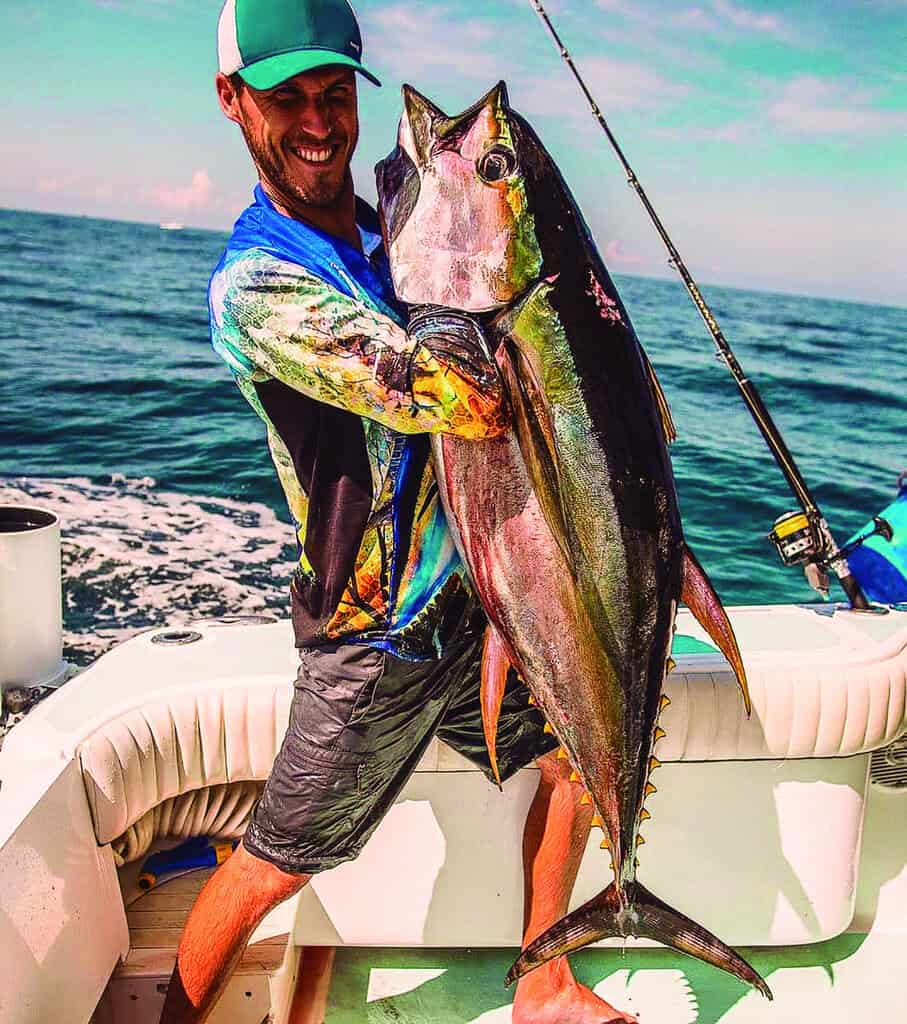
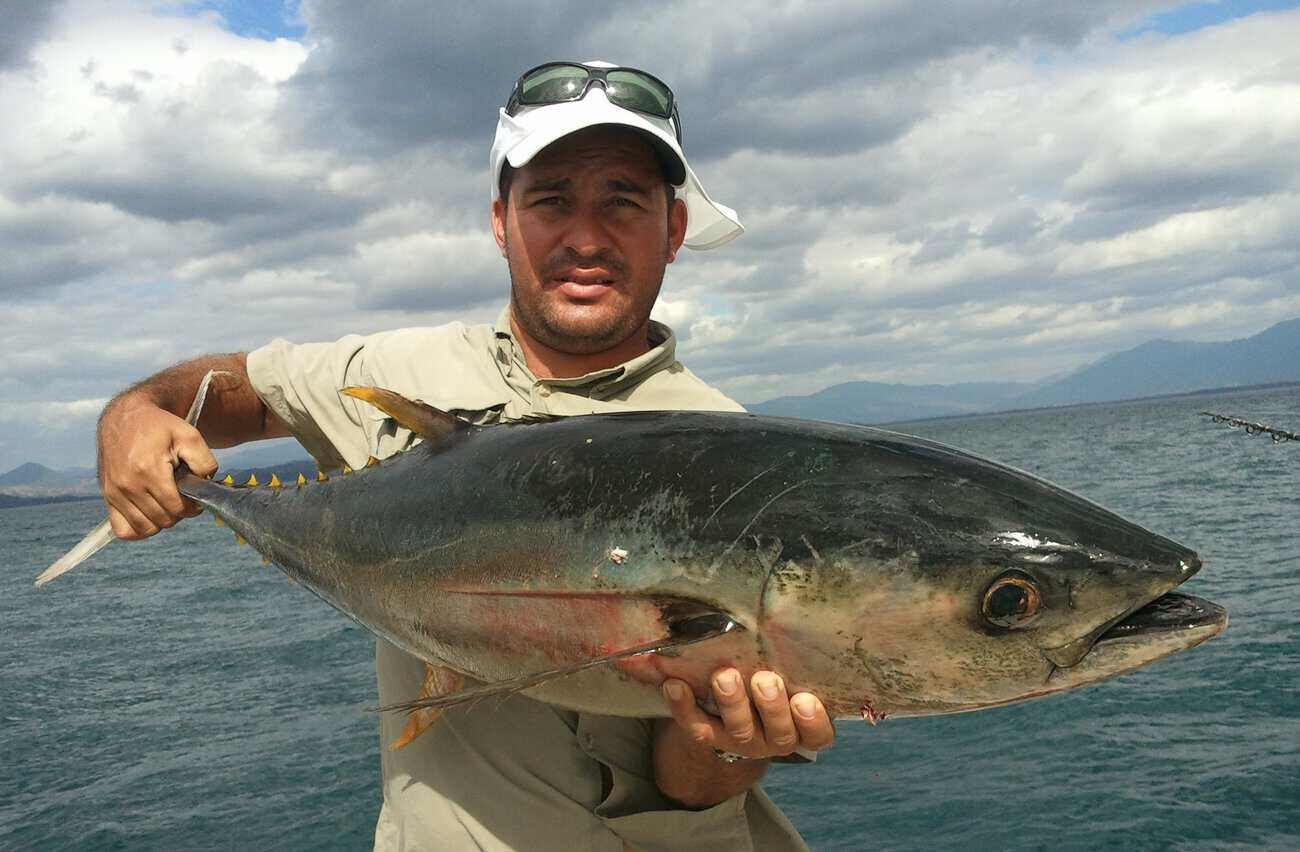
Tagged yellowfin have dived below 1,000 m (3,300 ft), into water colder than 5 °C (41 °F). The one on your line just came up from somewhere very dark.
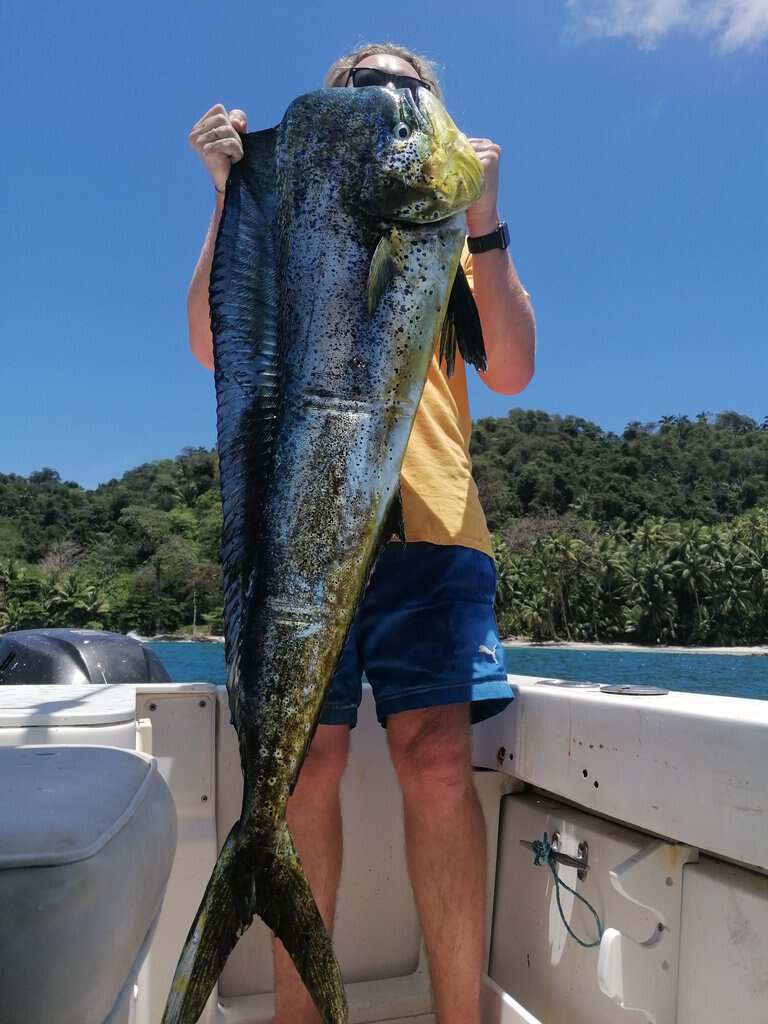
Wild mahi spawn at night, mostly around the new moon and deeper than they usually swim. By morning, they’re back near the surface and hungry.
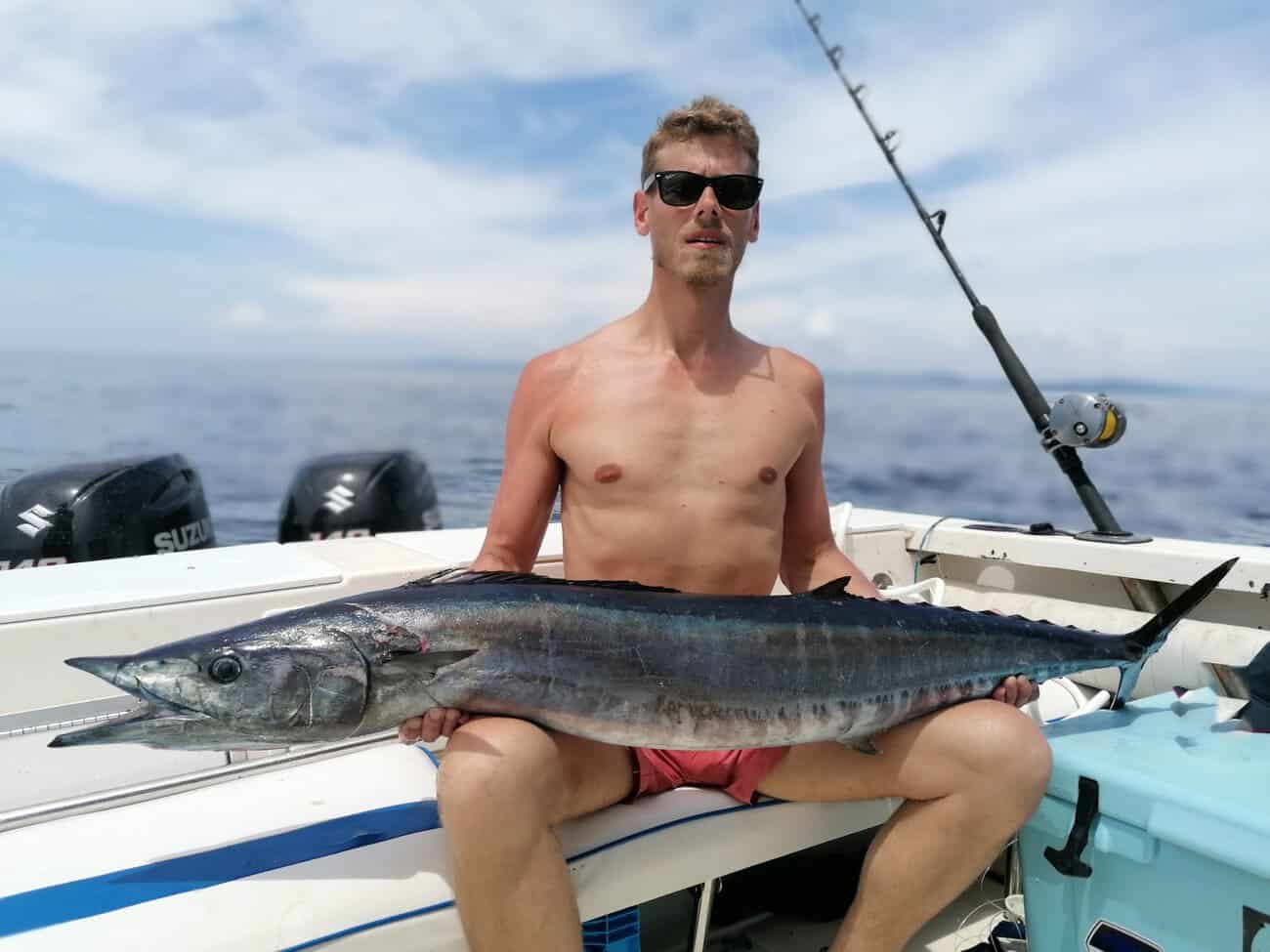
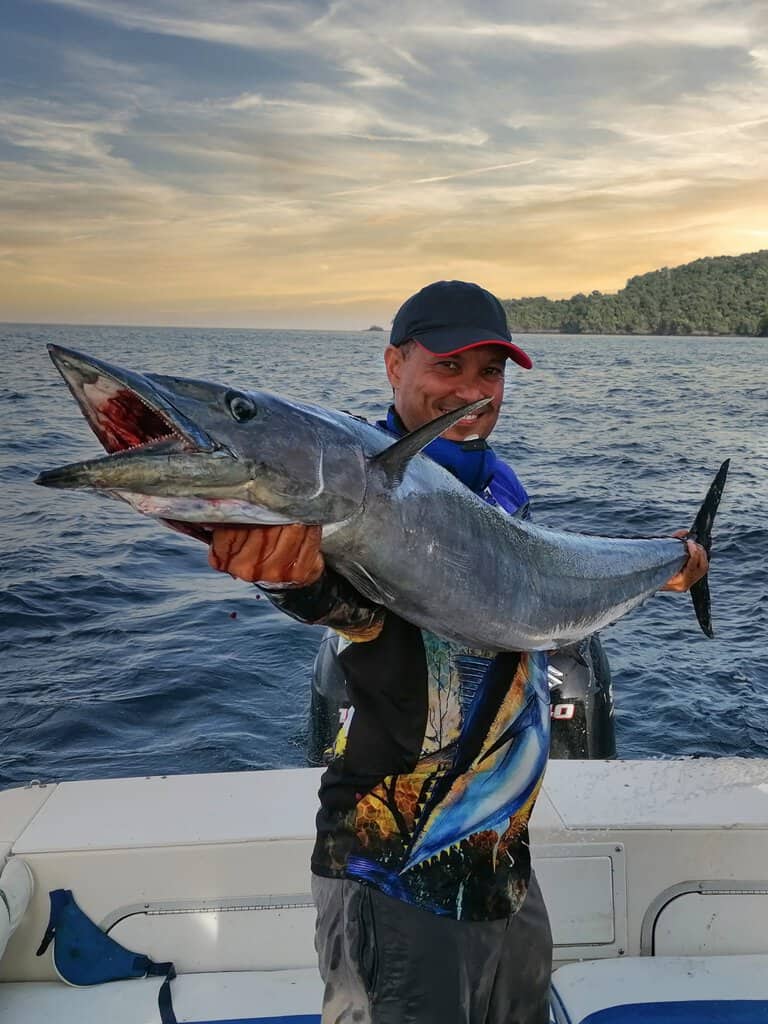
The heaviest wahoo on record weighed 83.5 kg (184 lb), caught off Baja California in 2005. Its 24 to 30 cobalt-blue bars fade within minutes after death: take the photo while it’s still in the water.
Also called longfin yellowtail, it’s known for swimming up to check out divers’ bubbles. Don’t let the curiosity fool you: the world record is 136 lb (Japan, 2020).
In a telemetry study, all seven roosterfish tracked after being caught on rod and reel survived. That’s why we release every one: it works.
It grows to about 95 cm and only starts breeding around 38 cm. Letting the small ones go is how there are still big ones on the reef.
There are three cubera species in the world: Atlantic, African and Pacific. Ours is the smallest of the three, and it still reaches 35 kg. Every one goes back.
Aguja Reef, between Cebaco and Mariato, is known for black marlin: one crew released up to ten in a single day. A chance, never a promise, and always released.
Sailfish hunt in groups that form, break up and form again, and they attack the bait ball one at a time, almost like taking turns.
Only have one day? See our Cebaco & Mariato day trip, with a beach stop at Tintorera.
A family-run guesthouse on Cebaco, close to the fishing grounds. It’s our favorite, so we book it as early as possible.
Eco villas on Cebaco for those who want a little extra comfort, for $100 more per boat.
Room options: one room for 4 ($1,900) or two rooms ($1,999), plus $100 at the eco villas.
On Gobernadora, a small fishing village about 3 km from Cebaco. We stay there when there’s no room on Cebaco.
When the lines come in, the island slows down. Dinner is fried fish with patacones and salad, sashimi or whatever the day gave us. Gobernadora is a fishing village of a few hundred people, about 3 km from Cebaco, and the seat of the district that includes Cebaco itself.
From July to October, humpback whale mothers and calves rest in the calm water between Cebaco and Gobernadora, and sea turtles nest on Cebaco beaches like El Jobo and Playa Grande. Breakfast is before sunrise: the fish don’t wait.
There’s no fixed route, and that’s on purpose.
Curious about techniques? Read our guide to sport fishing in Panama.
All-inclusive means no alcohol; you’re welcome to bring your own.
Everyone who fishes in Panama needs a sport fishing license, unless they fish with a licensed operator like us: our captains’ tourism license covers your temporary license. We release most fish and every threatened species; roosterfish, cubera and billfish always go back.
A change of clothes, sandals, reef-safe sunscreen, sun-protective clothing, a light rain jacket and your original passport. More tips in what to wear and bring on a boat tour.
If the captain cancels before departure for safety, we reschedule, usually for the next day. Once on the island, the crew adjusts the plan to the weather.
Day 1: El Bongo (Club Nautico de Veraguas, next to Puerto Mutis) or Santa Catalina, or another port that suits you.
Day 2: straight from Cebaco, the closest point to the fishing grounds.
Day 1: 6:00 am from El Bongo or 7:00 am from Santa Catalina; fishing until the afternoon.
Day 2: breakfast before sunrise, fishing until past noon, then back to your port.
Our Cebaco & Mariato day trip packs the same coast into a single day, with a beach stop at Tintorera. Want a national park instead? See our Coiba fishing day trip.
Private boat with skipper and fishing captain, one night’s room on Cebaco or Gobernadora, light lunches, dinner and an early breakfast, soft drinks, water, ice, complete gear, lures, live bait caught on the way and accident insurance. Alcohol and tips are not included.
At Hostal Familiar Cebaco Island, our favorite, or at Las Tres Islas on Gobernadora, depending on availability. For a little extra comfort, BioCebaco Eco Villas on Cebaco costs $100 more per boat. Book early if you want Cebaco.
One room for 4 costs $1,900 per boat; two rooms cost $1,999. Staying at BioCebaco Eco Villas adds $100.
It depends on the season, the latest reports and our captains’ experience. Some trips split the coasts; others stay where the fish are biting.
Breakfast is before sunrise and we leave straight from Cebaco, the closest point to the fishing grounds. We fish until past noon, then head back.
Yes, if you can: on day two you skip the ride from the mainland, fish at first light and get a second tide change. It’s the closest thing to doubling your fishing time.
A light bag: a change of clothes, sandals, sunscreen, sun-protective clothing, a rain jacket and your original passport.
Yes. Up to 4 anglers fish at a time, and anyone can take a turn: besides the skipper, a fishing captain comes along to help.
It fishes all year. Mahi come with the rains (May to mid-December), wahoo peak July to November, and sailfish and black marlin show up offshore in the first half of the year.
If the captain cancels before departure for safety, we reschedule, usually for the next day. Once on the island, the crew adjusts the plan to the weather.
Departure at 6:00 am from El Bongo or 7:00 am from Santa Catalina. Live bait on the way, then the first marks of the day.
Light lunch on board and more fishing until the afternoon. Check in on Cebaco or Gobernadora; dinner is the catch of the day.
Breakfast before sunrise and out from Cebaco, minutes from the fishing grounds.
Fishing until past noon, then back to your port.
A mix of island reefs and offshore seamounts on both sides of Cebaco. The captain chooses each morning.
The tip of an underwater mountain off Cebaco: a reliable first stop for tuna, snapper and wahoo.
Flat on top, blue water around the edges: groupers and snappers below, jacks and tuna passing by.
A small seamount between Cebaco and Mariato, ringed by bonito all year, where black marlin come to feed.
Visible only at low tide or with big swell; the broken bottom holds bait, cubera and wahoo.
A point on the way to Punta Mariato that anglers describe as one of the most consistent on this coast.
The southernmost point of mainland North America, with a reef that climbs from 1,500 to about 120 feet close to shore.