

Cebaco Island · Mariato CoastPrivate Boat · Up to 4 Anglers
Amberjack, snapper and tuna bite here all year. The roosterfish? That one you have to earn. Short runs, rocky points, an empty coastline and a beach waiting for lunch.
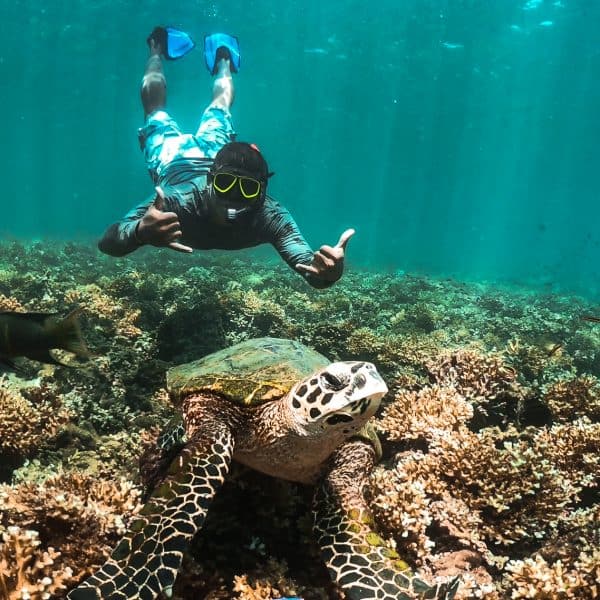
Two coasts, one private boat: the reefs of Cebaco Island and the empty points of the Mariato coast, with inshore and offshore fishing in the same day.
Cebaco is the easy-going option: short runs, popping and jigging on reefs close to the island, a run offshore if the tuna show up, and a beach stop for lunch. Ideal for families, beginners and mixed groups.
The Mariato coast is the wild one: remote rocky points and offshore reefs on what visiting anglers call Panama’s “Lost Coast”. It’s for anglers who want wilder water and bigger cubera.
Cebaco is Panama’s third-largest island, sitting right at the mouth of the Gulf of Montijo. Its south coast is a string of rocky points and reefs, and that’s where we spend most of the morning casting poppers and stickbaits.
The star of the show is Piedra del Sombrero, an underwater mountain that only shows its very tip above the water, shaped like a hat. Around it: tuna, snapper, mahi and some of our best wahoo fishing. Just beyond Sombrero sits Bajo Cagado, a flat-topped seamount covered in coral: snapper and grouper on top, schools of jacks and tuna along its blue edges.
If the birds start working offshore, we run about 10 miles past Sombrero and chase the tuna in blue water. Leaving from El Bongo? You get a bonus: an hour across the Gulf of Montijo, between mangroves, before the first cast.
The regulars first, then the trophy.
Bring your back. Amberjacks live around rocky reefs and the water above them, from 15 to 110 m deep, and they feed day and night. Pound for pound, few fish pull harder on a jig.
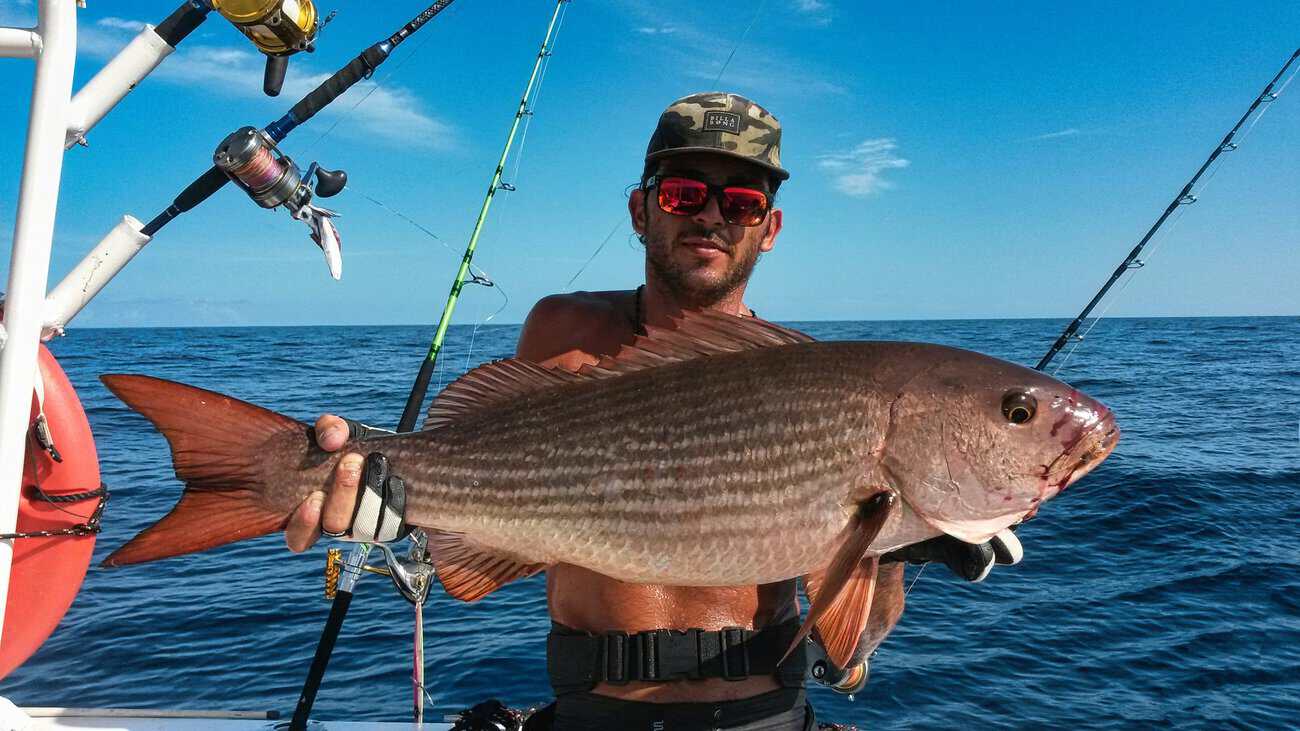
Young red snappers school through estuaries and turn into loners hiding in rock caves as adults. Baby cuberas grow up in mangrove estuaries and river mouths, just like the Gulf of Montijo, before moving to the rocks. Every cubera goes back.
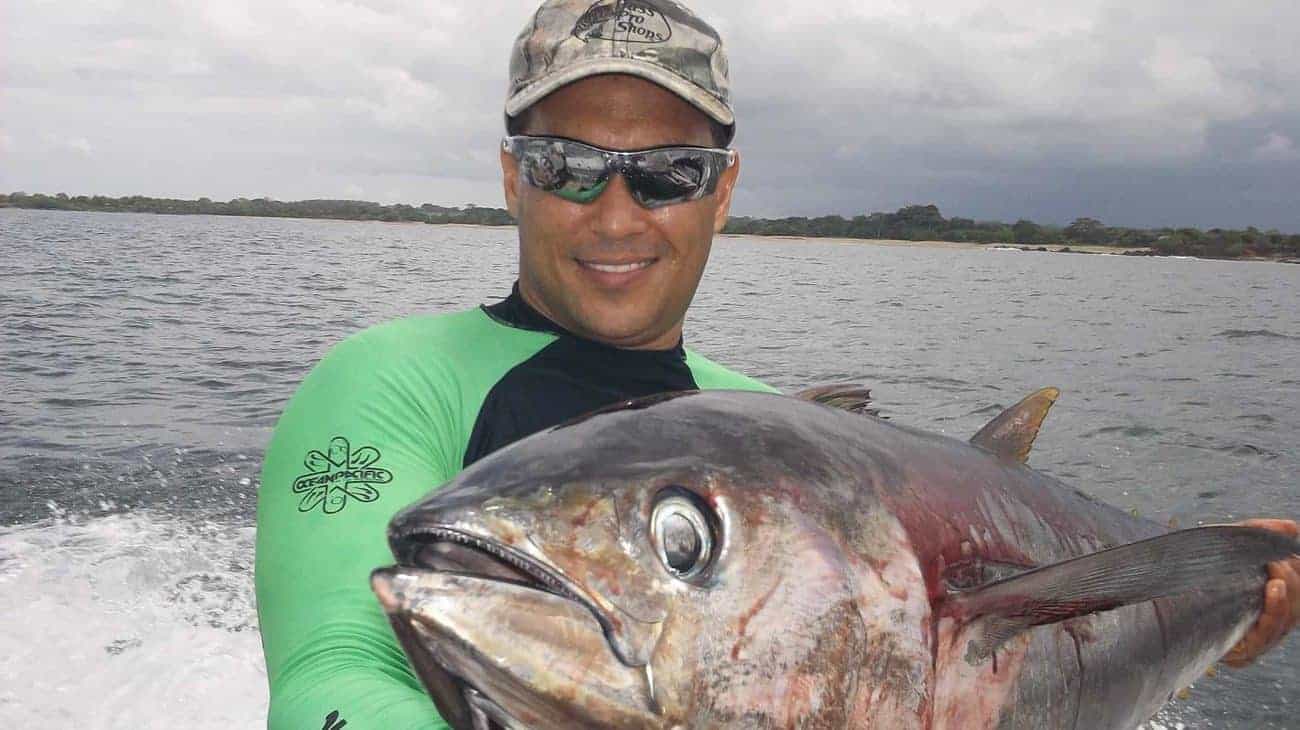
Small to mid-size tuna are around most of the year. Tuna are partly warm-blooded: a built-in heat exchanger keeps their swimming muscles warmer than the water, which can double their power. You’ll feel it at Piedra del Sombrero.
In Hawaii it’s called ono, “good to eat.” The story goes that “wahoo” comes from an old spelling of Oahu. Mind the teeth: triangular, serrated and sharp. Look for it at Piedra del Sombrero and Punta Mariato.
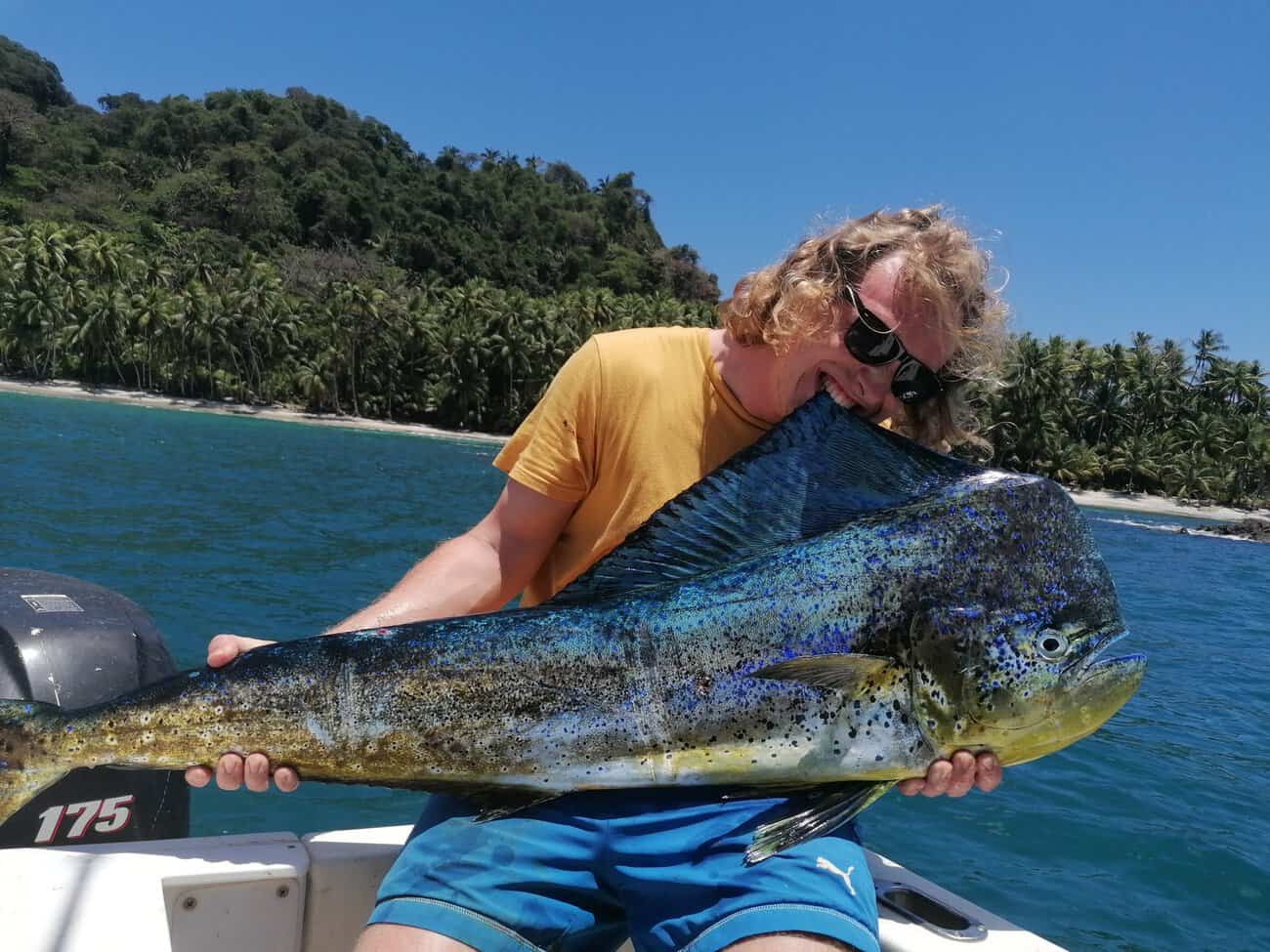
Mahi change color with cells wired to their nervous system: electric blue, green and gold while they fight, fading to silver once out of the water. Hooked, they leap again and again. Males (bulls) have a square forehead; females, a rounded one.
As babies, they trail fin threads longer than their own body, and scientists think the look may pass for a jellyfish and keep predators away. The threads disappear as they grow into silver slabs that fight sideways.
Jacks run up estuaries and even rivers, can live 15 years, and until 2007 were thought to be the same fish as the Atlantic jack.
Rows of orange spots and knife-like teeth. It bites close to shore: a perfect first fish for kids and beginners.
The hardest fish on this coast, and that’s exactly why anglers chase it. That “rooster comb” is seven long dorsal spines. A satellite-tag study done in Panama found roosterfish spend almost all their time in the top 10 to 20 meters, hunting from dawn to dusk. No promises, only chances. If one hits your popper, the photo is yours and the fish goes back.
Every season is different; your captain will tell you what’s biting the week you come.
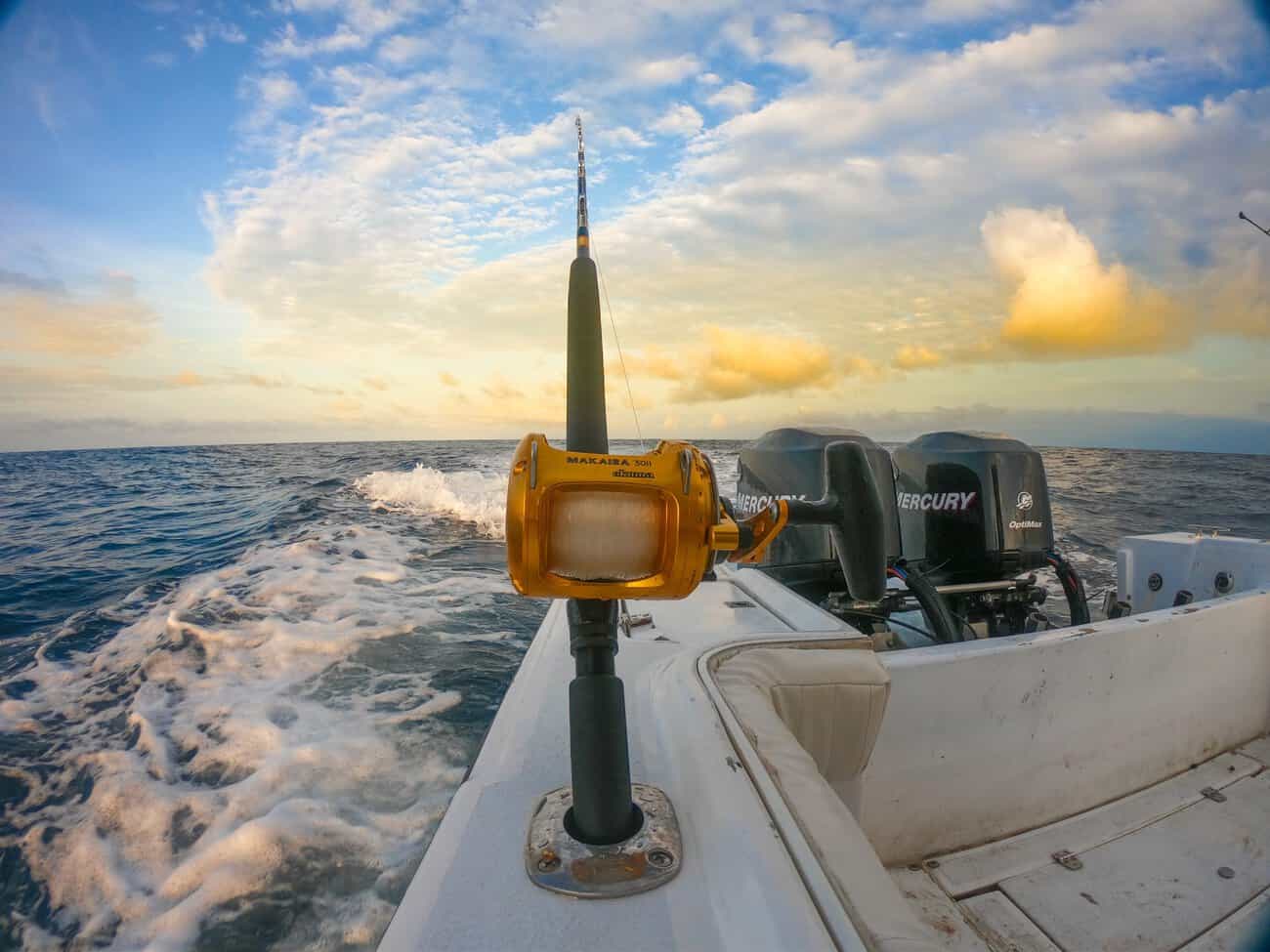
Style: popping and jigging on reefs close to the island, run offshore if the tuna show up.
Highlights: Piedra del Sombrero, Bajo Cagado, the south coast, 10 miles beyond Sombrero.
Best for: families, beginners, mixed groups.
Style: remote rocky points and offshore reefs on Panama’s “Lost Coast”.
Highlights: Punta Mariato, Islote Roncador, Aguja Reef, Baja del Gringo.
Best for: anglers who want wilder water and bigger cubera.
Many of the fish you’ll catch today grew up in the mangroves. Cubera snapper and red snapper spend their first months in estuaries and river mouths, then move out to the reefs.
Cebaco sits at the entrance of the Gulf of Montijo, the largest Ramsar wetland in Panama and home to more than 10% of the country’s mangroves. Protect the mangroves, and you protect the fishing.
This is the fishing day for groups where not everyone is an angler yet. The boat seats 7 adults and up to 4 fish at once, and anyone can take a turn: besides the skipper, a fishing captain comes along to help. Kids from 12 can fish too.
At midday we stop at Tintorera, an islet off Cebaco’s south tip with white sand and clear water (if the sea allows). Choose your lunch:
Want the beach without the rods? See our private Cebaco Island tour.
Lunch: wrap ($10) or beach BBQ from our grill menu.
Fishing license (ARAP): everyone who fishes in Panama needs one, unless they fish with a licensed operator like us; our captains’ tourism license covers your temporary license, so there’s no paperwork for you. Park fees: none in Cebaco, and none for now at Mariato. We release most fish and every threatened species; roosterfish and cubera always go back. More about popping, jigging and trolling in our guide to sport fishing in Panama.
Reef-safe sunscreen, clothes that cover you from sun or rain, a swimsuit for the beach stop and your original passport. More tips in what to wear and bring on a boat tour.
The final route depends on tides, weather and where the fish are that day. If the captain cancels before departure for safety, we reschedule, usually for the next day.
El Bongo: our home dock at the Club Nautico de Veraguas, next to Puerto Mutis. About 1 h 15 min to Cebaco, crossing the mangroves of the Gulf of Montijo.
Santa Catalina: about 30 minutes to Cebaco.
Another port works better for you? Just ask.
We recommend 6:30 am, and we agree on the exact time with you. We’re usually back around 4:00 pm.
The tide turns, the amberjacks start biting, and it’s time to go home. Unless you stay. Our two-day Cebaco & Mariato fishing trip includes the night on Cebaco or Gobernadora, meals and soft drinks, so day two starts at the fishing spot instead of the dock. From $1,900. See the two-day trip →
Want Coiba instead? See our Coiba fishing day trip.
Cebaco is Panama’s third-largest island, at the mouth of the Gulf of Montijo in Veraguas. We pick you up at El Bongo (about 1 h 15 min by boat), Santa Catalina (about 30 min) or another port that suits you.
An underwater mountain off Cebaco that only shows its tip above the water, shaped like a hat. It’s one of our best spots for tuna, snapper, wahoo and mahi.
Cebaco ($1,200) is ideal for families, beginners and popping close to the island. The Mariato coast ($1,500) is wilder and more remote, with points and reefs like Punta Mariato, Islote Roncador and Aguja Reef.
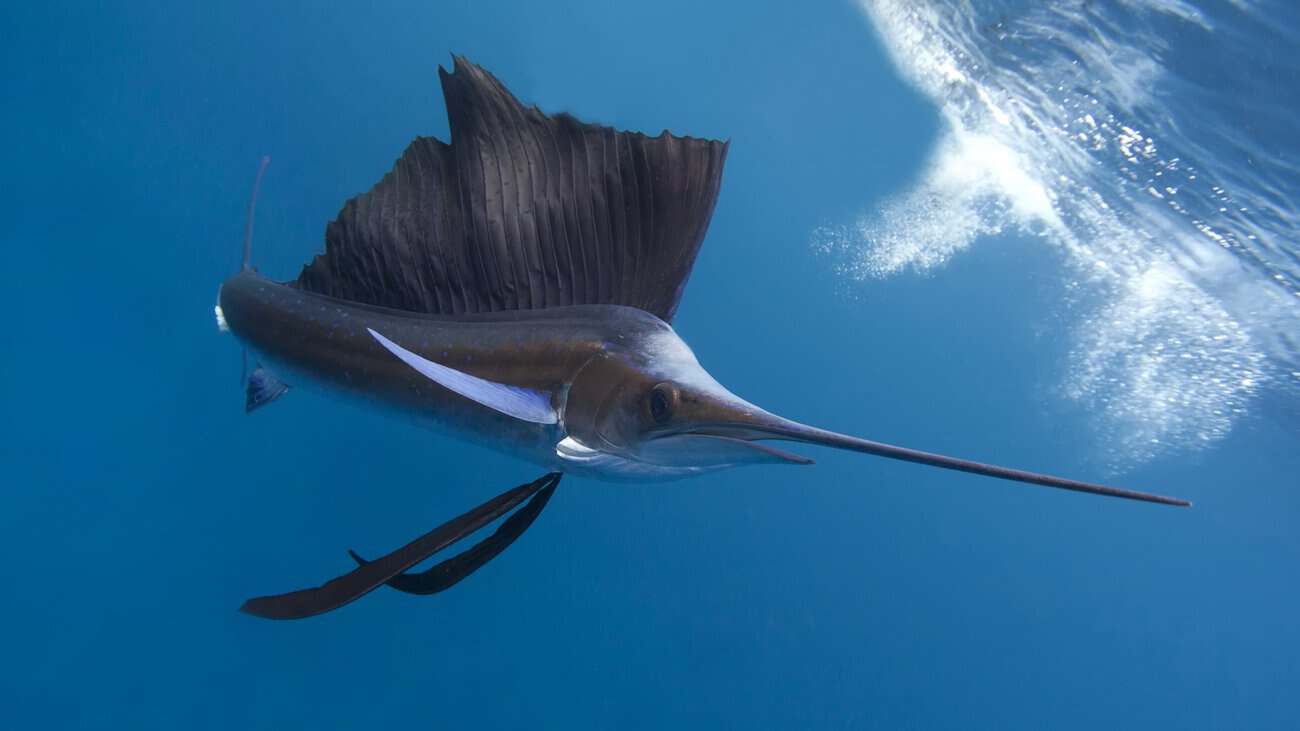
Amberjack, snapper and small to mid-size yellowfin bite all year. Wahoo is a regular at Piedra del Sombrero and Punta Mariato, best from July to November, and sailfish show up offshore from January to August. Mahi comes with the rains, from May to mid-December, and Aguja Reef holds black marlin from December to August. Roosterfish are possible too, but they’re the hardest fish on this coast: a trophy, not a promise.
Yes. Runs are short, the crew teaches you, and sierra, snapper and jacks bite close to shore. Minimum age is 12.
Everyone who fishes in Panama needs a sport fishing license, unless they fish with a licensed operator like us: our captains’ tourism license covers our guests’ temporary licenses, so there’s no paperwork for you. There are no park fees in Cebaco, and for now none at Mariato.
Yes. We stop at Tintorera at midday (if the sea allows); choose a wrap ($10) or a BBQ from our grill menu, ordered at least a week ahead.
We release most of our catch and every threatened species; roosterfish and cubera always go back. Your captain will tell you what can be kept for dinner.
Yes, with our two-day Cebaco & Mariato fishing trip, all inclusive, with a room on Cebaco or Gobernadora.
If the captain cancels before departure for safety, we reschedule, usually for the next day.
About 1 h 15 min from El Bongo to Cebaco, or about 30 min from Santa Catalina. The exact time is agreed with you.
Popping along Cebaco’s south coast, Piedra del Sombrero and Bajo Cagado, or the run to Mariato’s points and reefs.
Swim, rest and lunch: a wrap ($10) or a BBQ from our grill menu.
More casting, jigging or trolling, depending on tides and weather. Back at your port around 4:00 pm.
Visiting anglers call the stretch from Punta Mariato to Jicarita “the Lost Coast,” because you can spend days out there without seeing another sport fishing boat. Mariato is more than fishing, too: read more about Mariato’s coast.
An underwater mountain that only shows its tip, shaped like a hat. Tuna, snapper, mahi and some of our best wahoo.
A flat-topped seamount covered in coral: snapper and grouper on top, jacks and tuna along its blue edges.
A string of rocky points and reefs, perfect for poppers and stickbaits. About 10 miles out, blue water for tuna.
The southernmost point of mainland North America, inside Cerro Hoya National Park. Less than half a mile offshore, the bottom climbs from 1,500 feet to about 120 feet: good wahoo, plus amberjack, cubera and snapper.
A rock that only shows at low tide or in a big swell. The broken bottom around it holds bait, and the bait brings wahoo and big cubera.
About 14 miles from Cebaco, a small seamount rising from over 300 feet to around 120 feet, with bonito all year. Cubera, amberjack, grouper and black marlin; Aguja is counted among Panama’s black marlin hot spots, best from December to August.
A seamount with a flat top of rock, coral and sand and steeper edges. The currents pile life onto it: schools of snapper and grunts, and big solitary groupers.