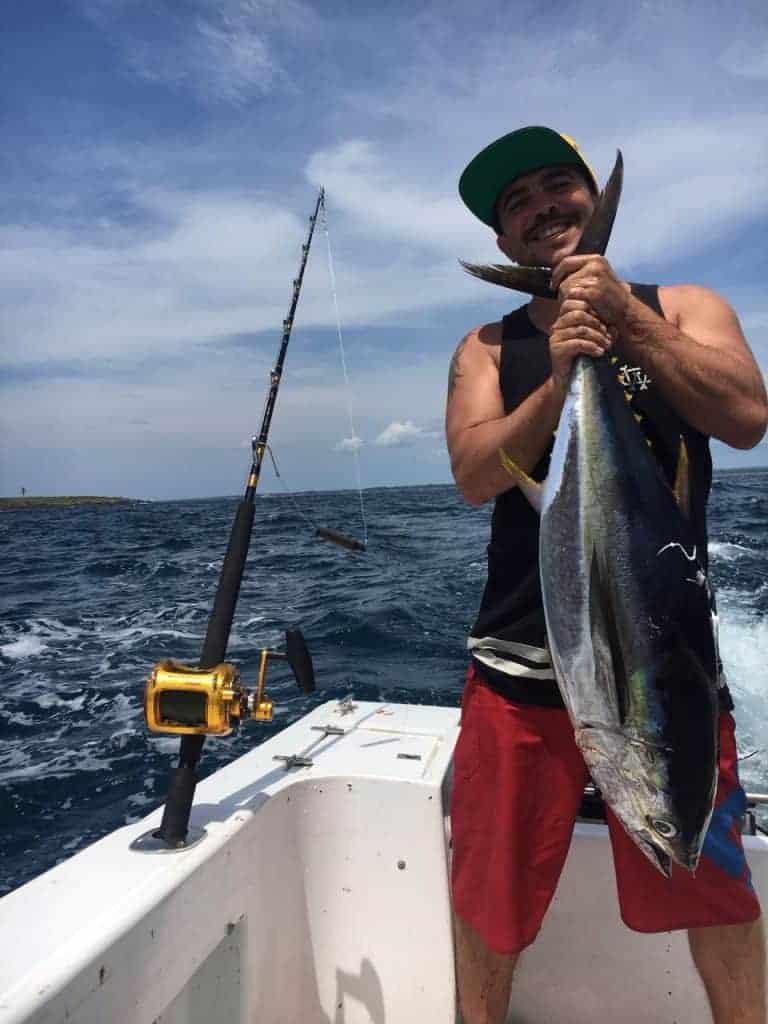


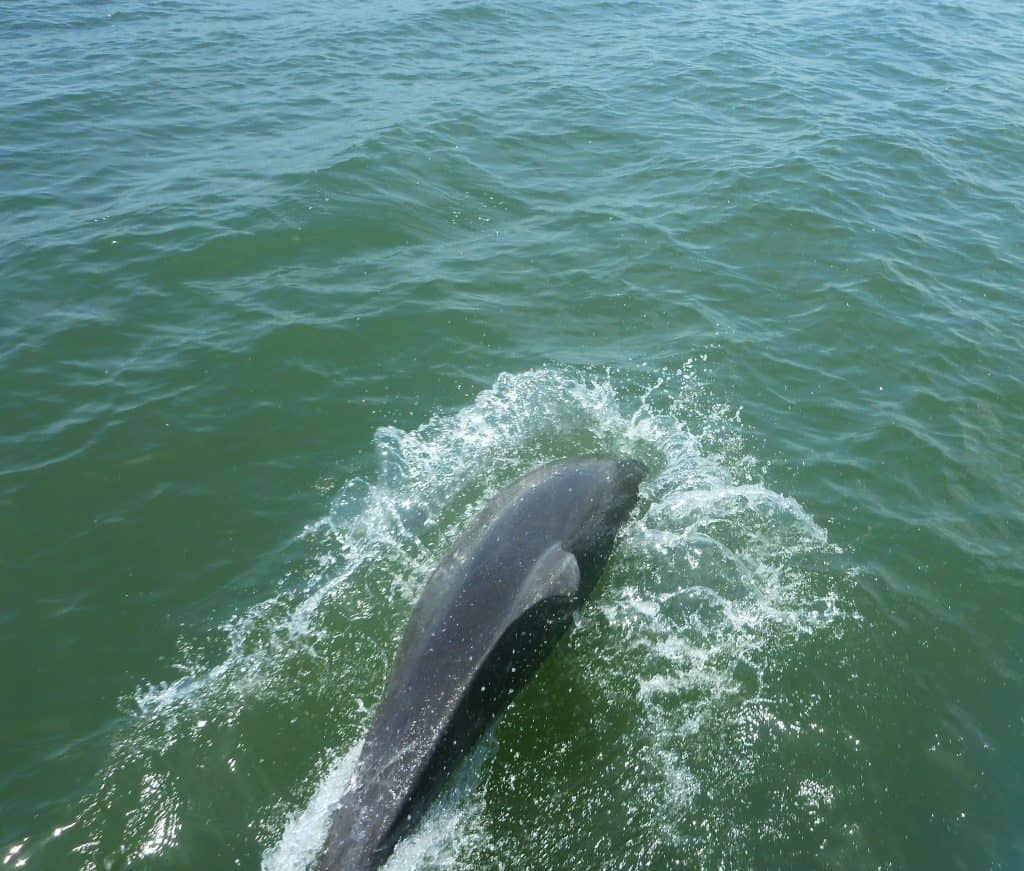
The first sign isn’t a fish. It’s a pod of dolphins cutting across the bow, with frigatebirds circling low over them. The captain turns to follow, and someone asks why. “Because the tuna are underneath,” he says.
In this corner of the Pacific, that’s not a hunch. It’s one of the strangest partnerships in the ocean, and it’s how a lot of yellowfin days in Panama begin.
Meet the Yellowfin: Built for Speed, Warm on the Inside
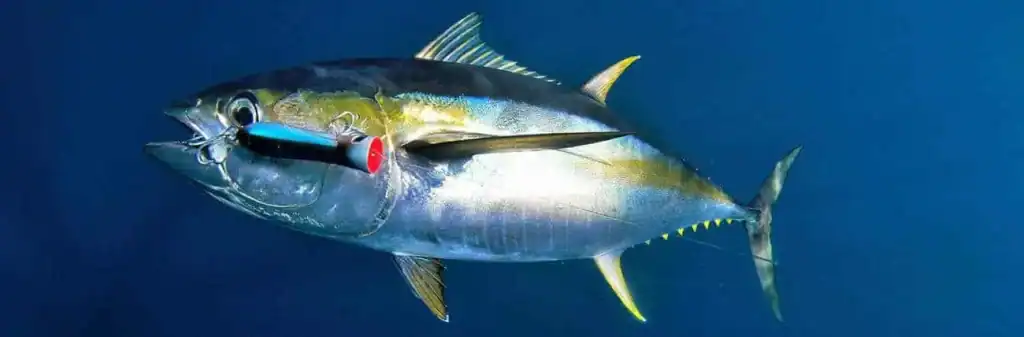
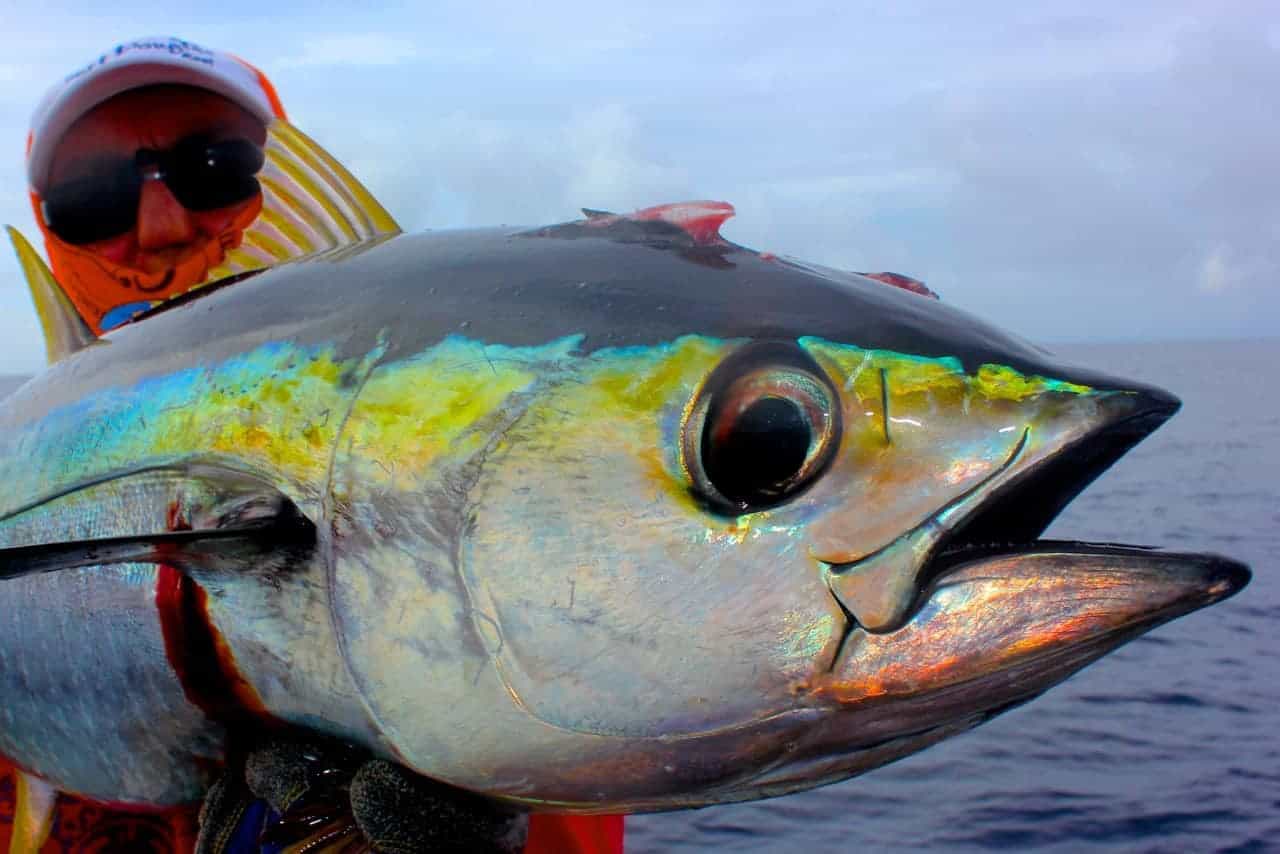
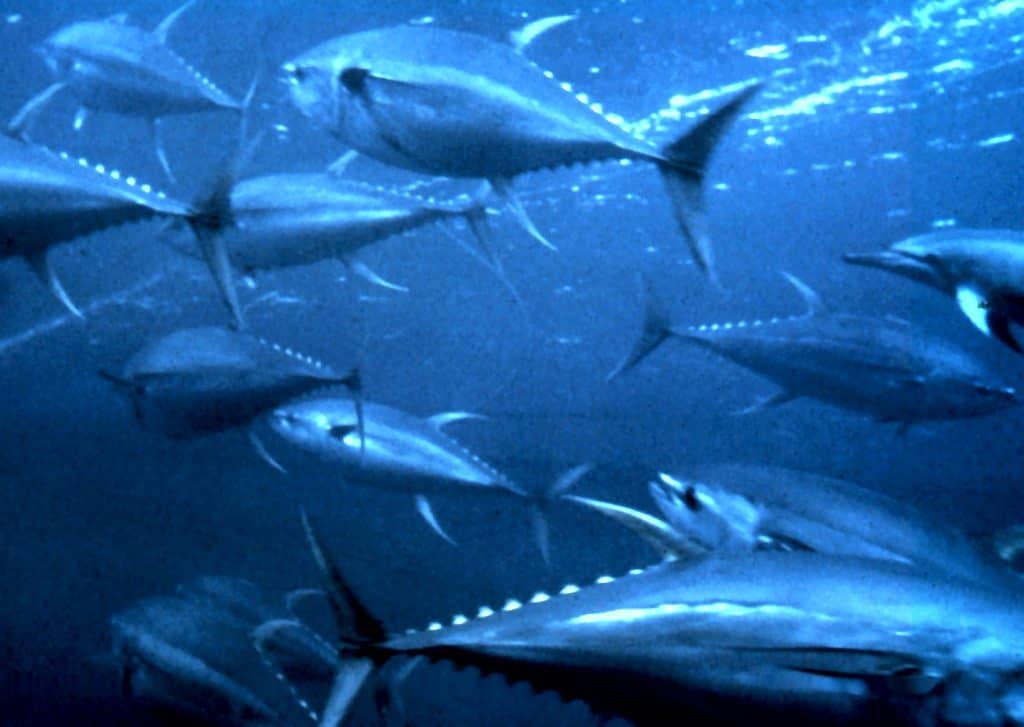
The yellowfin tuna (Thunnus albacares) is all muscle: a torpedo with a dark metallic-blue back, a gold stripe down its side and bright yellow finlets running to the tail. Older fish grow long, sickle-shaped fins that make them look even faster.
Here’s the secret behind its power: a yellowfin is partly warm-blooded. A network of blood vessels works like a heat exchanger and keeps its swimming muscles warmer than the water around it. Warm muscles are strong muscles, which is why a tuna can keep pulling long after you think it’s done.
Why the Tuna Swim With Dolphins
In the Eastern Tropical Pacific, large yellowfin travel together with schools of spotted and spinner dolphins, something scientists rarely see in other oceans. Nobody is completely sure why, but for anglers the lesson is simple: find the dolphins and the birds, and you’ve probably found the tuna.
Where to Catch Yellowfin Tuna in Panama
Panama’s Pacific is tuna country, from the islands of Coiba National Park to the Azuero Peninsula. These are the four places we chase them. For every spot in the country, see our guide to Panama’s best fishing spots.
When to Fish for Yellowfin in Panama
Yellowfin are around all year on Panama’s Pacific coast. The giants are a different story: the biggest fish show up from about April to July, and May and June are peak season at Hannibal Bank.
The rest of the year is great for school-size tuna, often mixed with mahi-mahi and wahoo. For the full calendar, read our guide to offshore fishing in Panama.
How We Fish for Tuna
It depends on what the tuna are doing. When they’re feeding on the surface, it’s casting and popping: throwing a lure into the boil and holding on. When they’re deeper, it’s vertical jigging, and trolling covers water while the captain looks for birds and dolphins.
A tuna can wear you out, so you’re never alone: one captain runs the boat while a second one coaches you through the fight. As for the license, Panama requires one for every angler unless you go out with an authorized company. We are one, so the captains’ tourism license covers you and there’s nothing to file.
Want to taste it the same day? On our two-day Cebaco & Mariato trip, dinner can be sashimi from the day’s catch. Planning around Coiba? Here’s how to get to Coiba.
The Tuna Move. So Do We.
Tuna trips are private and reserved ahead, so write to us first. Share your dates and we’ll tell you where the tuna are running that week.
Frequently Asked Questions
When is the best time to catch yellowfin tuna in Panama?
Yellowfin tuna are caught all year on Panama’s Pacific coast. The biggest fish show up from about April to July, with May and June the peak season at Hannibal Bank.
Where can I catch yellowfin tuna in Panama?
The best areas are Coiba National Park, Hannibal Bank, the Tuna Coast off Pedasi, with Isla Iguana and Los Frailes, and the waters around Cebaco Island and Mariato.
Why do yellowfin tuna swim with dolphins?
In the Eastern Tropical Pacific, large yellowfin tuna travel with schools of spotted and spinner dolphins, something rarely seen in other oceans. Anglers use it as a clue: where you see dolphins and birds, tuna are often underneath.
How big do yellowfin tuna get in Panama?
Most yellowfin around Coiba and Cebaco are school-size fish, but at Hannibal Bank the big tuna known as “cows” can reach about 100 kg (220 lb), especially in May and June.
Do I need a fishing license to catch tuna in Panama?
Panama’s rule is simple: anyone who fishes needs a sport fishing license, except when fishing with an authorized operator. With Pacific Adventure Tours, the captains’ tourism license covers you, so you can focus on the tuna.