


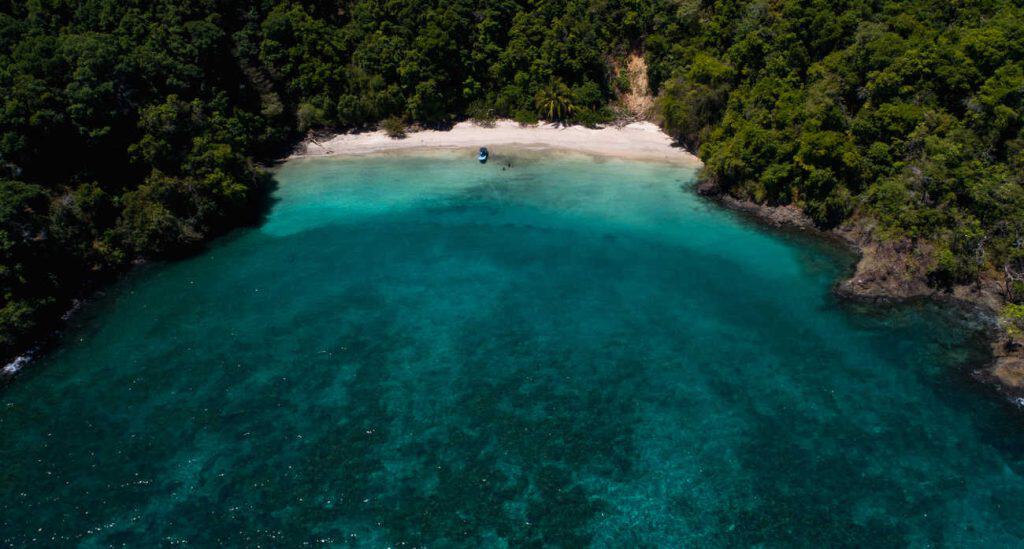
Movies taught us that pirates belonged to the turquoise Caribbean. But on the other side of Panama, a longer and far more savage war was being fought: the war of the Pirates of the Pacific.
It began in 1575, when John Oxenham crossed the Darien jungle on foot, and the last documented raids came around 1710. In between, the South Sea became a slaughterhouse.
And at the heart of that manhunt, between two oceans, key sea lanes and rivers carrying gold, sat the Duchy of Veragua, today’s province of Veraguas.
Were There Pirates in the Pacific Ocean?
Yes. From 1575 to around 1710, English, French and Dutch buccaneers crossed the Isthmus of Panama to raid Spain’s Pacific coast. For about a hundred years, Coiba Island, which their logs called Quibo, was their favorite refuge, and between 1680 and 1688 it became their headquarters: the place where they repaired ships, healed the wounded, hunted sea turtles and planned raids from Panama all the way to Nicaragua.
The Gold That Started It All: La Concepcion (1558–1577)
Greed in Veraguas did not start at sea. It came out of the ground. By the mid-1500s, the Belen and Concepcion rivers on the Caribbean side were bleeding gold, and in 1558 Francisco Vázquez founded La Concepcion, the mining heart of the northern isthmus.
Word of the “golden century of Veraguas” spread through the taverns of Jamaica and Tortuga like wildfire. The buccaneers saw no reason to dig. They simply waited at the river mouths for the Spanish supply ships.
For more than 20 years they choked the town: no flour, no wine, no gunpowder. Miners chewed dried leather and dug up roots to stay alive, while the pirates demanded gold dust for every ship they caught. Then the Spanish struck back.
The Plan That Failed: Mansvelt Goes for Nata (1665)
Six years before Henry Morgan marched on Old Panama, his mentor in the Brethren of the Coast had a bolder idea. Dutch corsair Eduard Mansvelt wanted to invade the Panamanian interior by land.
His target was Nata de los Caballeros, the richest cattle town inland and the gateway to the plains of Veraguas. The plan: land hundreds of men from Santa Catalina Island in the Caribbean, cross the mountains and plunder Nata’s haciendas.
It never happened. The president of the Real Audiencia of Panama declared an emergency and rushed troops to seal the mountain passes. Mansvelt was captured in 1666, taken to Portobelo and beheaded in the main square.
François L’Olonnais: The Most Feared Pirate Meets His Match (1668)
Whenever the Caribbean filled with Spanish patrols, the buccaneers crossed the mountains to hit the southern coasts. But the wild lands of Veraguas knew how to settle a score.
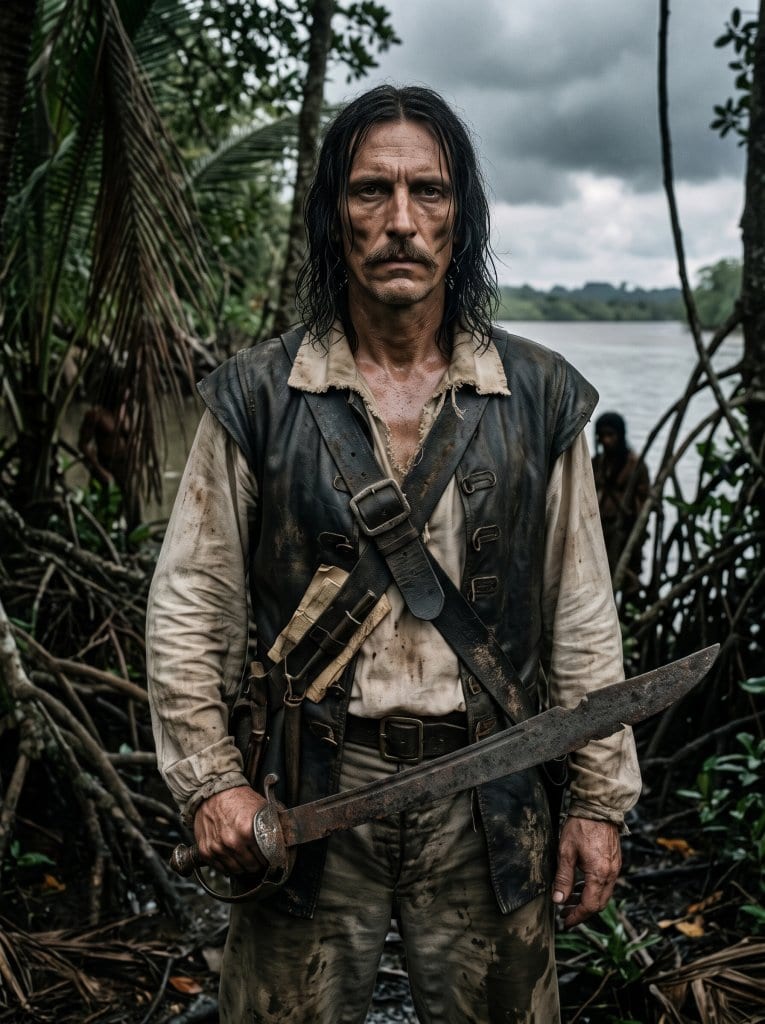
He was the most feared man in the West Indies. Sold into servitude in the Caribbean, he swore eternal hatred of Spain after surviving an ambush in Campeche by smearing himself with the blood of his dead comrades. In Maracaibo and Gibraltar he tortured with method, and on the road to San Pedro Sula he cut out a Spanish soldier’s heart and bit into it in front of the other prisoners.
In 1668 his fleet wrecked on shallow reefs. On a barge of rotten planks, with a starving crew, he landed on the northern coast of Veraguas looking for food and canoes. There were no frightened settlers waiting for him. There were independent indigenous warriors.
With their gunpowder soaked by the tropical damp and outnumbered in the mangroves, the buccaneers fell one by one. L’Olonnais was taken alive. The warriors tore him apart, roasted his remains over a fire and scattered his ashes in the wind.
The Butcher of Maracaibo found his own slaughterhouse in the soil of Veraguas.
Three Bullets for Richard Sawkins: The Trap at Pueblo Nuevo (1680)
In 1680, 330 buccaneers crossed the Darien on foot, launched canoes into the Gulf of San Miguel and smashed the Spanish flotilla off Old Panama in the Battle of Perico. Their prize was the giant of the South Sea: the Santisima Trinidad, a 400-ton galleon with 52,000 silver coins and holds full of flour and sugar.
Command went to Richard Sawkins, a Puritan who threw his men’s dice overboard if he caught them gambling on a Sunday, and who fought with no limits at all. Low on food, he sailed west to Veraguas and up the river to Pueblo Nuevo (Nuestra Señora de los Remedios) to raid the ranches.
He expected the locals to run, as they had elsewhere. Instead, cowboys, townspeople and militia were waiting behind three heavy wooden barricades on the riverbank. When Sawkins jumped into the mud, cutlass in hand, a single volley thundered from the barricades. Three musket balls hit his head.
His men panicked, left his body in the mud and rowed for the only safe place on the map: Coiba Island.
The Gulf of Montijo: A Maze Built for Ambushes
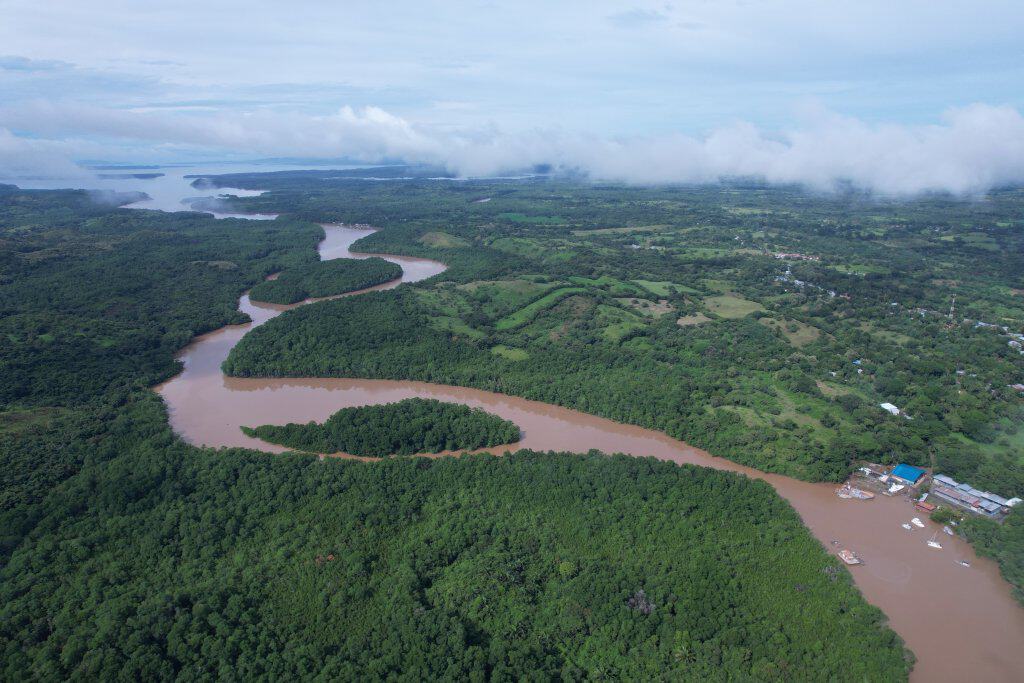
Veraguas did not back down. The governor gathered 800 men, soldiers, mounted lancers from the savannas and indigenous archers, and met the invaders hand to hand in the mud, pushing them back to their boats. The fear ran so deep that whole indigenous communities, like those of chief Tabarabá, left the riverbanks and moved inland for good, founding towns such as Sona and El Alto de La Mesa.
Today those same channels are a nursery for the ocean, and the fishing boats of Puerto Mutis come and go through them every morning. Here is our guide to the Gulf of Montijo.
Cebaco Island: The Pirates’ Lookout
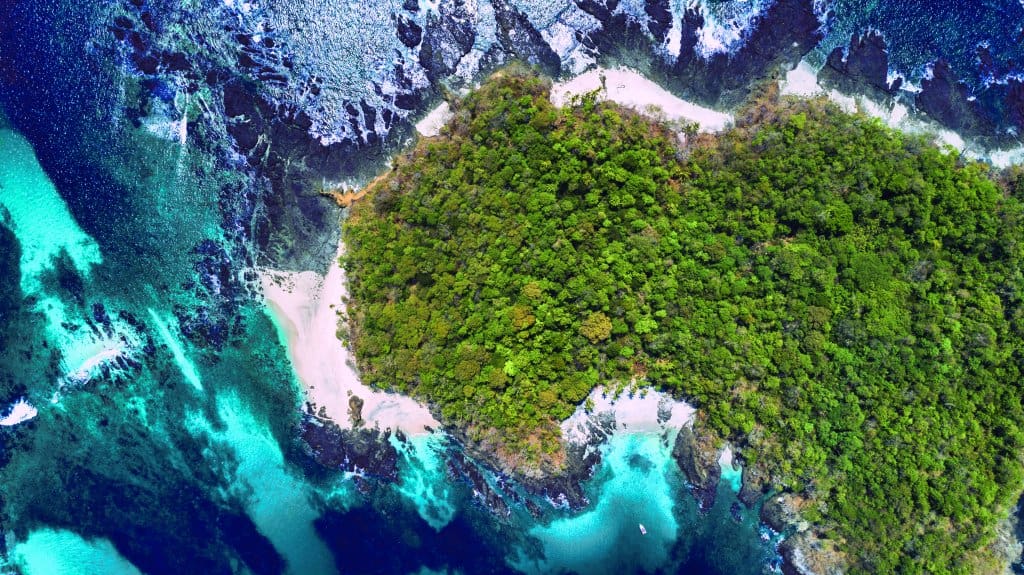
The Battle of Pacheca (1685): Running for Coiba
In May 1685 came the largest naval clash of the century in Panamanian waters. The combined fleet of William Dampier, Francis Townley, Raveneau de Lussan and François Grogniet blockaded the Bay of Panama, sure they could take the capital.
Instead they ran into an iron wall: the Armada Real del Mar del Sur, sent from the Viceroyalty of Peru with 14 heavily armed galleons. Off Pacheca Island, Spanish broadsides tore the pirate line apart.
Splintered decks, holds full of blood, hundreds of wounded men and no surgeons. The Spanish fleet blocked the way east, and militias from Nata and Los Santos waited with lances on land. A lucky wind let them slip through the cordon and run west. To Coiba.
Coiba Island (1680–1688): The Pirates’ Headquarters in the Pacific
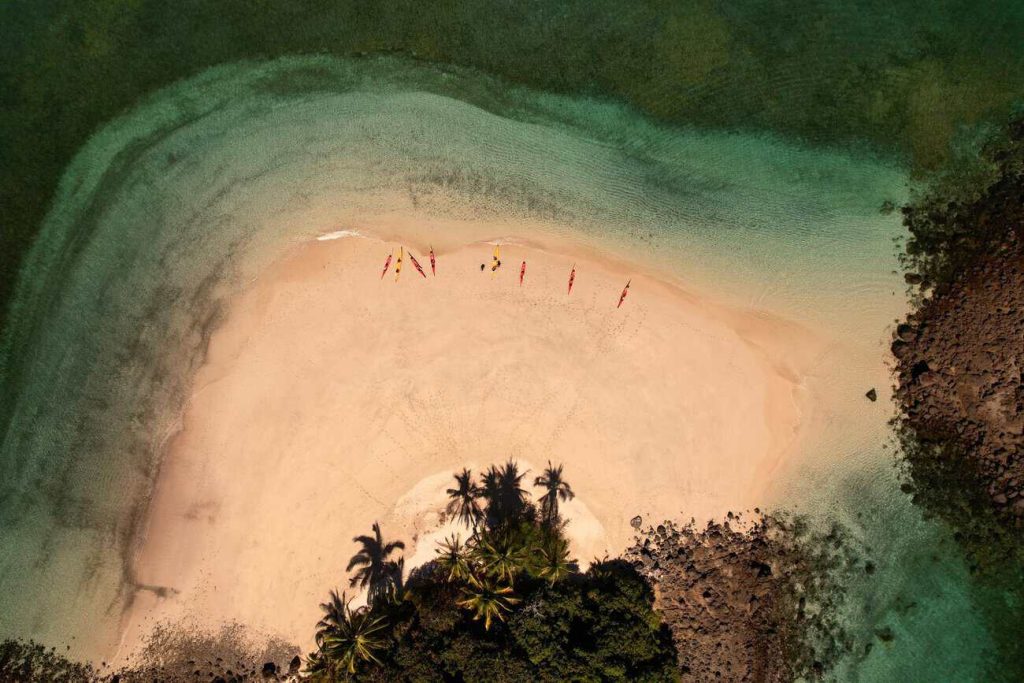
Coiba was never a quick stop. Pirates kept coming back to it for about a hundred years, and between 1680 and 1688 the island that English and French logs called Quibo was the headquarters and shipyard of the Brethren of the Coast in the Pacific. Far from any garrison, with deep sheltered bays, it was the only place in thousands of miles that could keep a whole pirate fleet alive. It played five roles.
The Black File: The Captains Who Ruled the South Sea
Behind every burned ship and every raid launched from Coiba there were names, faces and bloody reputations. You already met L’Olonnais and Sawkins. Here is the rest of the gang. Their portraits are new illustrations, each one inspired by a real engraving or painting from their own time.
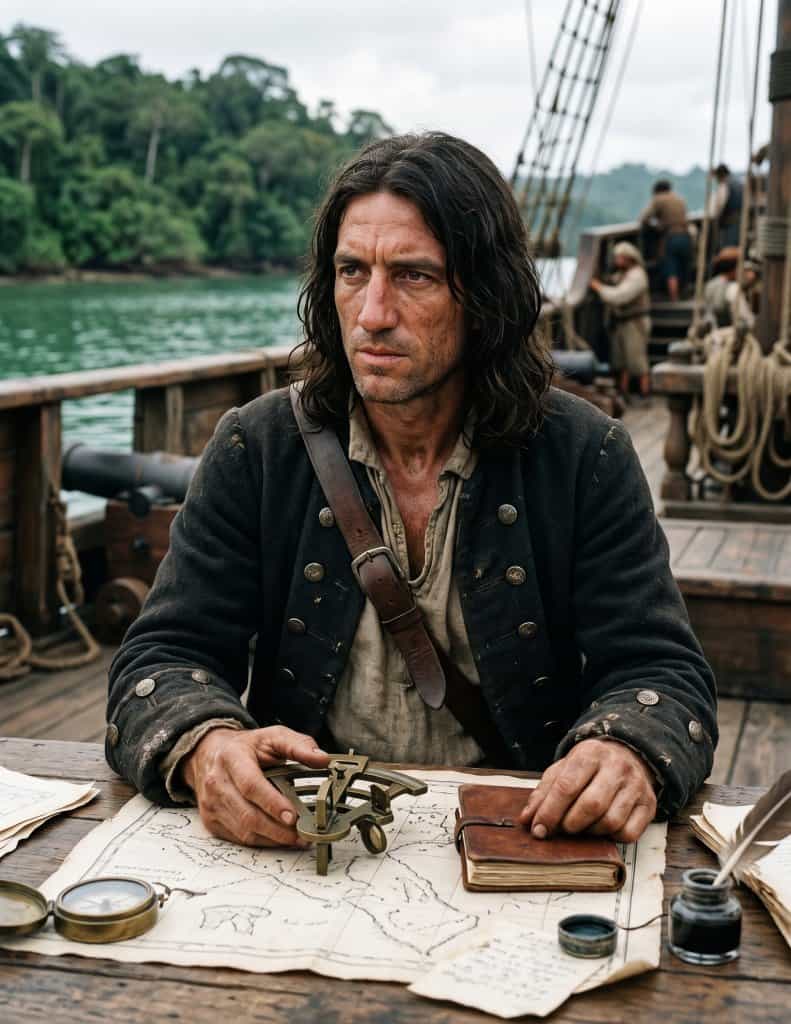
Dampier was the brains of the Brethren: a navigator and gunner with a mathematician’s precision who sailed with Sharp, Davis and Swan. While the others drank stolen wine, he wrote about winds, tides and anchorages, and kept his notes in bamboo tubes sealed with wax so the salt spray wouldn’t ruin the ink.
He charted the Gulf of Montijo, Cebaco and Coiba’s deep anchorages, and his journals revealed the secret of pirate survival here: the Miskito hunters who supplied sea turtle and manatee meat. His charts stripped Spain of its greatest advantage, the secret geography of the Pacific. Decades later, the British Navy used his maps to raid Spanish ports all along the South Sea.
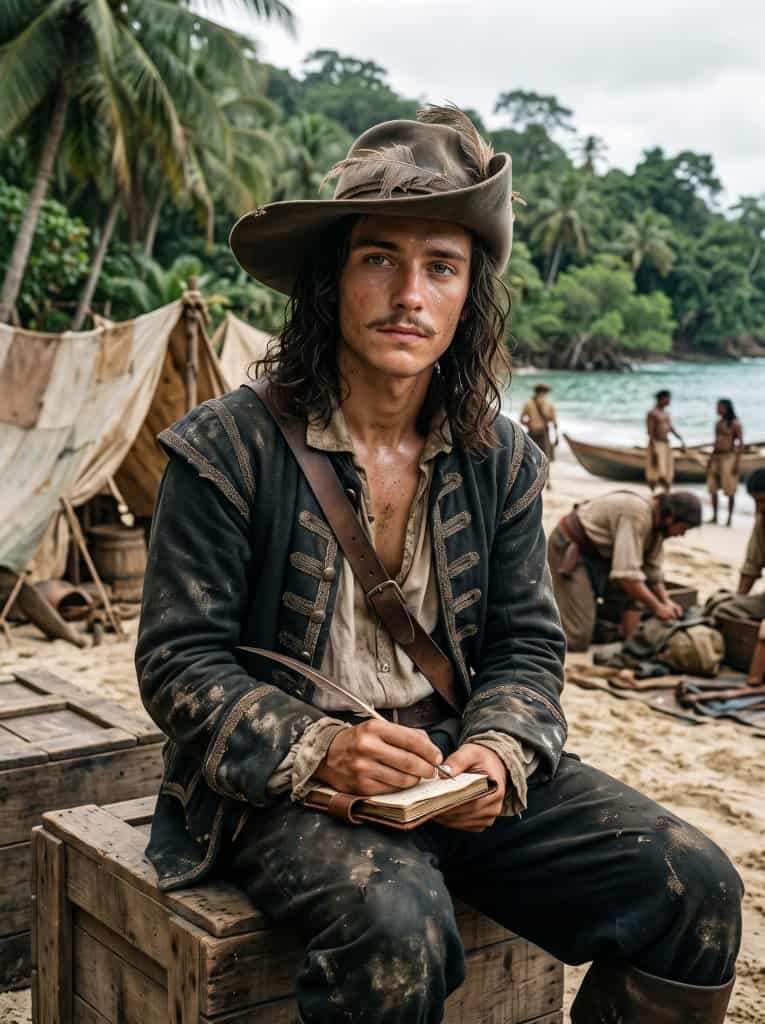
A ruined Parisian noble who fled his debts and became the sharpest tactical mind among the French filibusters of the South Sea. He made captive priests sing Latin Mass before opening fire, yet sent hostages’ heads in baskets to governors who were slow to pay.
From Coiba he sailed to burn León and Granada, raided the sugar mills of the Gulf of Montijo and held out in the stone church of Alanje against the Spanish cavalry. He survived it all, and back in Paris he published a war journal that captivated European high society.
The Heretic of the TrinityBartholomew SharpBornLondon, c. 1650Active1679–1682ShipThe Trinity, ex-Santisima TrinidadTook the Santisima Trinidad after Perico and terrorized 10,000 nautical miles of coast for two years. He captured El Rosario with more than 700 silver ingots, then careened his rotting galleon on Coiba before rounding Cape Horn. In London he escaped the noose by handing King Charles II the secret Spanish atlas of the South Sea, and was made a Royal Navy captain.
The trigger-happy PuritanRichard SawkinsBornEnglandDiedMay 1680, Pueblo NuevoShip16-gun frigate taken in the Bay of PanamaSacked Portobelo, crossed the jungle into the Pacific and led the longboat charges at Perico, sharing command with Sharp. His fearsome reputation made him careless: at Pueblo Nuevo he charged without waiting for his reserve, and never got up from the mud.
The headsman of the coastFrancis TownleyBornEnglandDiedAugust 1686, at seaShip14-gun frigate, 120 English buccaneersDe Lussan’s partner at Coiba and the fleet’s enforcer. When the Audiencia of Panama delayed a ransom, he beheaded prisoners and sent their heads ashore in a canoe with a 24-hour ultimatum. The silver arrived the next morning. Weeks later, a musket ball to the chest and a fever ended him at sea.
Sail Where the Pirates Sailed
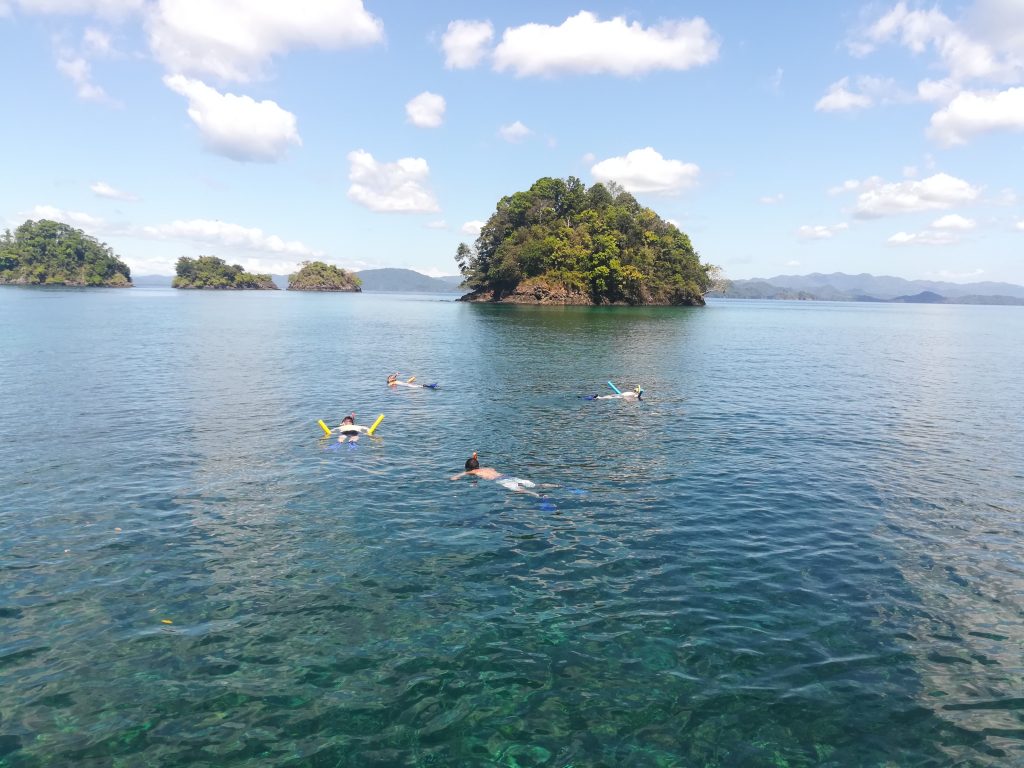
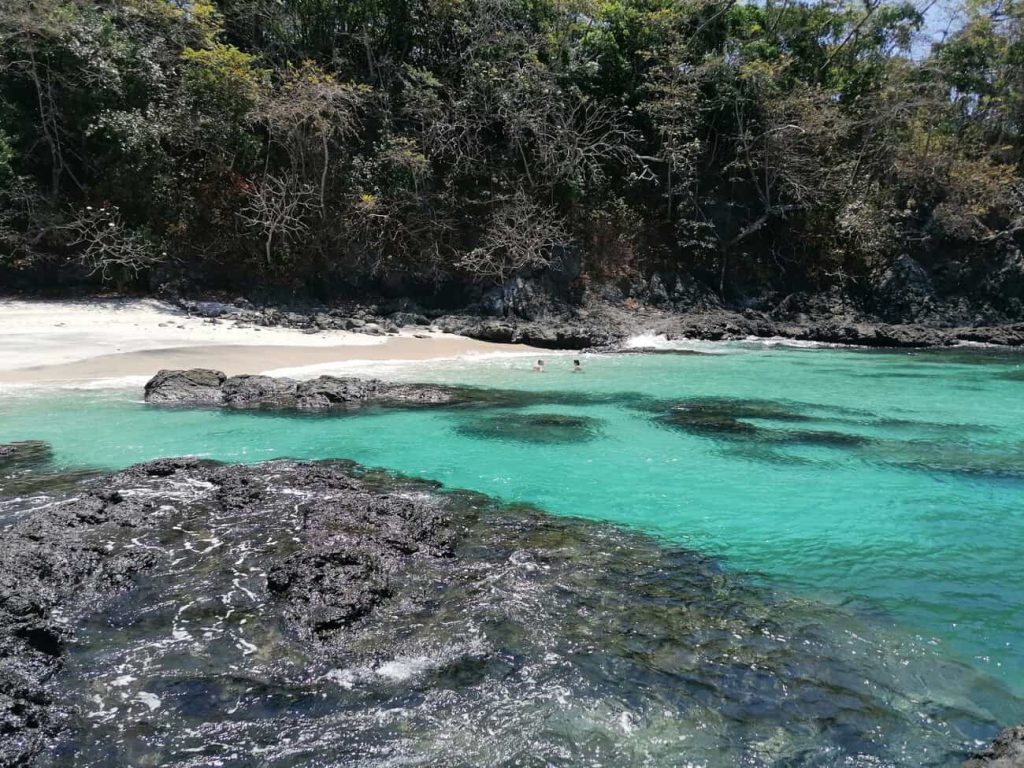
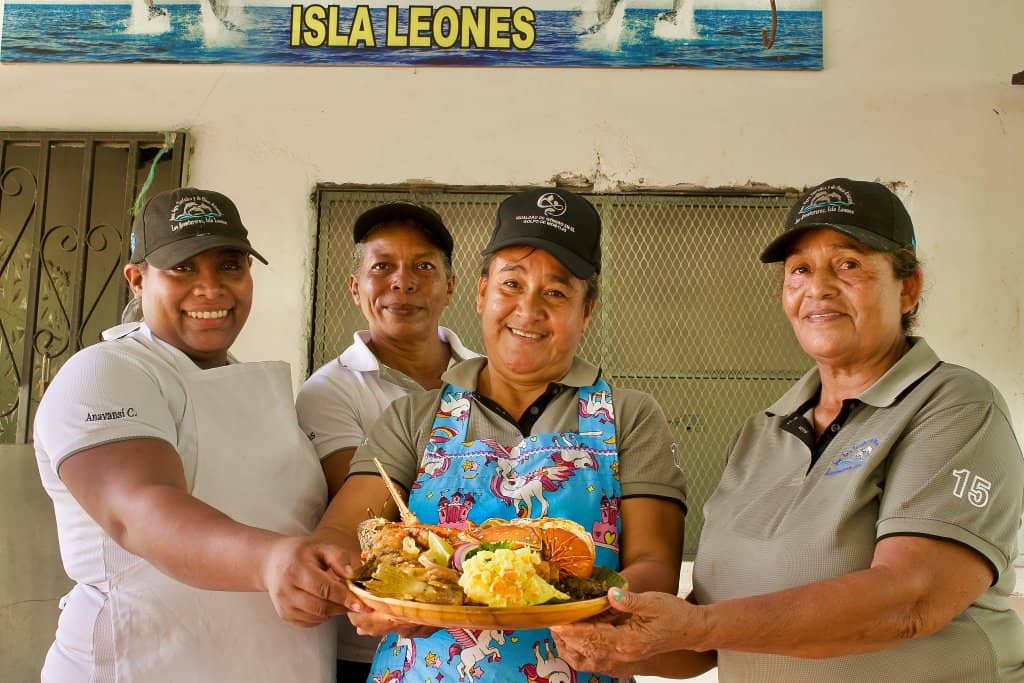
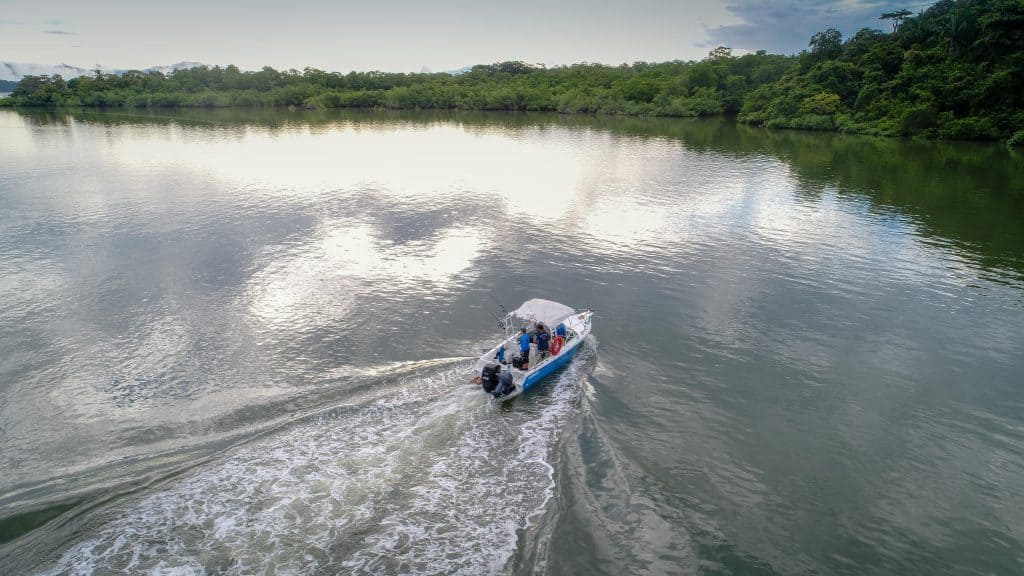
The galleons are gone, the forts are ruins and nobody is hunting sea turtles for salt meat anymore. What is left are the same bays, islands and channels, now protected, and much easier to enjoy from a private boat.
Frequently Asked Questions
Were there pirates in the Pacific Ocean?
Yes. From 1575 to around 1710, English, French and Dutch buccaneers crossed the Isthmus of Panama to raid Spain’s Pacific coast. They boarded more than 150 colonial ships and carried off silver from Potosi and Spanish gold.
Did pirates use Coiba Island?
Yes. For about a hundred years, pirates used Coiba Island, called Quibo in English and French logs, as their refuge in the Pacific, and between 1680 and 1688 it was their main base. Buccaneers repaired their ships on its beaches, treated their wounded, hunted sea turtles and launched raids from there to Panama, Costa Rica and Nicaragua.
Who was the most feared pirate in Veraguas?
François L’Olonnais, known as the Butcher of Maracaibo, was the most feared pirate to reach the coasts of Veraguas. He died there in 1668, captured by indigenous warriors after his fleet was wrecked.
Who was William Dampier?
William Dampier (1651–1715) was an English buccaneer, navigator and naturalist who sailed around the world three times. He charted the Gulf of Montijo, Cebaco Island and the anchorages of Coiba, and his maps were later used by the British Navy.
Can you visit pirate history sites in Panama?
Yes. Coiba, Cebaco and the Gulf of Montijo, the islands and channels the pirates used in Veraguas, can be visited by boat from Santa Catalina or El Bongo. Coiba is now a national park and a UNESCO World Heritage Site.
Story inspired by the historical investigations of architect and historian Sebastián Aguilar Medina.
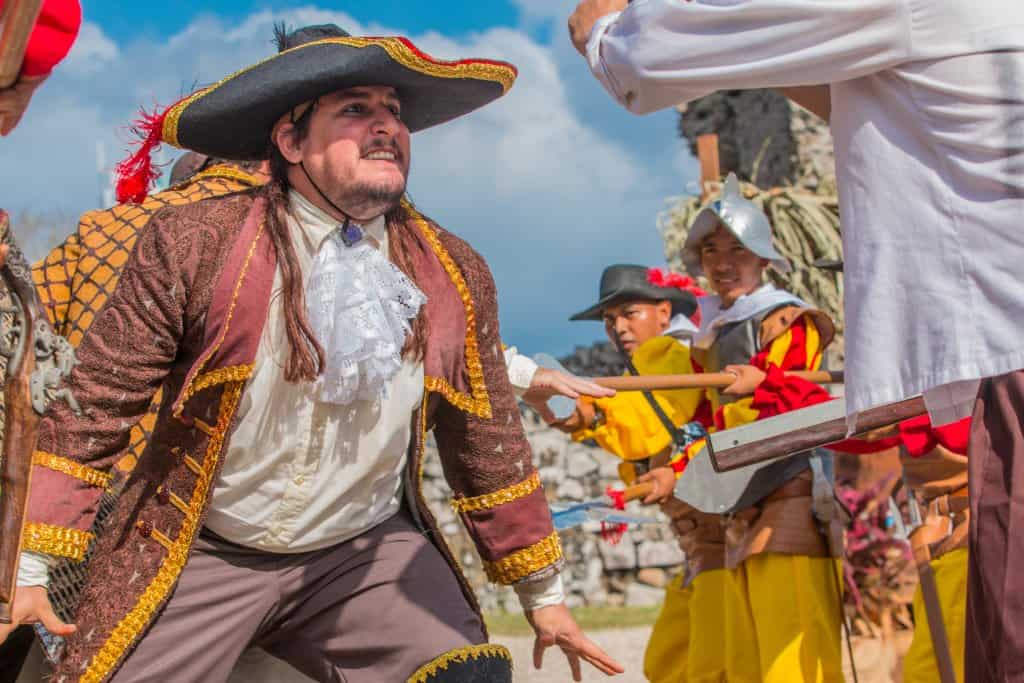
Pirate photos (featured image and reenactment): Branly Bruneth.