


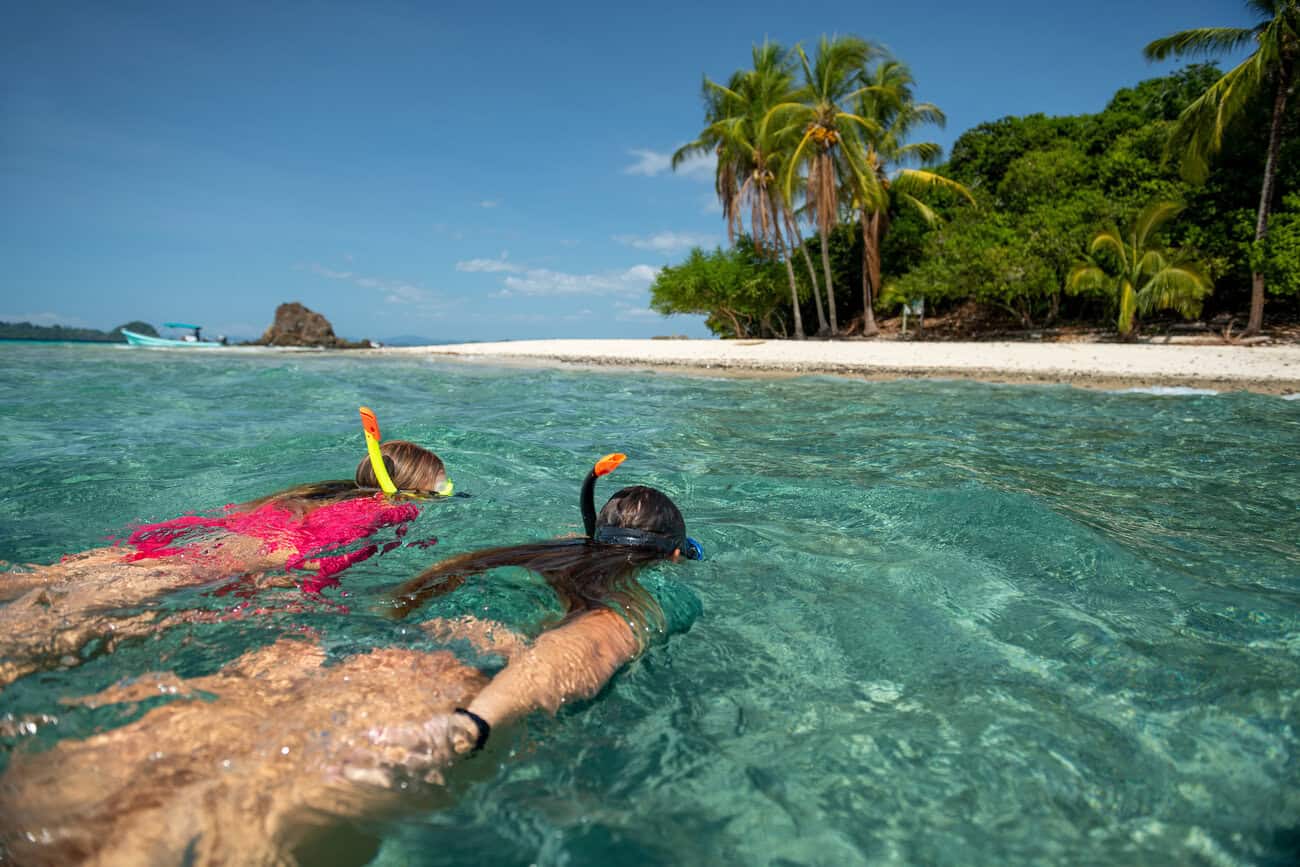
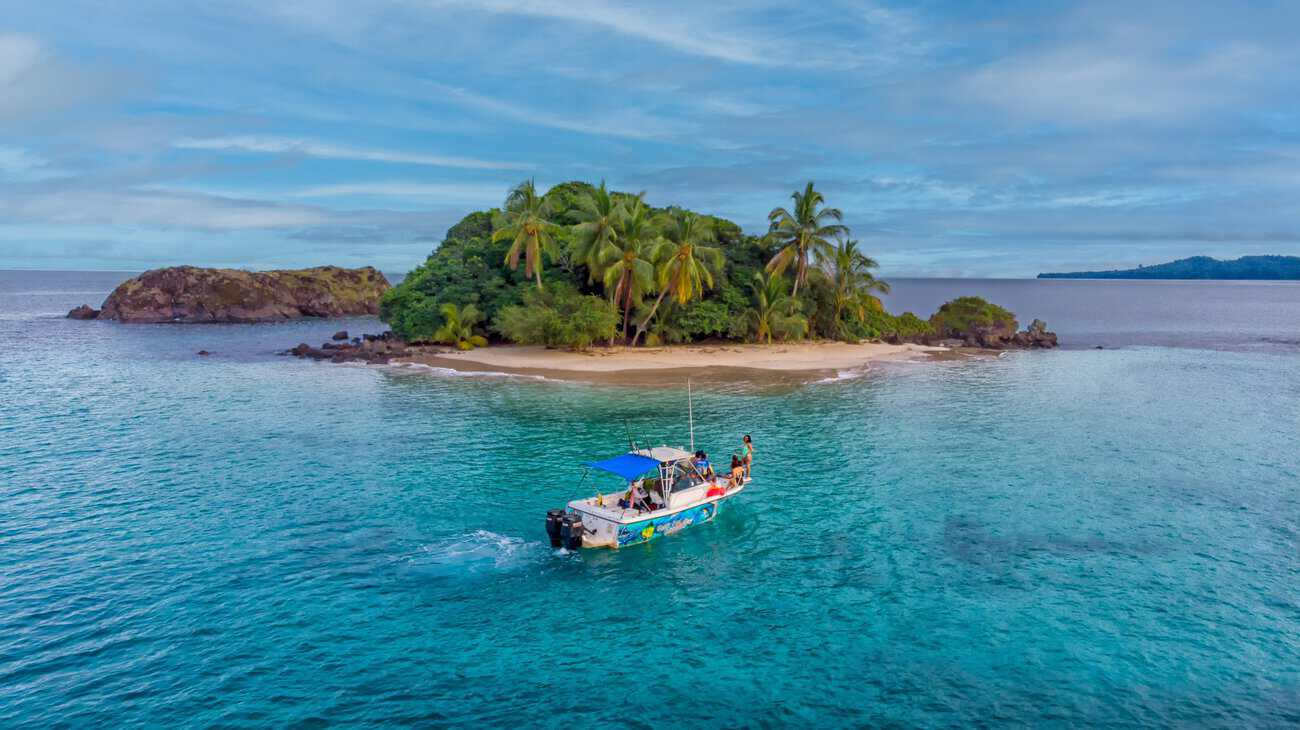
A small islet off the eastern coast of Coiba Island named Granito de Oro (Grain of Gold) was, for years, the most popular stop for visitors snorkeling the waters of Coiba National Park and picnicking on one of the most pristine beaches in the world. If you’re planning a visit, here’s the big news first: Granito de Oro is closed to visitors, and it will stay closed so its reef can recover. Below you’ll find why, and the best spots to go instead.
Granito de Oro is taking a well-deserved break, but the rest of Coiba is ready for you.
Its steep volcanic outcrop holds the white sand in place and forms a reef that shelters a huge variety of marine life. It is the multicolor aquarium of Coiba, home to moray eels, sea turtles and big schools of colorful fish. Granito de Oro offered the casual snorkeler a diversity and volume of marine life that many avid scuba divers spend their lives trying to see.
Why Is Granito de Oro Closed?
Being everyone’s favorite came at a price: too many boats, too many fins and too many feet on a tiny islet. Granito de Oro has been closed since the pandemic, and the park’s management plan keeps it closed so its ecosystems can bounce back.
And they are bouncing back. We’ve filmed Granito de Oro three times since the closure, and the change is jaw-dropping: more fish, healthier corals and a reef that looks brand new. Scientists from the Coiba AIP research station rated its beach the second most scenic of the 42 beaches in the park, so this little jewel is well worth the wait.



What You Can See Instead
Don’t worry, Coiba has plenty of gold left to go around:
- Canales de Afuera: shallow coral gardens with the highest live coral cover measured in the park, plus sea turtles and reef fish in every color of the rainbow.
- Coco Islands: the beach that beat Granito de Oro itself, ranked the most scenic in the whole park.
- Rancheria · Isla Tortuga: a calm, sheltered beach with a coral islet, sea turtles and rays. A favorite spot for our beach BBQ.
- Monkey Trail: an easy one-hour walk through the jungle with howler monkeys overhead, and it starts almost facing Granito de Oro, so you can still say hi from across the water.
We can visit them all on our private snorkeling tour in Coiba National Park. The boat is only for your group, and you pick the stops.
How to Get There
Coiba is only reachable by boat. The most popular departure points are Santa Catalina and Playa Banco, about 70 minutes away.
If you’re staying in Santiago and don’t feel like driving two more hours, you can leave from Puerto Mutis or from our headquarters in El Bongo de Montijo, with boats leaving right from the Club Nautico de Veraguas. The trip takes just over two hours: we sail down the San Pedro River, past the community of Hicaco to Punta Brava, then by Santa Catalina before setting course for Coiba. For every option step by step, read how to get to Coiba.
Ready to Dive In?
Find out why Coiba National Park is worth every minute of the ride.


