

Gulf of Montijo · Puerto Mutis · Ramsar WetlandPrivate Boat · Up to 4 Anglers
Out here, the tide is the real captain. It rises and falls up to 6 meters (20 ft), and the corvina, the snapper and the snook move with it. Our job is knowing where they’ll be.
6:30 am. The captain cuts the engine next to a wall of mangrove roots. The water is still coming in, the color of strong tea, and the only sound is a tiger heron complaining about the company.
You cast a lure into the shade, right where a fallen branch meets the roots. Two turns of the reel. Then the line goes tight, and something heads straight back into the branches.
That’s the Gulf of Montijo: Panama’s largest Ramsar wetland and a maze of islands, river mouths and mangrove channels on the Pacific coast of Veraguas. Shallow, quiet, and a lot harder to fish than it looks. We leave from our home dock in El Bongo, on the road to Puerto Mutis, on a private boat for up to 4 anglers.
The tide in the Gulf of Montijo can rise and fall up to 6 meters (20 ft) every six hours. That much water moving in and out changes everything: where the bait goes, how murky the water gets, how hard the current pulls your lure.
After years on this water, our captains follow a simple rule: the days when the tide range is 13 feet (4 m) or less are the best fishing days. Less current, clearer water and fish that stay put long enough to see your lure. And on any day, keep an eye on the turn of the tide: a few minutes of changing current can switch on the whole bite.
Those days come around every couple of weeks, between the big tides. Send us your dates and we’ll check the tide table for you before you book.
Corvina and snapper fill the cooler. Snook fills the photo album.
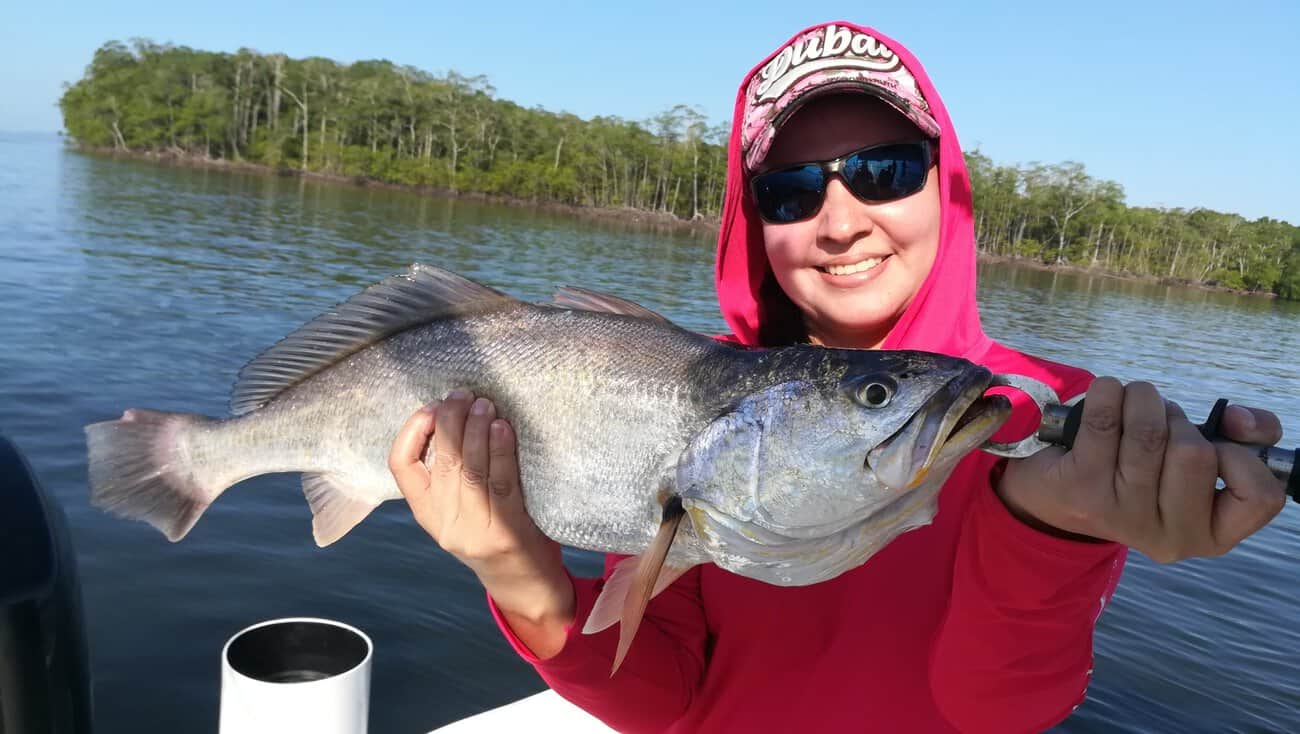
The queen of the gulf. Scientists call it the whitefin weakfish, and there’s nothing weak about it; the FAO even lists it as “queen corvina.” Most run 35 to 45 cm (14–18 in), but this species can pass 1.2 m (4 ft). On our boat we’ve landed them up to 35 lb (16 kg), just a pound shy of the IGFA record of 16.3 kg (36 lb). The big ones turn gold, and the inside of the mouth is yellow.
“Roncona” means “the snorer,” and it’s a fair name: corvinas belong to the croaker family, fish that drum by vibrating their swim bladder, especially at spawning time. If you hear a low grunt from the cooler, that’s why.
Less common, and that’s what makes it the trophy. Snook are born male and become female as they grow, so the big ones are the mothers of the next generation. Panama’s Pacific has six snook species; the white snook can reach 1.3 m (4.3 ft) and 24 kg (52 lb). Take the photo and let her go.
Our other everyday star, also called pargo colorado. Young red snappers grow up in the shallow estuaries of the coast, then move out to the rocks, where they can pass 1 m (3.5 ft). That’s why any rocky structure in the gulf can hold them.
The toughest snapper in the gulf, also known as pargo dientón, pargo negro or Pacific dog snapper. Adults have been found swimming up rivers as far as 20 km (12 miles) from the sea. Its first run is brutal and goes straight for the rocks: stop it in the first seconds or say goodbye to your lure. Every cubera goes back.
During the day it hides in cracks between the rocks, then comes out after dark for crabs and small fish. Put your lure right against the rocks and it may not be able to resist. Up to 92 cm (3 ft).
The Gulf of Montijo is a nursery for groupers. Most of the ones we hook here are juveniles, and if we take them out, none of them will ever reach breeding age. That’s why every grouper is catch and release, no exceptions.
You’ll often see it before you hook it: diving birds, bait jumping out of the water and swirls on the surface. Jacks hunt in packs and fight way above their weight. Common in the estuaries, up to 1 m (3.3 ft).
A silver fish that likes the estuaries and sandy bottoms, with a black spot hidden at the base of its pectoral fin. Up to 73 cm (29 in), and great on the grill.
Combine a dry-season date with a small tide and you’ve picked the best day the gulf has to offer. Coming soon: our calendar of the best fishing days of the year.
About 8 hours, departure at 6:00 am from El Bongo. Gear, artificial lures, captain and fishing captain included.
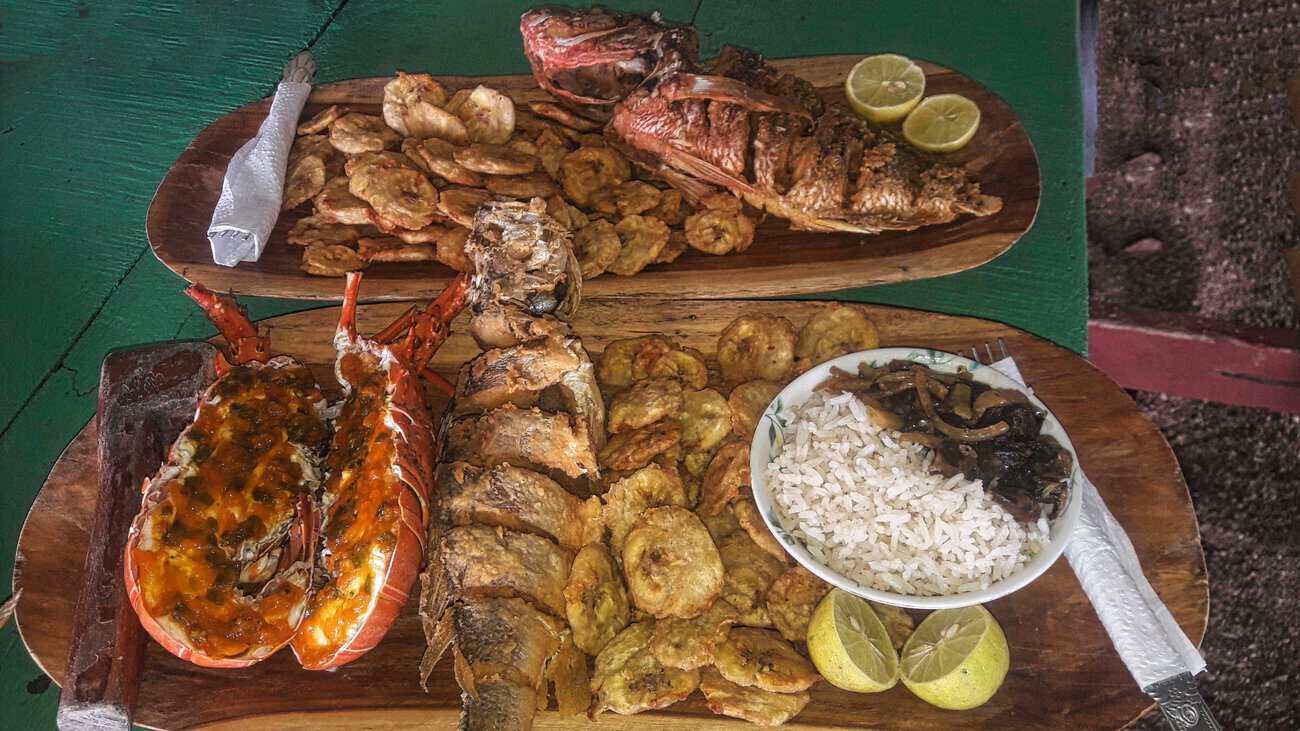
Fried fish, lobster, coconut rice and black clams cooked by the fisherwomen of Isla Leones, right in the middle of the gulf.
Rather not stop fishing? Order a wrap when you book and eat between casts.
Around 800 small-scale fishers make their living in the Gulf of Montijo. The red snapper, the corvina, the snook and the shrimp they bring home all start their lives in the same place: the gulf’s 23,000 hectares of mangrove forest. Locals say “voy a pescar a Mutis” (I’m going fishing in Mutis), because Puerto Mutis has always been the gateway.
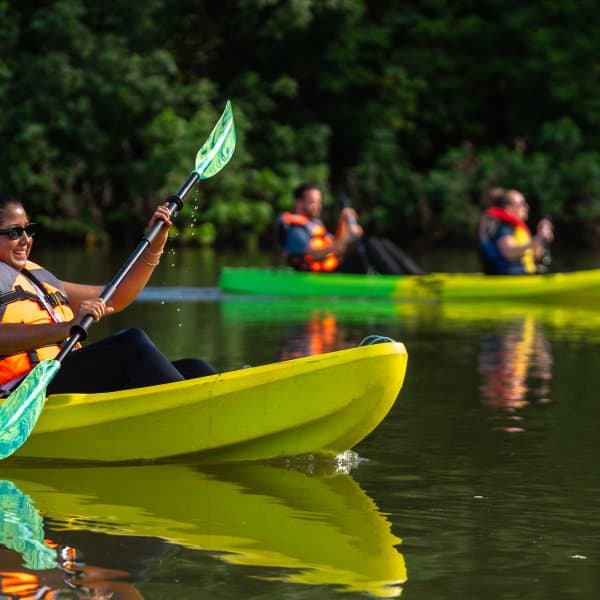
The gulf is a living aquarium with the lights on. More than 80 bottlenose dolphins live here all year, tiger herons stand on the roots, roseate spoonbills feed on the mudflats, and don’t be surprised if a crocodile is sunbathing on a muddy bank.
Rather swap rods for snorkels? Our Cebaco Island tour leaves from the same dock.
Taste the gulf where it was caught.
Bring your own food and drinks, or order a lunch box.
Everyone who fishes in Panama needs a sport fishing license, unless they fish with a licensed operator like us: our captains’ tourism license covers your temporary license. You can keep fish for dinner within the limits of Panamanian law; your captain tells you how many, and everything else goes back. Every grouper is released, and we always suggest catch and release, especially for big snook.
Your own food and drinks, reef-safe sunscreen, a hat and clothes that cover you from sun or rain, a cooler bag if you plan to take fish home, and your original passport. More tips in what to wear and bring on a boat tour.
The gulf is sheltered by islands and mangroves, so the water is usually flat. What really shapes the day is the tide, and the captain plans the route around it. If the captain cancels before departure for safety, we reschedule, usually for the next day.
Our home dock in El Bongo, 24 km (15 miles) from Santiago, just 5 minutes by car from Puerto Mutis.
From Panama City: about 4 hours to Santiago, plus half an hour to El Bongo.
6:00 am from El Bongo, with the first casts about 30 minutes later. We’re back after about 8 hours. Honestly, we love fishing too, so we don’t watch the clock.
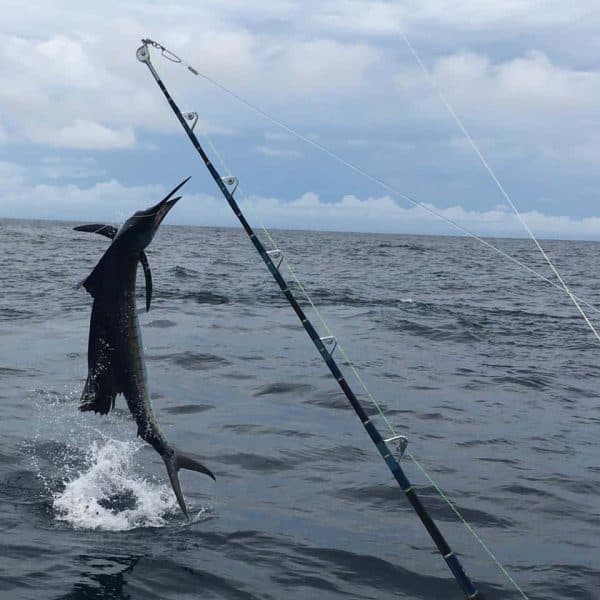
Want to go bigger? See our Coiba fishing day trip, fish the reefs of Cebaco and Mariato or stay the night on our two-day fishing trip. New to this? Read our guide to sport fishing in Panama.
The Gulf of Montijo is on Panama’s Pacific coast, in the province of Veraguas. We leave from Club Náutico de Veraguas in El Bongo, 24 km (15 miles) from Santiago on the road to Puerto Mutis. From Panama City, it’s about 350 km (220 miles) to Santiago, around 4 hours by car, plus half an hour more to El Bongo.
Yes. Locals say “voy a pescar a Mutis” because Puerto Mutis is the classic gateway to the gulf. Our dock in El Bongo is on the same road, just 5 minutes away by car, and we fish the same waters.
All year, but peak season runs from mid-December until the rains start at the end of April. The best days are the ones with a tide range of 13 feet (4 m) or less. Send us your dates and we’ll check them.
No. We fish with artificial lures. If you’d rather fish with live bait, tell us when you book and we’ll arrange it (live bait isn’t included).
Yes, you can take fish home for dinner, within the limits of Panamanian law; your captain tells you how many. The rest are released, every grouper goes back, and we always suggest releasing big snook.
Very unlikely. The gulf is protected by islands and mangroves, so the water is usually flat, and the first fishing spots are only about 30 minutes from the dock.
Yes. The crew teaches you how to cast and fight a fish, and all the gear is included. Besides the boat captain, a fishing captain comes along to help, so anyone on board can fish. For safety we recommend ages 7 and up, since there are hooks and jumping fish on deck, but it’s your call: younger kids are welcome with their parents.
$450 per boat for the whole day, not per person, for up to 4 anglers. Friends who don’t fish can come along too.
Everyone who fishes in Panama needs one, unless they fish with a licensed operator like us. Our captains’ tourism license covers your temporary license, so there’s no paperwork for you.
Yes. From the same dock you can visit Cebaco Island, go fishing farther out in Coiba National Park, or spend a day with the dolphins of the gulf. Ask us and we’ll put the days together.
Meet your captain and fishing captain at Club Náutico de Veraguas, on the road to Puerto Mutis.
About 30 minutes from the dock. Early hours are prime time.
The captain moves between rocky structure, sandy bottoms and mangrove roots, following the tide.
Lunch on board, or the optional lunch with Las Aventureras on Isla Leones ($20 per person).
Depending on the tide, the weather and how your arms are holding up.
Fish cleaned, photos shared and stories getting bigger by the minute.
Around 97,000 hectares and over 10% of Panama’s mangroves. For an inshore angler, that means structure everywhere. The captain picks the spots as the day goes on, following the tide.
Points, rock piles and reefs. Red snapper, cubera and rock snapper live here, and they fight dirty.
The flats and channels where yellow corvina cruise and feed. Pompano like them too.
Sunken trees, fallen branches and the root walls along the islands. Snook, snappers and jacks hide in there, and the trick is getting your lure in without losing it.