Mariato, Panama: The Sunset Coast Across From Cebaco Island

Mariato, Veraguas · The Sunset Coast

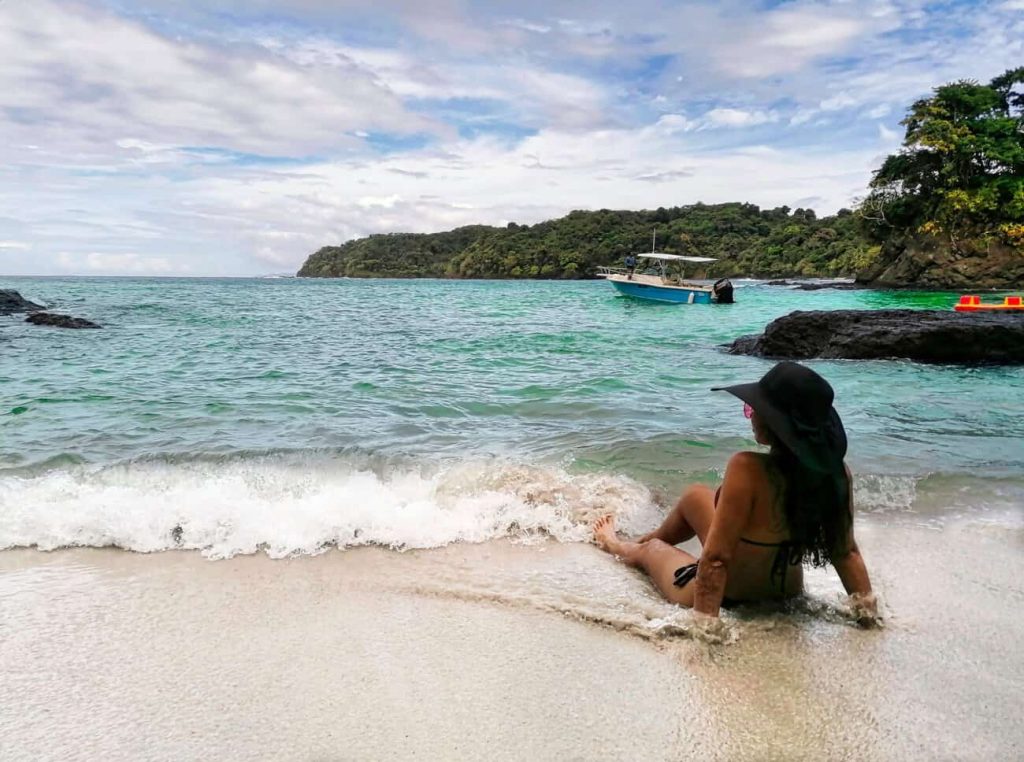
In Mariato, the sun sets into the sea. And Cebaco Island is always in the picture.

On the southwest coast of the Azuero Peninsula, Mariato is a string of dark-sand beaches, fishing villages and sea turtle nests, facing the biggest island in the Gulf of Montijo. This is the coast that watches Cebaco, and the best way to cross over to it.

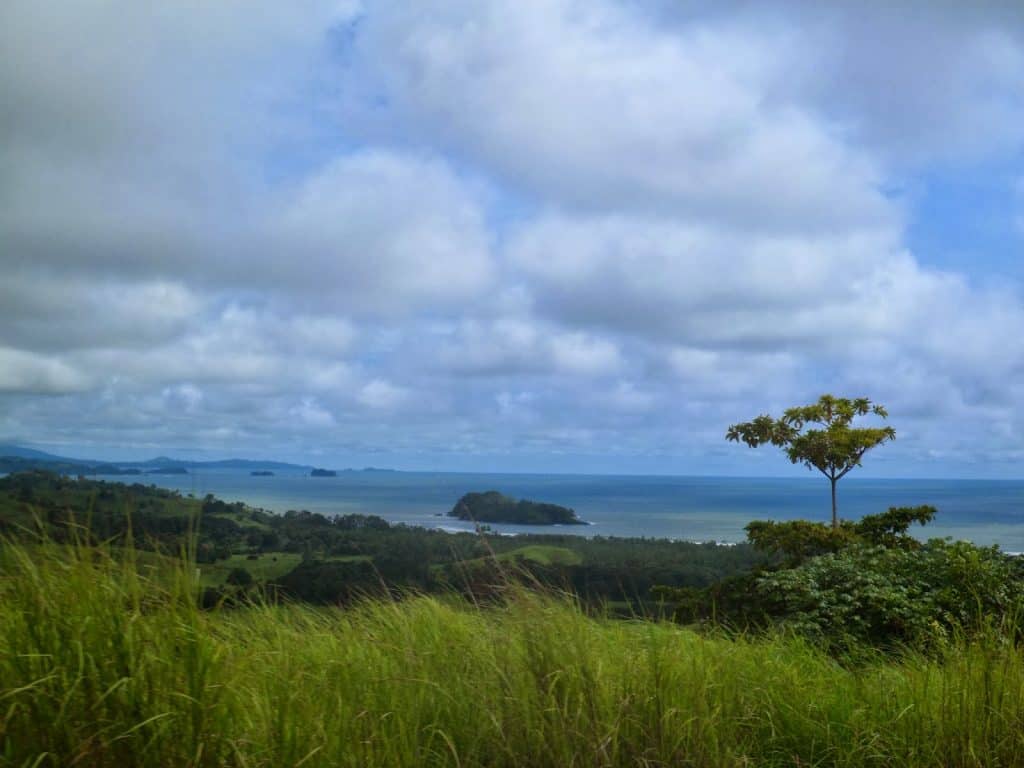
Green hills of the Mariato coast looking out over the Gulf of Montijo and an island on the horizon, Veraguas, Panama

Around five in the afternoon, the fishermen of Palo Seco stop mending their nets and look west. Not at the boats. At the sky.

Here the coast faces the open water, so the sun doesn’t hide behind a mountain: it drops straight into the Pacific, and the whole Gulf of Montijo turns orange. Out on the horizon, a long green shape catches the last light. That’s Cebaco Island.

Most travelers who come to Mariato end up asking the same question while they watch: what’s on that island? Hold that thought. First, let’s see where you are standing.

Quick answer

Where Is Mariato, Panama?

Mariato is a district of Veraguas Province, on the southwest coast of the Azuero Peninsula, about an hour’s drive south of Santiago de Veraguas. Its district seat is Llano de Catival. The coast looks west across the mouth of the Gulf of Montijo to Cebaco Island, and to the south it ends at Punta Mariato, inside Cerro Hoya National Park.

30+rivers run down from the hills to the Mariato coast.
83green sea turtle tracks found on a single 800 m beach, El Gato.
250+sea turtle nests saved every year by the Tortuga EcoRoute.
200,000+hatchlings released to the sea each year by local families.
250 mhigh takeoff for tandem paragliding over Torio.
3sea turtle species nesting on Mariato’s wild beaches.

Why Is Mariato Called the Sunset Coast?

Golden sunset over the sea on the Mariato coast, Panama
The sun has nowhere to hideMost of Panama’s Pacific beaches face south. Mariato faces west, across the Gulf of Montijo. Stand on the sand and the sun drops straight in front of you, at almost a right angle to the shoreline: no headland, no mountain, nothing in between. American visitors nicknamed it the Sunset Coast, the same crowd that named Pedasi’s shore the Tuna Coast. Nobody here argues.

From the pier at Palo Seco or the sand at Playa Reina, the show has a co-star: Cebaco Island, stretched across the horizon. Bring a cold drink. Leave the phone in your pocket for at least the first five minutes.

Cebaco Island, Seen From the Mainland

From Mariato, Cebaco looks close enough to swim to. It isn’t. It’s the largest island in the gulf, with fishing villages, a jungle-covered ridge and coves the day boats rarely reach, and on its north shore the village of Platanares looks straight back at you.

Here is the part most visitors don’t know: Palo Seco is a natural harbor that doesn’t depend on the tide, so boats can come and go at any hour. That makes Mariato the shortest way to get your feet on Cebaco’s sand. We can pick you up at Palo Seco for any of our Cebaco tours (+$100).
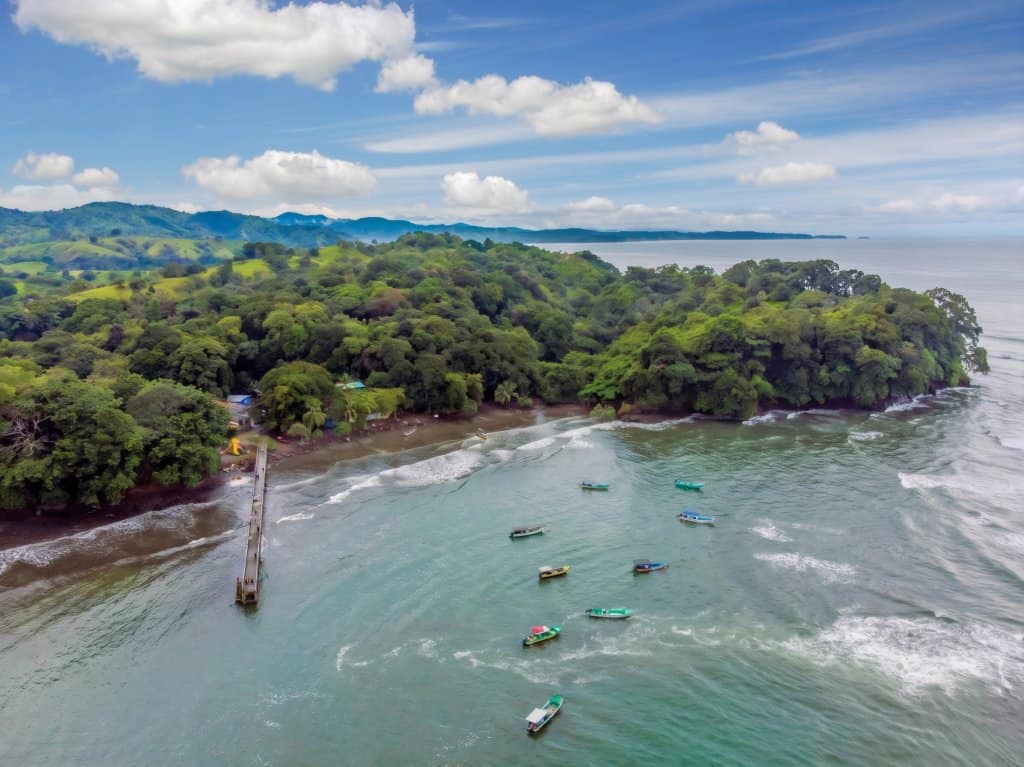
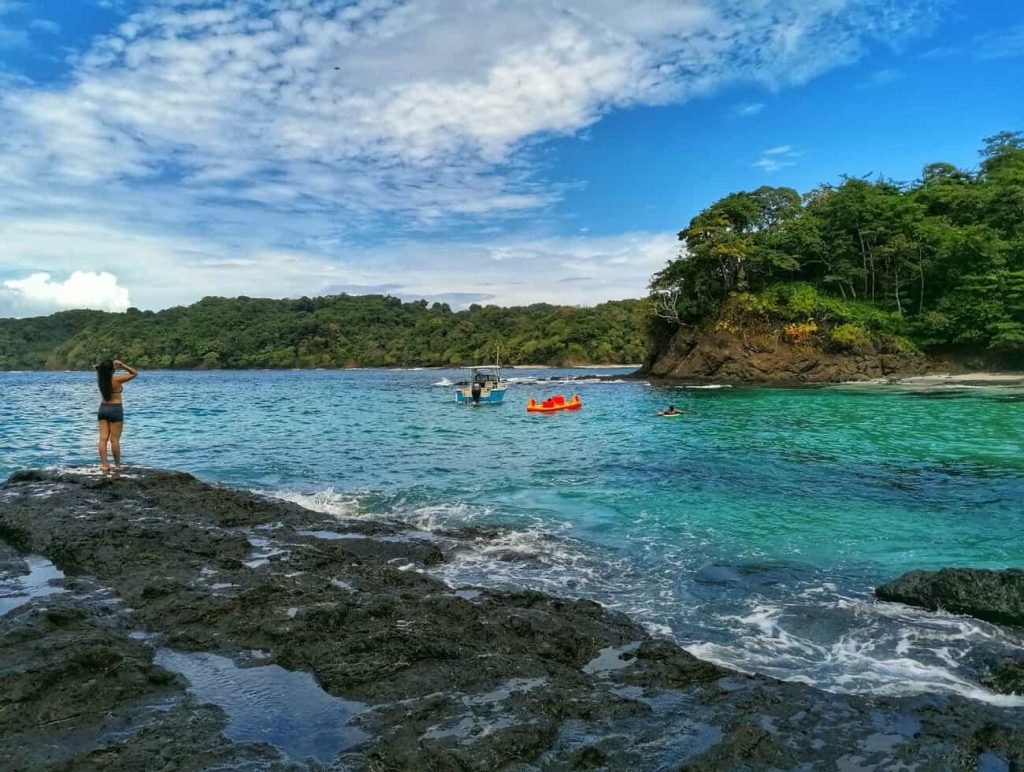
Aerial view of the Palo Seco pier and fishing boats on the Mariato coast, Panama
Palo Seco, Mariato: a natural harbor where boats come and go at any tide. Cebaco is just across the water.

Mariato Beaches: Torio, Morrillo, Mata Oscura and Malena

Mariato has dozens of beaches, and almost none of them have a hotel on the sand. Each one has its own personality. These are the four you will hear about first.
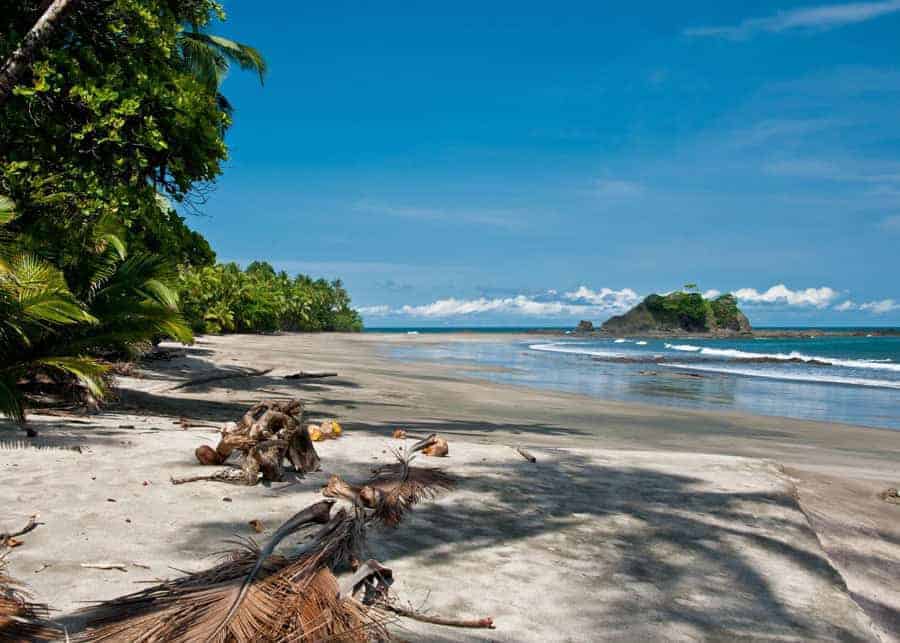
Empty beach and rocky islet on the Torio coast, Mariato, PanamaTorio · ParaglidingJump Off a Hill Into the SkyFrom Cerro Salitre, about 250 meters up, tandem paragliders float over the coast of Mariato and its green mountains. No experience needed: the pilot does the flying, you do the screaming.
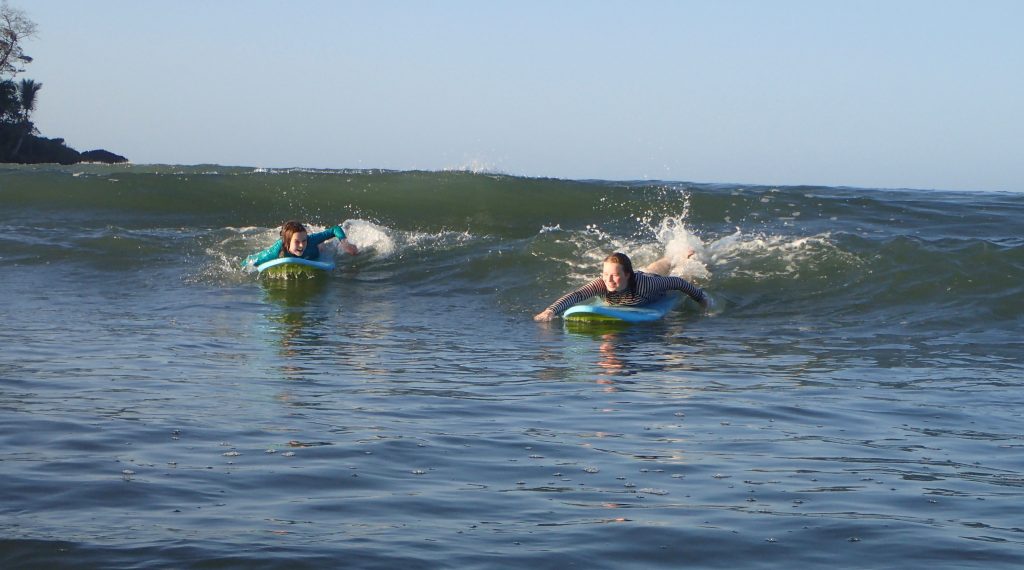
Barreling wave breaking at Playa Morrillo, Mariato, PanamaMorrillo · SurfThe Wave That Tests YouMorrillo’s break will take you to the limit. If you’re just starting, Playa Reina is the friendly place to rent a board and catch your first waves.
Sign for the sea turtle nesting site at Playa Mata Oscura, Mariato, PanamaMata Oscura · Sea turtlesWhere the Tortuga EcoRoute Was BornFamilies of Mata Oscura patrol the beach at night and run a hatchery, with the support of Fundacion Agua y Tierra. Each stop on the route belongs to a family of the community.
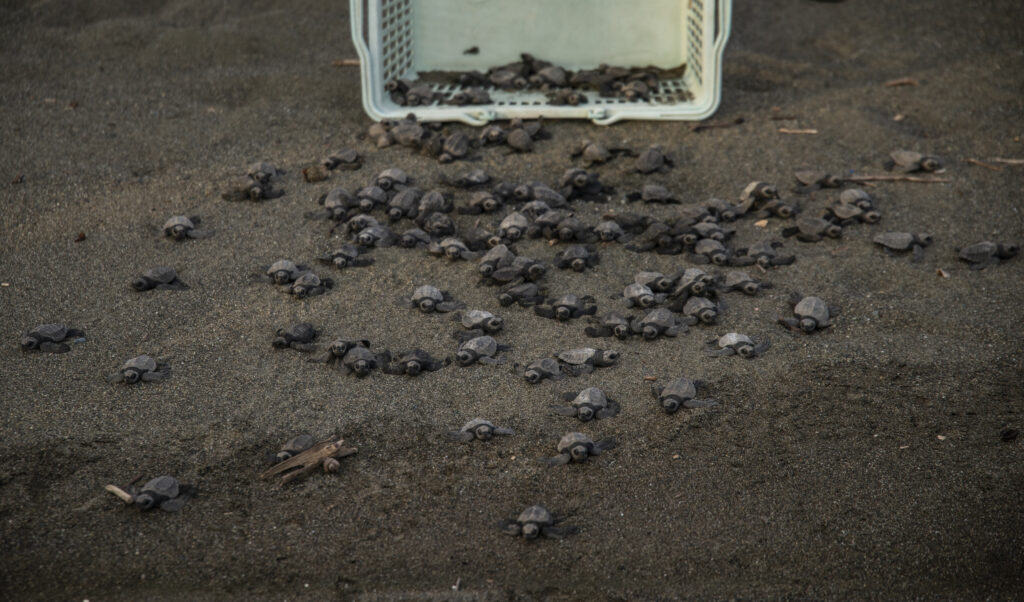
Sea turtle hatchlings crawling to the sea after release on the Mariato coast, PanamaMalena · Sea turtlesTwenty Years of Night ShiftsIn Malena, the community conservation association has protected sea turtle nests for more than 20 years. From June to December, you can join a hatchling release at dawn.

Sea Turtles in Mariato: The Beaches the Maps Forgot

For years, scientists had almost no data on sea turtles in southwest Azuero. Few roads, few phones, few visitors. So in 2018 and 2019 a research team did something simple: they asked the neighbors.

They talked to farmers and fishermen at roadside fondas and fish markets along about 30 km of coast. Between them, the locals named 22 beaches with sea turtles. The team patrolled the nine most mentioned, on foot and at night, and found nests on all nine.

83Of the 92 green sea turtle tracks the team counted, 83 were on one 800-meter beach in Mariato: El Gato. The study calls it a nesting site that could matter for all of Panama. The beach is named after a cat. The sea turtles are in charge.

Three species nest on these beaches: the green sea turtle (mostly in the dry season, December to May), the olive ridley (mostly in the rainy season) and the critically endangered hawksbill. The hawksbill has a neighbor worth knowing: about 90 km west, Coiba National Park is one of its most important feeding grounds in the eastern Pacific.

And the giant? The old folks still call the leatherback Tres Filos, for the three ridges on its shell, and many remember seeing it nest when they were young. The team didn’t find a single leatherback track. That’s why the night patrols matter.
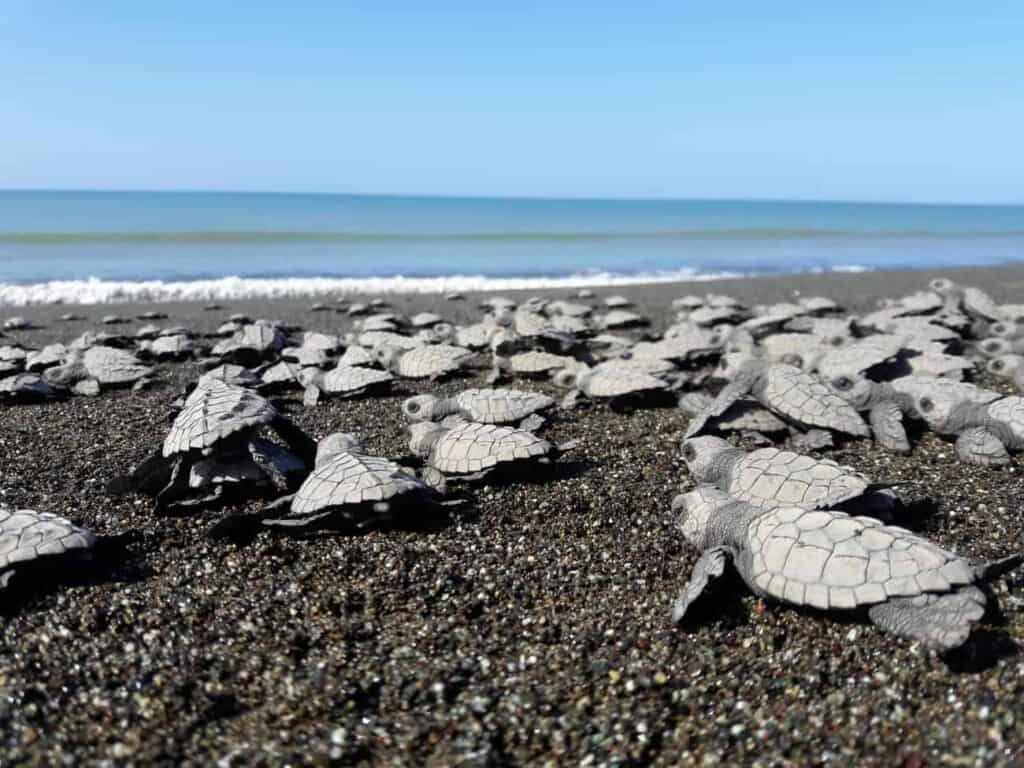
Dozens of sea turtle hatchlings heading to the sea on the dark sand of Mata Oscura, Mariato
200,000+Every year, families of the Tortuga EcoRoute release more than 200,000 hatchlings into the sea.
1Night · June to DecemberThe PatrolVolunteers walk the beach looking for fresh tracks in the sand. Sometimes they find the mother still digging.
2Same nightThe MoveEggs laid where coyotes, coatis or high tides could reach them are carried to a protected hatchery.
3About two months laterThe Dig OutThe hatchlings break their shells and can take several days to dig their way up to the surface.
4DawnThe RunReleased on the sand, they crawl to the waves on their own. Scientists believe that run helps them imprint the beach where they were born.
5Years laterThe HomecomingThe females that survive come back to nest on the same stretch of coast. The patrol starts all over again.

The Tortuga EcoRoute is more than a hatchery. It brings together 13 to 14 family businesses, most of them led by women, and it has won national and international awards. The Sea Turtle Fair is in June. Down the coast on the Azuero Peninsula, Isla Cañas is one of the few beaches in the world with arribadas, when thousands of olive ridleys nest on the same nights. Read more in our complete sea turtle guide.

Punta Mariato and Cerro Hoya National Park
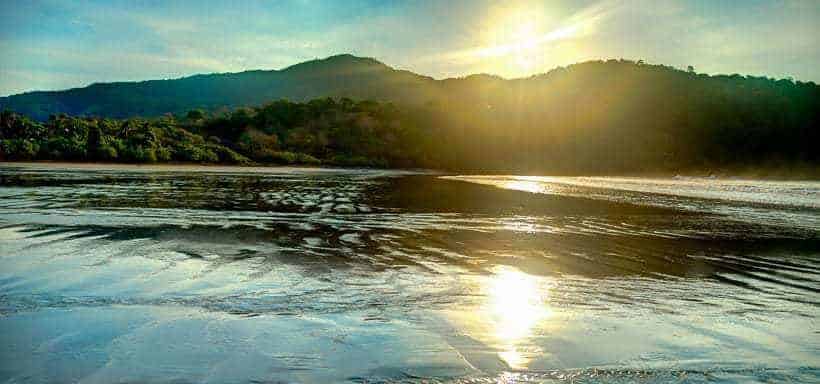
River and jungle-covered mountains of Cerro Hoya National Park at sunrise, Azuero Peninsula, Panama
The last corner of the continentSouth of the beaches, the road gives up and the jungle takes over. Cerro Hoya National Park protects the last large tropical forest of the Azuero Peninsula, and at its tip, Punta Mariato is the southernmost point of mainland North America.

An automatic lighthouse stands on the cliffs, the swell is strong, and the only regular visitors are fishing boats. Out on the water, anglers have a nickname for the stretch between Punta Mariato and Jicarita: the Lost Coast.

Fishing the Mariato Coast

Why the Lost Coast? Because you can fish all day without seeing another sport fishing boat. Just local pangas, frigatebirds and the green wall of Cerro Hoya behind you.
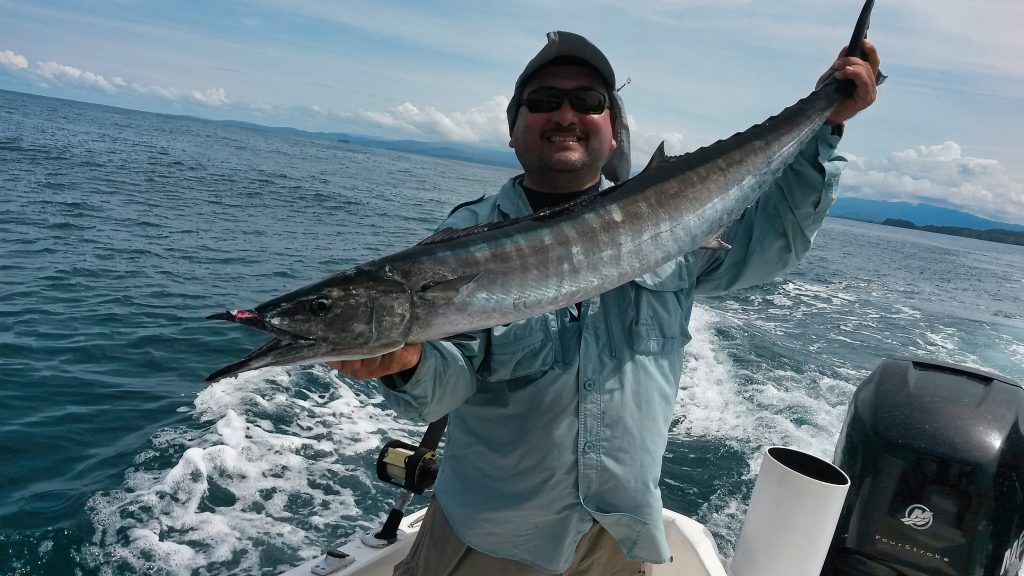
Angler holding a wahoo caught off the Mariato coast, PanamaWahoo · MariatoCebaco & Mariato · Private fishing charterFish the Lost Coast, From Cebaco to Punta Mariato$1,200Cebaco, per boat$1,500Mariato, per boat4anglers maxAll yearsnapper, amberjack, tunaSee the fishing charter →

Every angler in Panama needs a sport fishing license, unless they fish with an authorized company like ours: our captains’ tourism license covers it, so you don’t do any paperwork.

Where to Stay in Mariato

Mariato doesn’t do big resorts, and that’s the point. These are our friends on the coast, the places where we send our own guests. And when you get hungry, head to the pier.
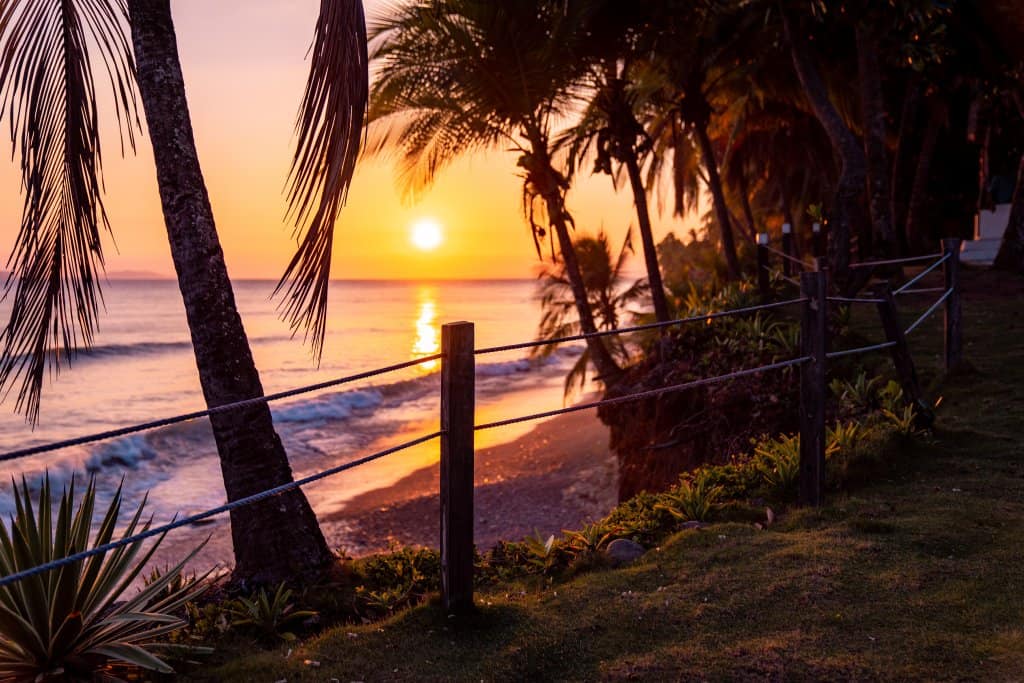
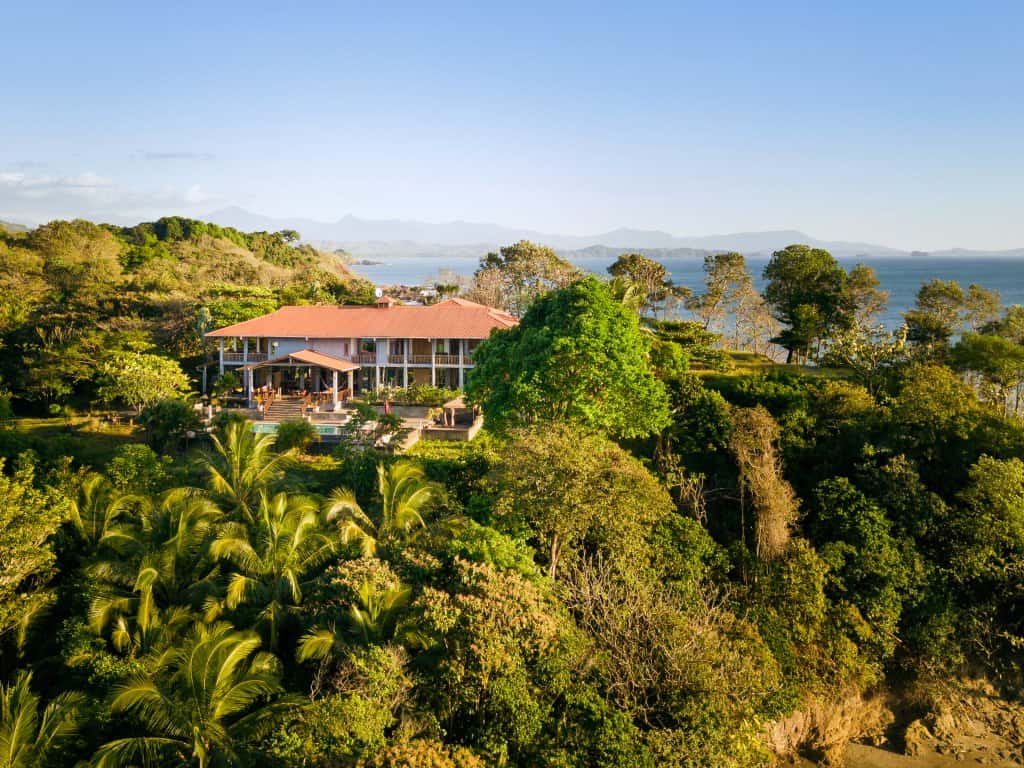
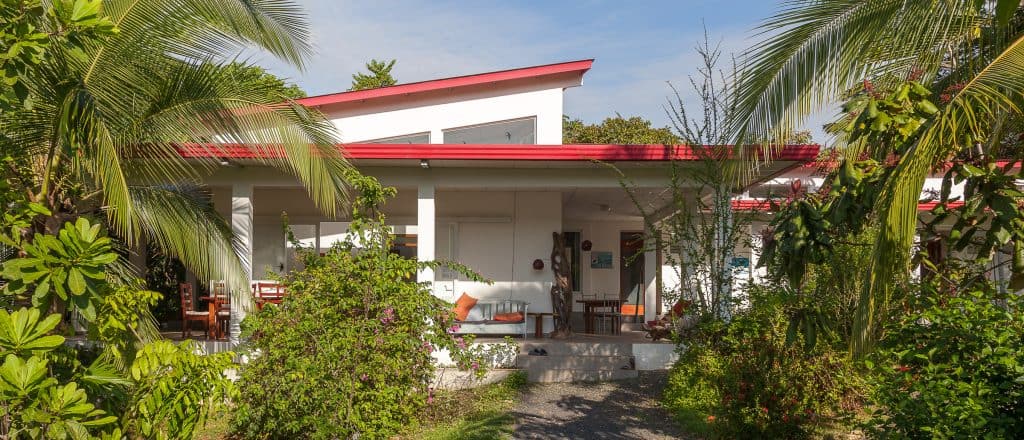
Sunset framed by palm trees at Hotel Playa Reina, Mariato, PanamaPlaya Reina · HotelHotel Playa ReinaRight on Playa Reina, the friendliest beach in Mariato for a first surf lesson. Palm trees, an open view west and a front-row seat to the sunset.See it on the map →Drone view of Hotel Punta Duarte in the forest above the sea, with Cebaco Island on the horizon, Mariato, PanamaPunta Duarte · HotelHotel Punta DuarteA hotel in the forest on the Punta Duarte headland, with the gulf below and Cebaco Island on the horizon. Sunset from the terrace is part of the deal.See it on the map →Guests learning to surf in front of Morrillo Beach Resort, Mariato, PanamaMorrillo · Beach hotelMorrillo Beach Eco ResortA beachfront boutique hotel near Playa Morrillo, close to the waves and the sea turtle beaches. Good place for a first surf lesson.Visit the website →Hotel Heliconia, the Heliconia Garden Inn eco-lodge among the gardens near Malena, Mariato, PanamaMalena · Eco-lodgeHeliconia Garden InnAn eco-lodge inside a botanical garden near Malena. A couple of Dutch biologists turned an old pasture into a forest of more than 4,000 trees, full of birds and monkeys.See it on the map →
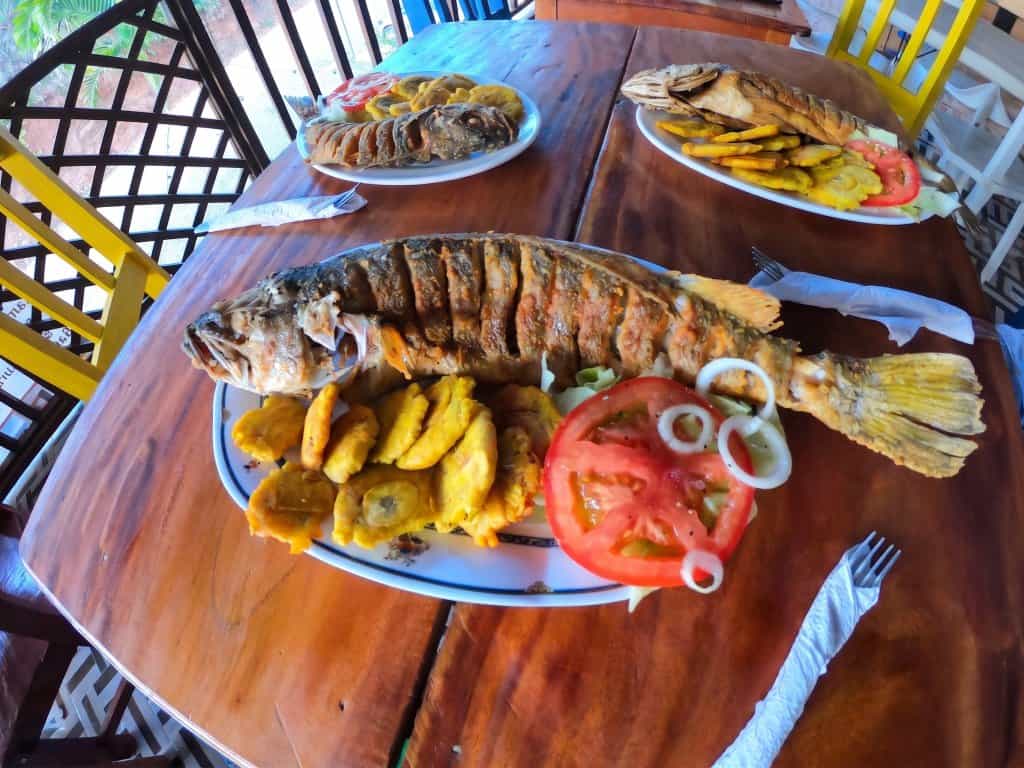
Fried whole fish with patacones and salad served at a restaurant in Palo Seco, Mariato, Panama
Palo Seco · Where to eatFresh Fish by the PierThe boats unload, the kitchen starts. In Palo Seco, lunch is whole fried fish, patacones and salad, as fresh as it gets on this coast. Eat slowly: the sunset is still a few hours away.

How to Get to Mariato

1By carPanama City to Santiago, Then SouthTake the Pan-American Highway to Santiago de Veraguas, then follow the road south toward Atalaya and Ponuga. The last stretch runs along the coast, with a new beach around almost every curve.
2By busAlbrook to Santiago, Then a Local BusBuses leave the Albrook terminal in Panama City for Santiago all day. From the Santiago terminal, local buses run to Mariato and the coastal villages.
3By taxiFrom SantiagoA taxi from Santiago takes about an hour. Agree on the fare before you leave.
4By boatFrom the Gulf, With UsOur boats leave from the Club Nautico de Veraguas in El Bongo, 5 minutes from Puerto Mutis, and from Santa Catalina. Coming from Mariato? We pick you up at Palo Seco (+$100).
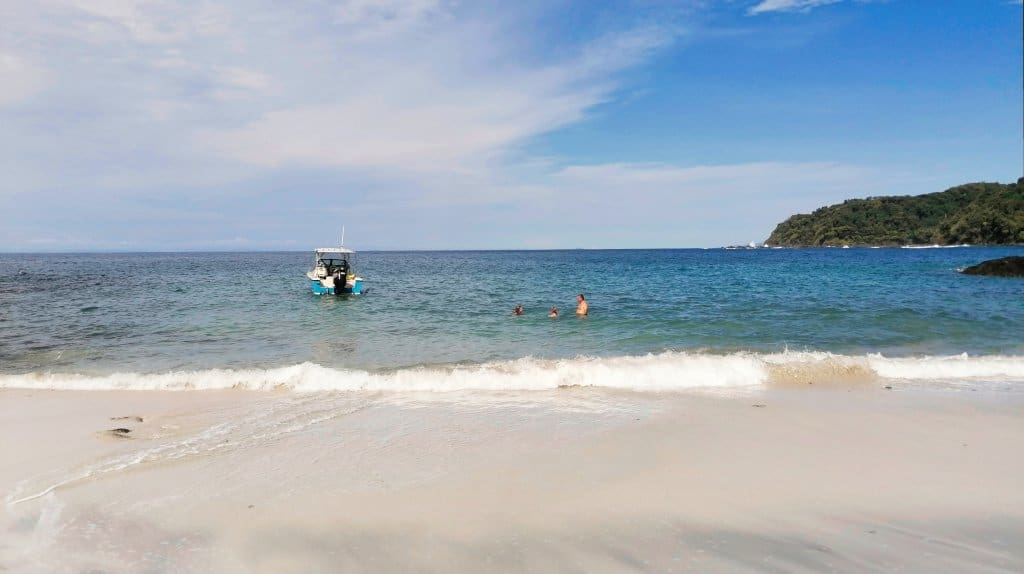
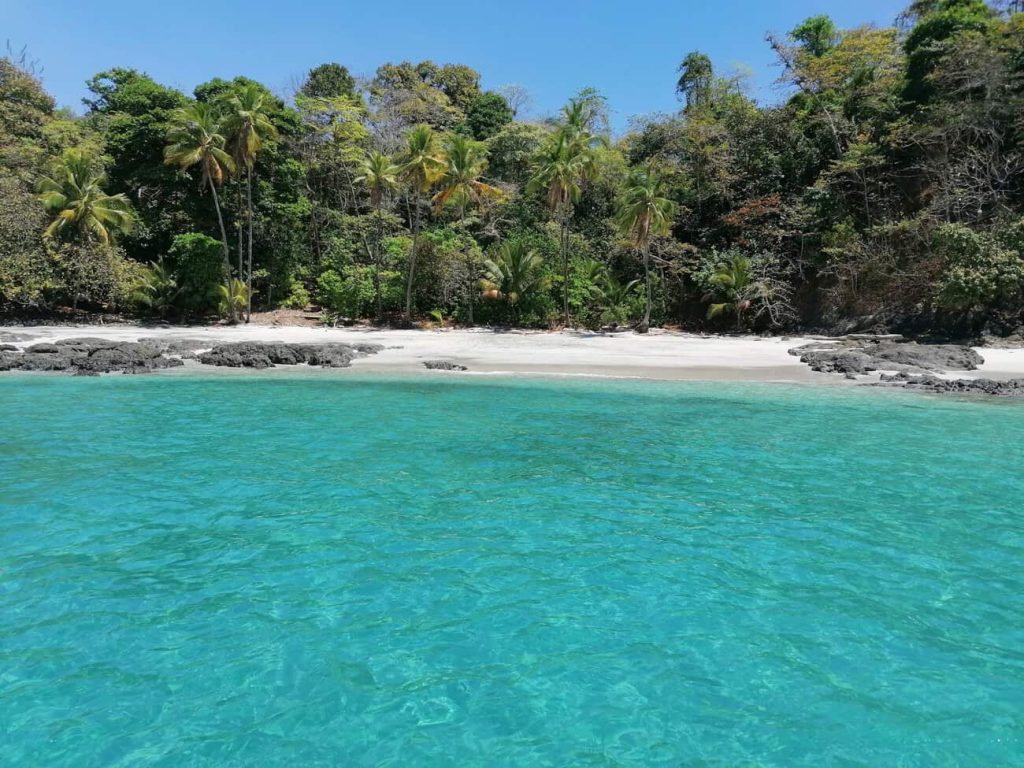
White sand and turquoise water at Tintorera Beach, Cebaco Island, PanamaFrom $650 / boatCebaco Island · Private boat · Up to 6You’ve Watched It From the Beach. Now Go.Snorkel with sea turtles at Tintorera, swim from an empty beach and have lunch on the sand. Pick-up from Palo Seco available.See the Cebaco day tour →

Frequently Asked Questions

Where is Mariato, Panama?

Mariato is a district of Veraguas Province, on the southwest coast of the Azuero Peninsula, about an hour south of Santiago de Veraguas. Its coast faces Cebaco Island across the mouth of the Gulf of Montijo, and it ends to the south at Punta Mariato, inside Cerro Hoya National Park.

Why is Mariato called the Sunset Coast?

Because the Mariato coast faces west over the Gulf of Montijo, at almost a right angle to the point where the sun goes down. From the beach, the sun sets straight in front of you and drops into the sea, with Cebaco Island on the horizon. The nickname came from American visitors, who also named the coast of Pedasi the Tuna Coast. Palo Seco and Playa Reina are two of the best places to watch it.

When can you see sea turtles in Mariato?

Sea turtles nest in Mariato mostly from June to December, and hatchlings are released from about August to January. The Tortuga EcoRoute in Mata Oscura and the community of Malena run night patrols and hatchling releases. Green sea turtles also nest in the dry season, from December to May.

How do I get to Mariato from Panama City?

Drive the Pan-American Highway to Santiago de Veraguas and then head south toward Atalaya and Ponuga. By bus, take a bus from Albrook to Santiago and a local bus from Santiago to Mariato. A taxi from Santiago takes about an hour.

Can you visit Cebaco Island from Mariato?

Yes. Cebaco is right across the water from Mariato. Pacific Adventure Tours can pick you up at Palo Seco (+$100) for its private Cebaco tours: the day tour from $650 per boat and the 2-day tour from $1,300 per boat, for up to 6 people.

Get a Question?

Do not hesitage to give us a call. We are an expert team and we are happy to talk to you.

+507 6673-0256

info@pacificadvent.com