


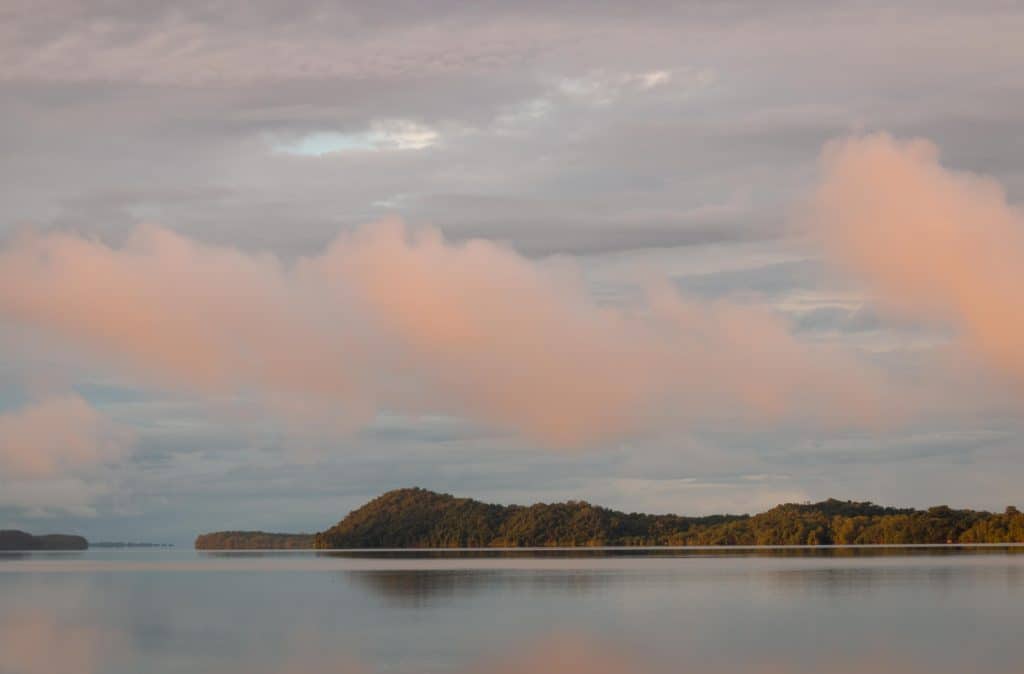
It’s 5:45 am at the dock in El Bongo, and you can’t see the mangroves yet. You can only hear them: water slapping the roots, a fish jumping somewhere you can’t point to, the tide pulling at the hull.
Nobody talks much. The captain checks the tide table one last time, the engine coughs, and the boat slides into a channel that is still more black than green.
Then, about twenty minutes before the sun shows up, the forest makes a sound you’ll be describing to your friends for years. That sound is where this story really starts. And it isn’t a bird.
What Time Is Sunrise in Panama?
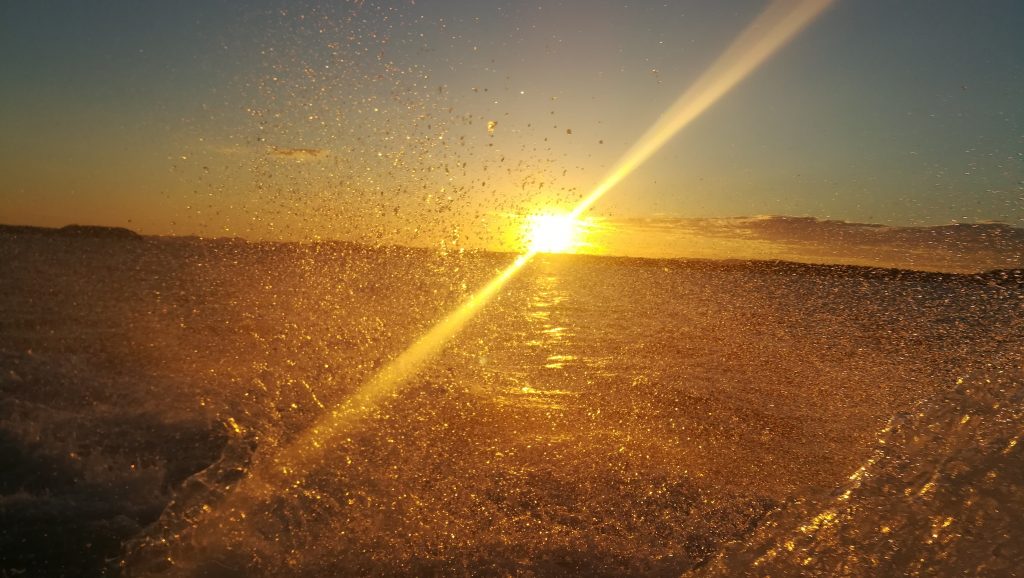
Panama sits only about 8 to 9 degrees north of the equator, so sunrise barely moves all year. In the Gulf of Montijo, in Veraguas, the sun comes up between about 6:05 am (late May and early June) and 6:44 am (late January and early February), Panama time (UTC−5, with no daylight saving time). First light arrives about 20 minutes earlier, and a day lasts between roughly 11 hours 40 minutes and 12 hours 35 minutes. In Panama City the sun rises about 6 minutes earlier than in the gulf.
Sunrise on the 15th of each month · Gulf of Montijo · Panama timeYour Sunrise in the Estuary, Minute by Minute
Times shift a little with the season and every day is its own show, but this is how a morning on the gulf usually unfolds. You leave from the Club Nautico de Veraguas in El Bongo, 5 minutes by car from Puerto Mutis.
Why Do Howler Monkeys Howl in the Morning?
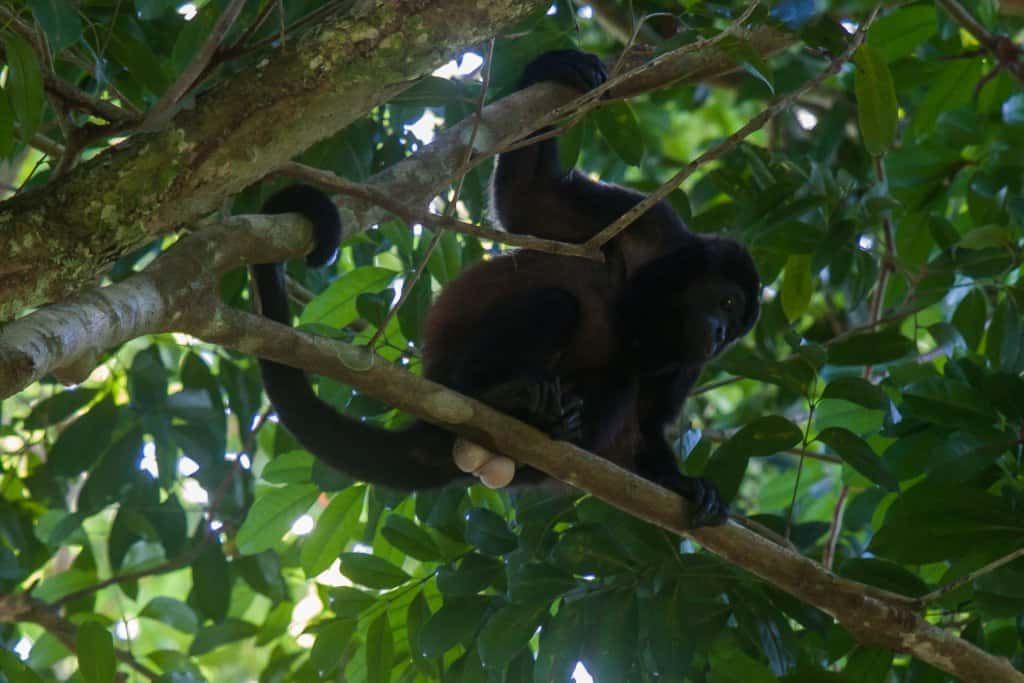
In the Gulf of Montijo you hear them from the water, along the San Pedro River, on our sunrise kayak tour. (The one in the photo lives in Coiba National Park.)
Why Do Birds Sing in the Morning?
For decades the favorite answer was that sound carries better in the cool, still air of dawn. In 2025, a team from the Cornell Lab of Ornithology put that idea to the test with recorders at 43 sites in a tropical rainforest in India, listening to 69 species of birds.
Sound carrying better didn’t explain the dawn chorus. Neither did “it’s too dark to look for food”, because most birds sang far more at dawn than at dusk. What the data did support: birds that defend a territory sing more at dawn, as if checking in after a night of silence, and birds that eat a bit of everything are chattier too, maybe to share news about food or danger. Sound familiar? It’s the howlers’ roll call, with feathers.

Is Sunrise a Good Time to Fish?
Yes, and the fish have the same reason as the howlers: the light. Snappers and groupers are twilight hunters. On coral reefs, scientists group them among the fish that forage mainly at dawn and dusk. In low light, small fish have a harder time spotting a predator, while the hunter keeps hunting, and the highest rates of fish-eating predation measured in the wild have been recorded at twilight.
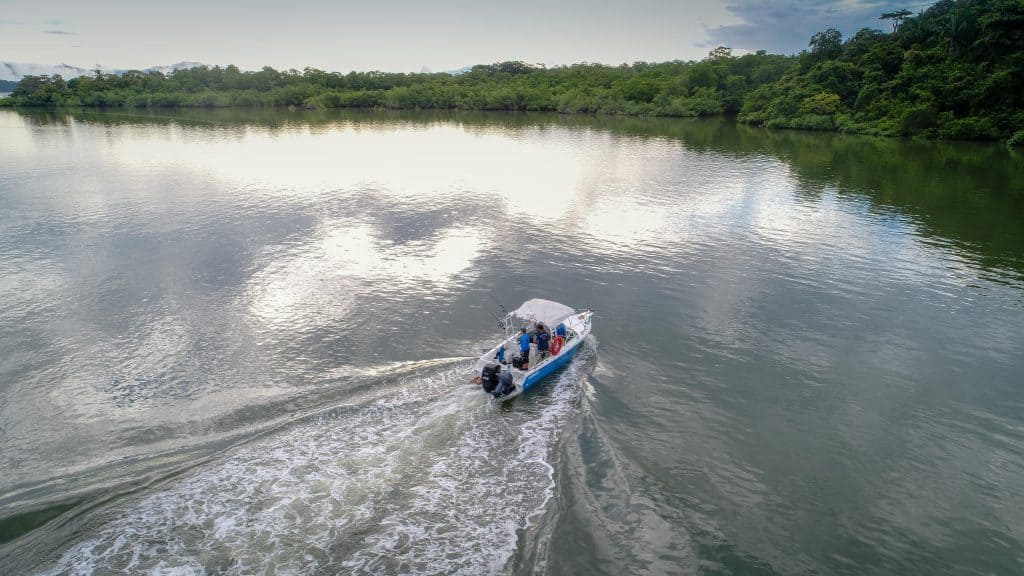
That is why our fishing trips suggest a 6:00 am start. But in the estuary, the light only gets a vote. The tide decides: in the Gulf of Montijo the sea rises and falls up to 6 meters, and the captains pick the day by the tide table. We explain how in mangrove fishing: how to fish an estuary with the tide. To meet the fish one by one, read our Puerto Mutis fishing guide.
Two Ways to Watch the Sun Come Up
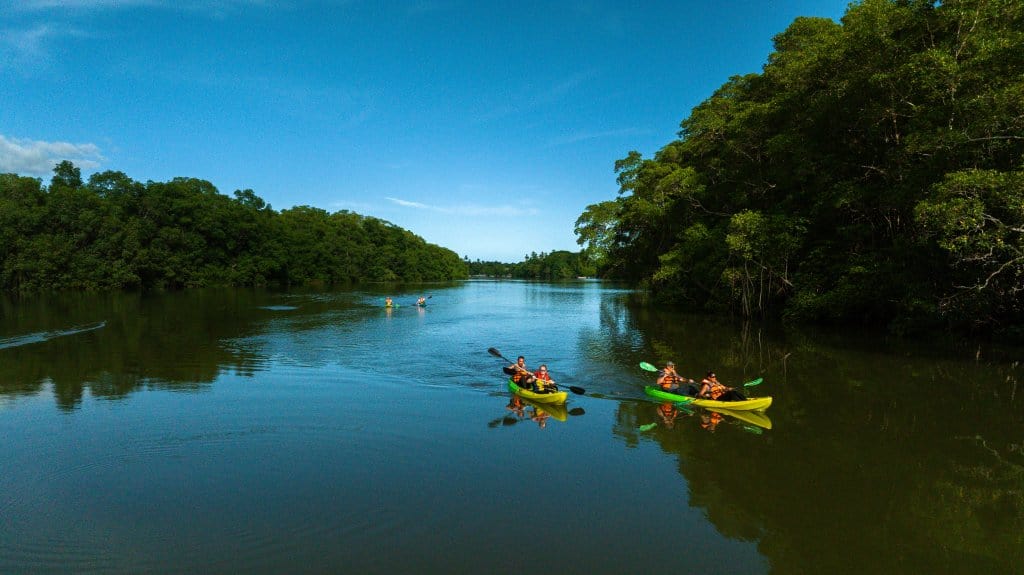
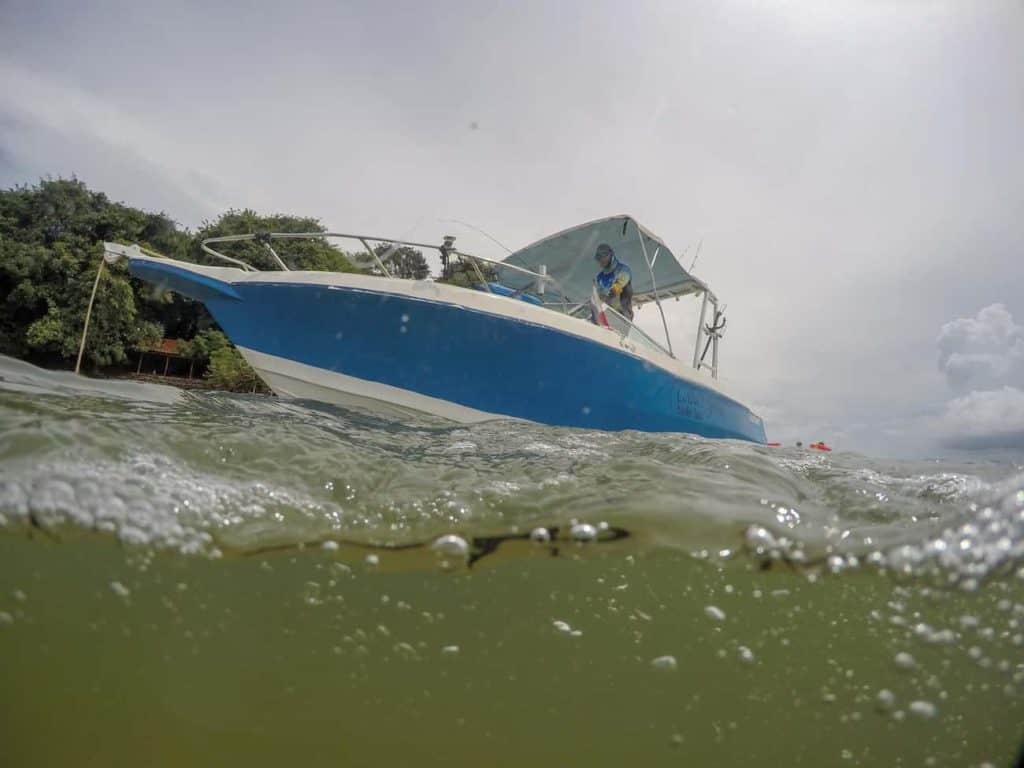
You can watch this morning in silence from a kayak, or from a boat with a rod in your hand. Both leave from El Bongo, and the kayak burns 0 liters of fuel.

Leave the Morning the Way You Found It
The best mornings in the estuary are the quiet ones. Keep your voice low when the birds are close, never feed wildlife, and let the animals decide how close they come. When the gulf’s resident family of more than 80 bottlenose dolphins swims over to the boat, we slow down and let them choose.
Frequently Asked Questions
What time is sunrise in Panama?
Between about 6:05 am (late May and early June) and 6:44 am (late January and early February), Panama time (UTC−5, no daylight saving time). Panama is close to the equator, so sunrise moves less than 40 minutes in a whole year. These times are for the Gulf of Montijo, in Veraguas; in Panama City the sun rises about 6 minutes earlier.
Why do howler monkeys howl in the morning?
Most howler roars come on their own around daybreak. Researchers think they work like a roll call that tells neighboring troops a group is still there, keeping each troop in its own patch of forest. A hollow bone in the throat makes the roar resonate, and the chorus can carry up to 5 kilometers through dense rainforest.
Why do birds sing in the morning?
A 2025 study led by the Cornell Lab of Ornithology found that the dawn chorus is not explained by sound carrying better at dawn or by low light making it hard to find food. It found support for birds advertising their territory after the night and for omnivorous birds communicating, possibly about food or predators.
Is sunrise a good time to fish in Panama?
Yes. Predators like snappers and groupers forage mainly at dawn and dusk, when low light helps them hunt. In the Gulf of Montijo our trips suggest a 6:00 am start, but the tide matters even more: our captains prefer days with a tide range of 13 feet (4 meters) or less.
Where can I watch the sunrise in the mangroves in Panama?
In the Gulf of Montijo, in Veraguas, the largest Ramsar wetland in Panama. Our sunrise kayak tour, The Bird Awakening, costs $45 per person, and our private inshore fishing trip costs $450 per boat. Both leave from the Club Nautico de Veraguas in El Bongo, 5 minutes from Puerto Mutis.