


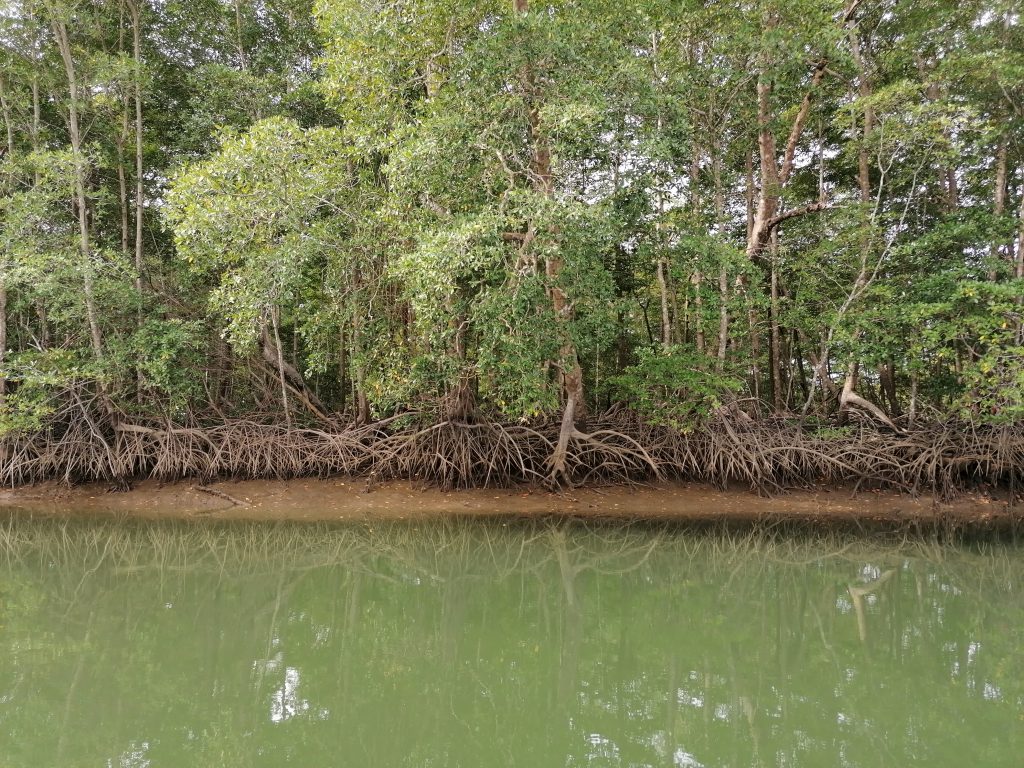
Low tide, 6:30 in the morning. The channel has shrunk to a ribbon of brown water, and the mud on both banks is moving. Thousands of small crabs are out, picking at the mud between the mangrove roots.
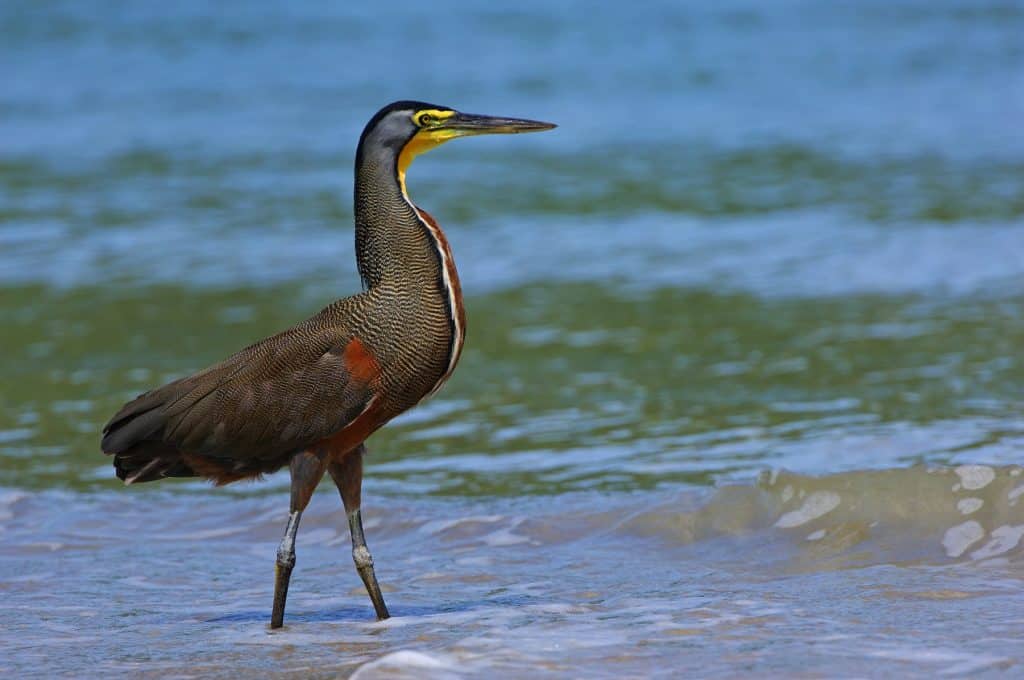
A tiger heron stands on a root, so still it looks carved. Then the water turns. Within minutes the river is running backwards, salt water from the Pacific pushing in, and the crabs vanish into their holes. Something bigger is coming in with the tide.
That is an estuary. And the cast of characters that lives by its clock is bigger, stranger and hungrier than most people imagine.
What Is an Estuary?
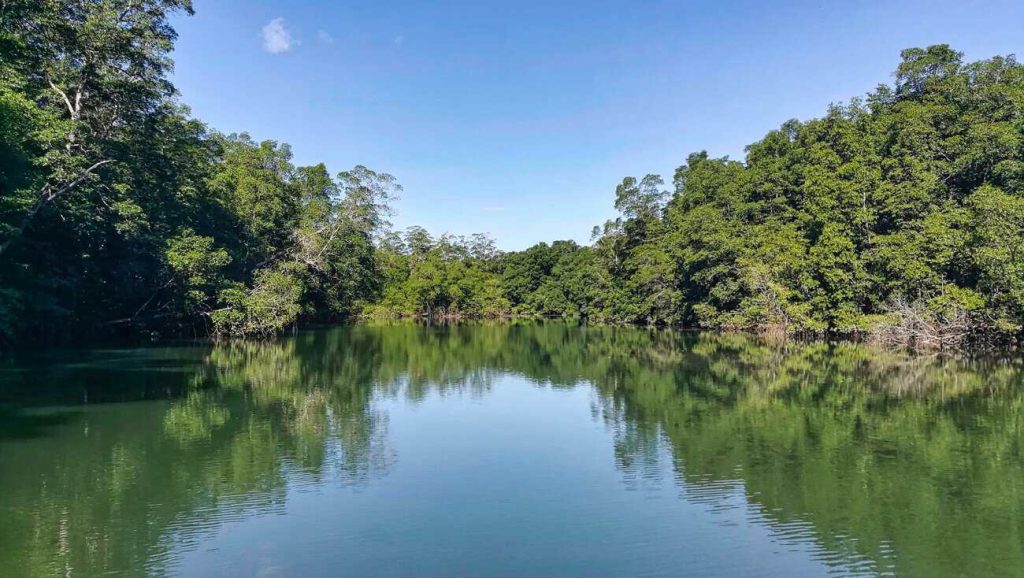
An estuary is the place where a river meets the sea and fresh water mixes with salt water. The result is brackish water, saltier than a river and fresher than the ocean, and it changes with every tide. In Panama, one of the largest is the Gulf of Montijo in Veraguas: rivers like the San Pedro pour in from the highlands, while tides of up to 6 meters push the Pacific deep into a maze of mangrove channels. Our boats leave from the Club Nautico de Veraguas in El Bongo, 5 minutes from Puerto Mutis.
Estuary Animals: What Lives in an Estuary?
Estuaries are home to fish, crabs, shrimp, clams, sharks, rays, wading birds, crocodiles, monkeys and dolphins, and many of them live here only for part of their lives. An estuary works like a crossroads: some animals are born here and leave, some arrive from the open sea to feed or give birth, and a few never leave at all.
The list below is not a generic one. These are the animals that share the Gulf of Montijo with us, grouped by family, with the job each one does to keep the estuary running.
How Do Animals Survive in Brackish Water?
Animals that live in estuaries have to cope with water that turns saltier or fresher several times a day. They solve it in three ways:
Estuary Fish: What Fish Live in an Estuary?
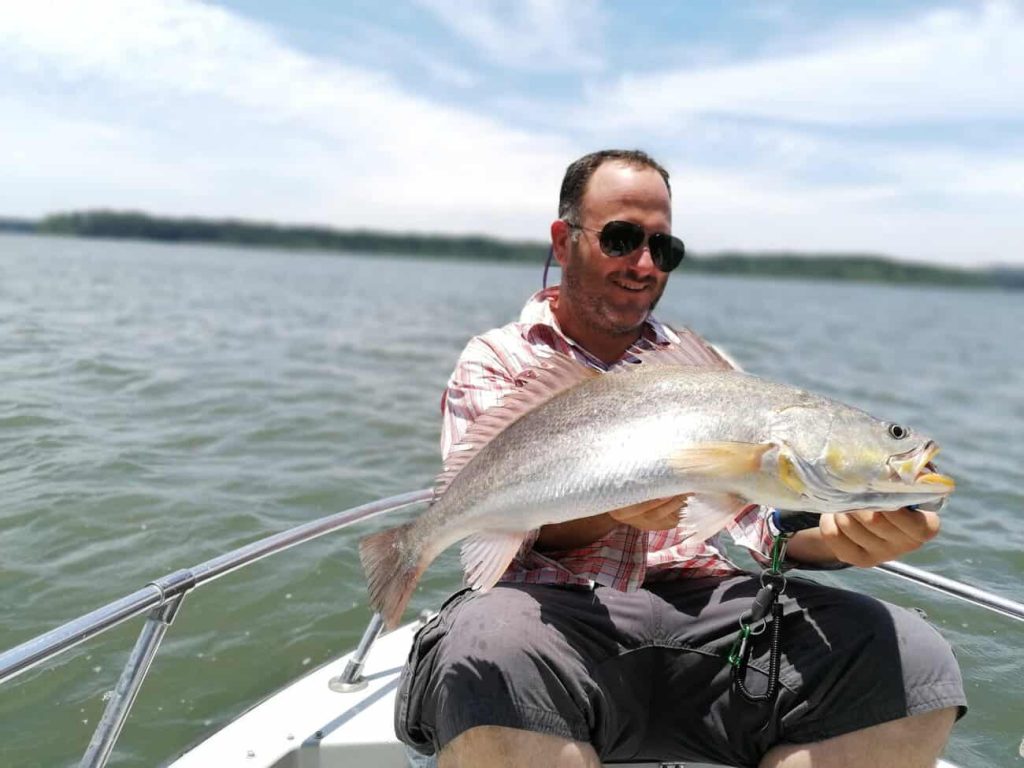
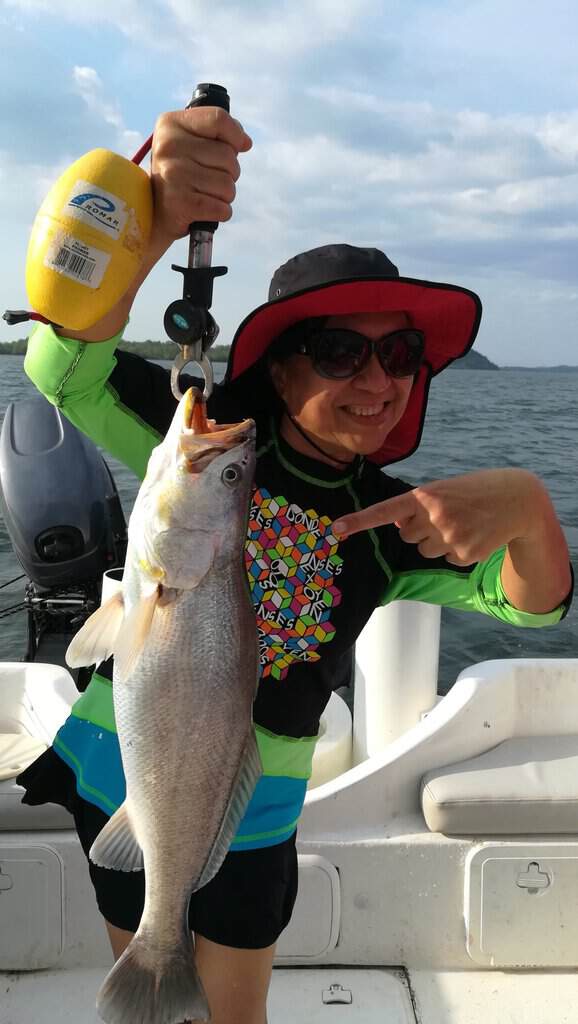
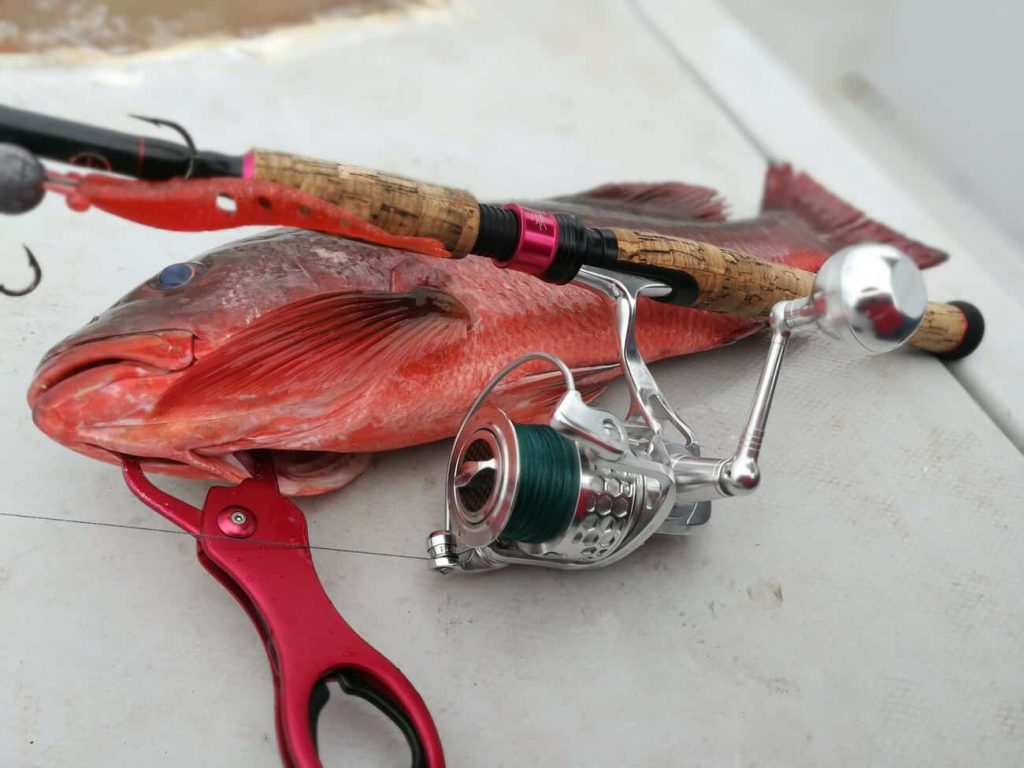
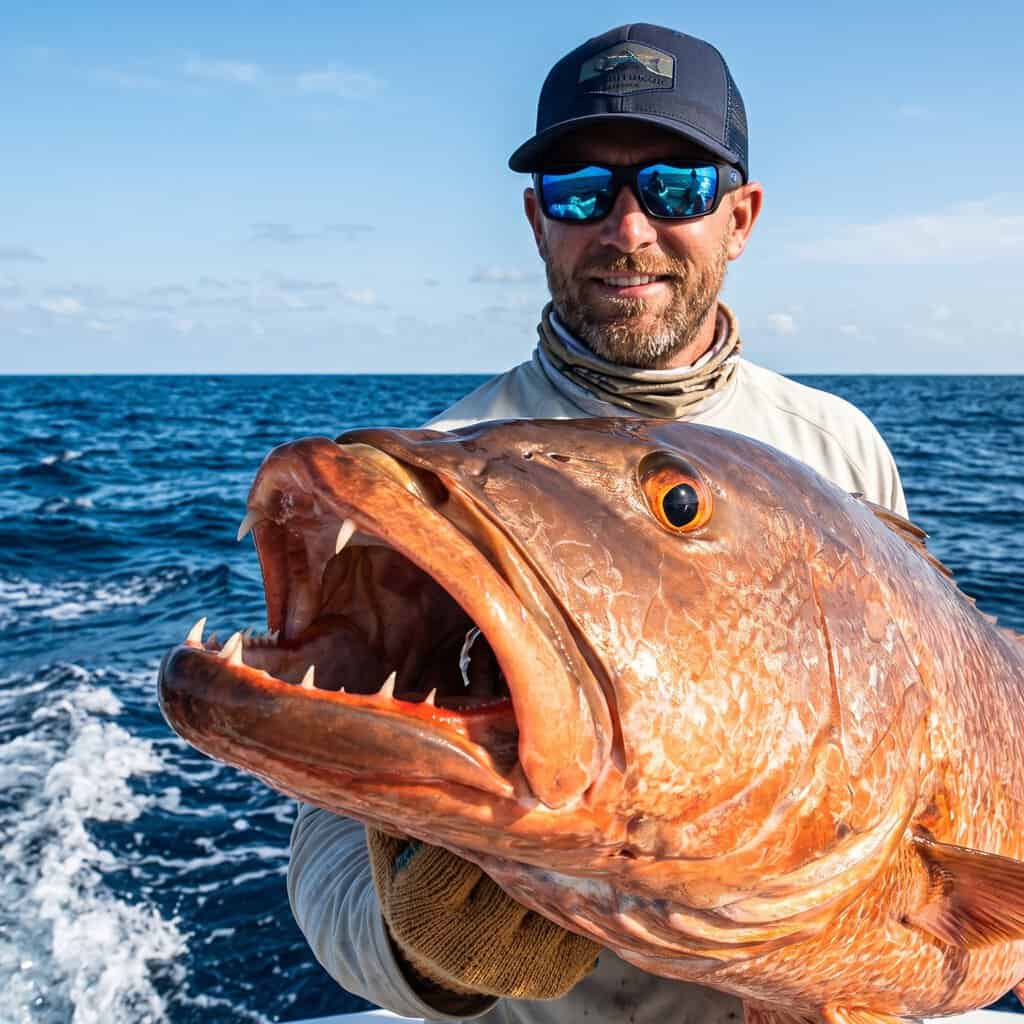
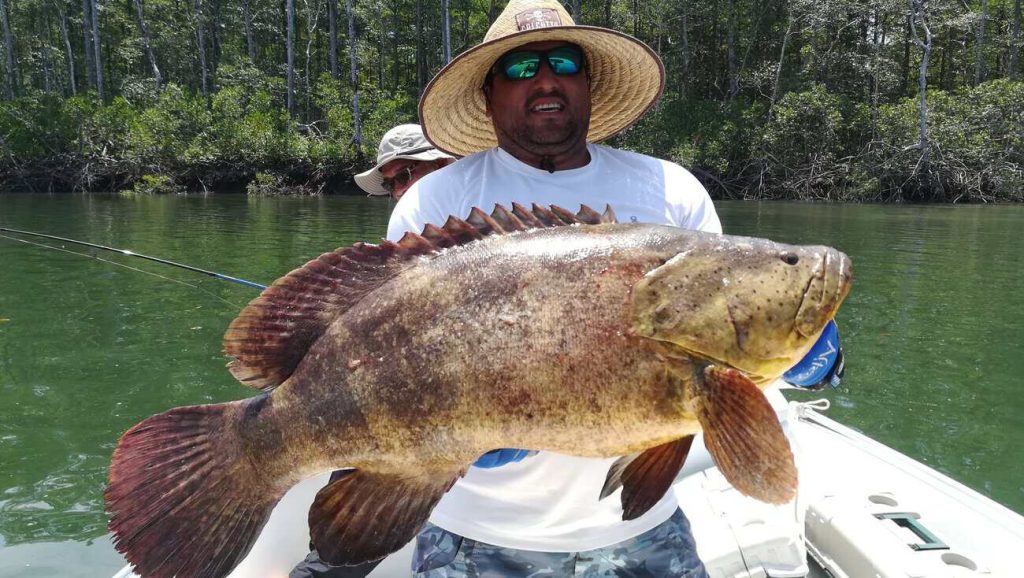
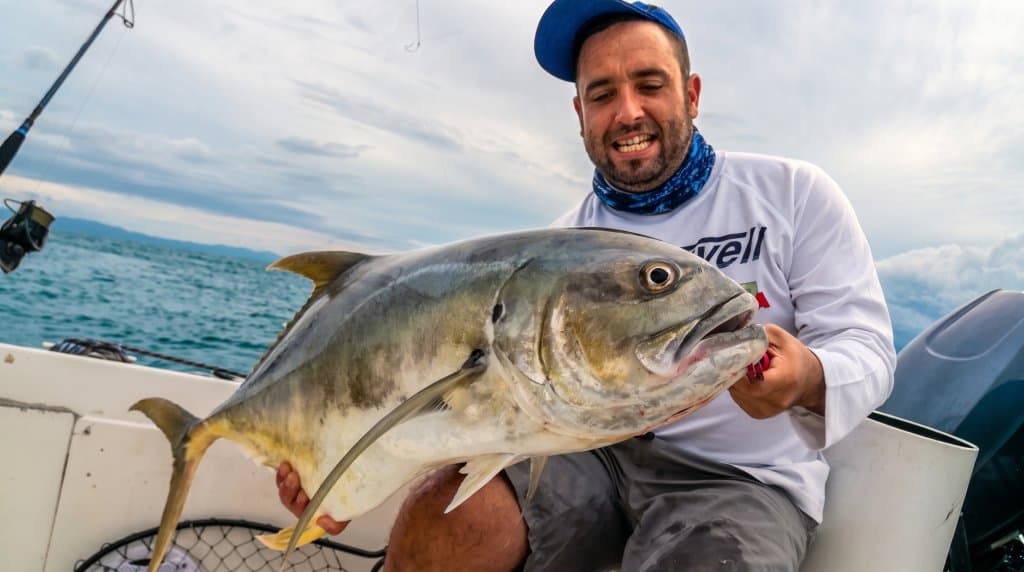
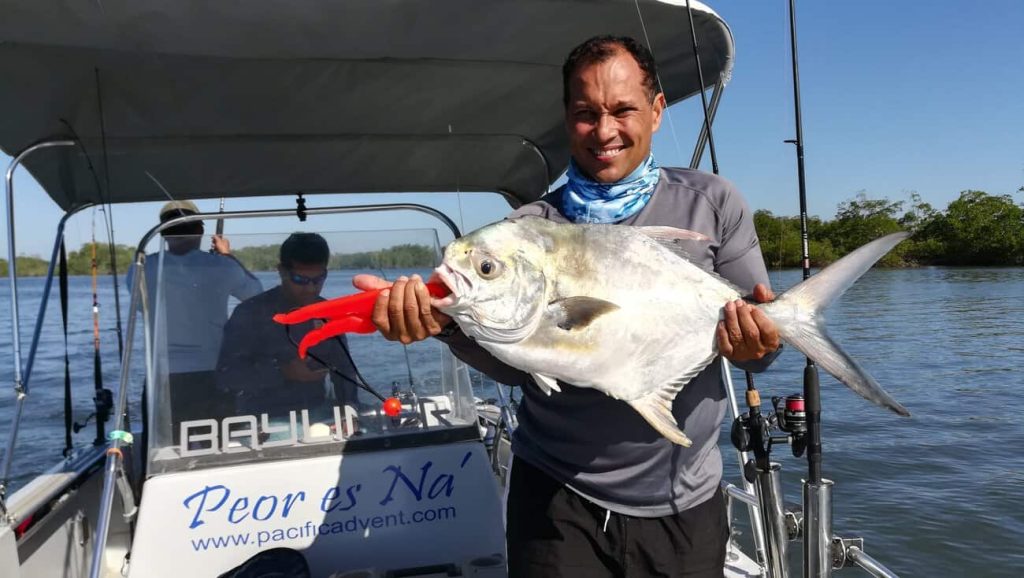
Corvinas, snappers, snook, grouper, jacks and pompano are the fish you are most likely to meet in a Pacific estuary like the Gulf of Montijo. Most of them are brackish water fish only while they are young: the mangrove roots hide them from bigger predators, and the channels are full of shrimp and small fish to eat. If you want to know how to catch them, read our Puerto Mutis fishing guide. Here we care about how they live.

Crabs, Shrimp and Clams: The Mud Crew
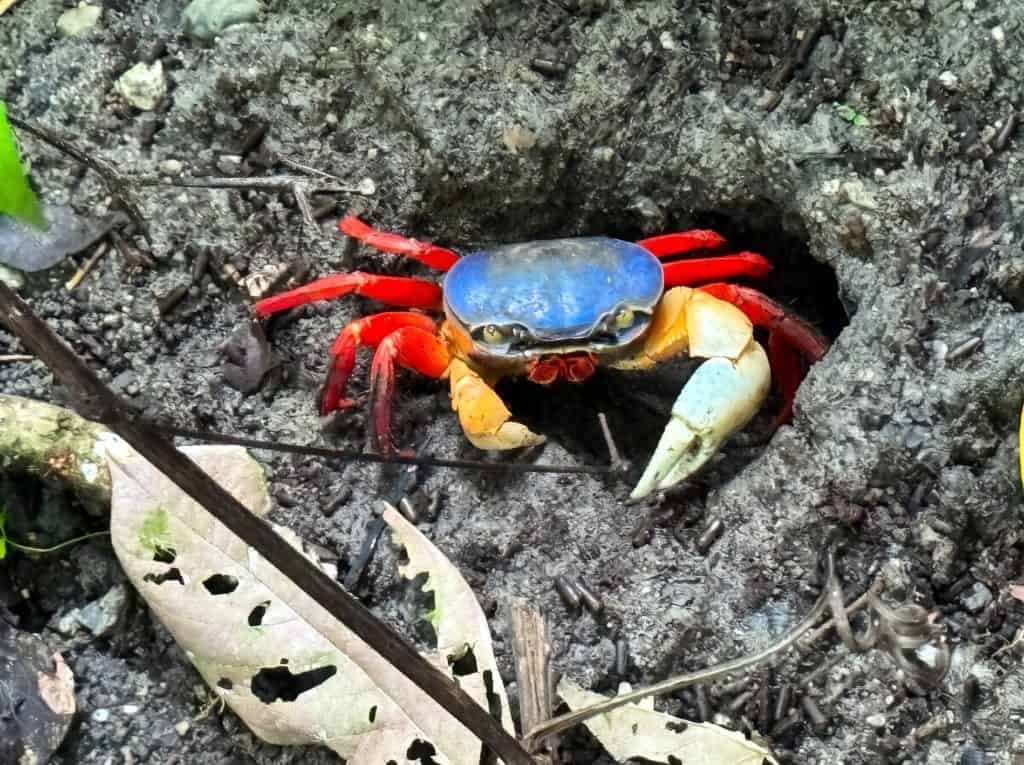
Nobody photographs them, but without these five the estuary would stop working. They live in, on or under the mud, and their whole lives are timed by the tide. Look closely at a red mangrove root at low tide, too: barnacles and small oysters cling to it, a tiny reef on stilts that the sea feeds twice a day.
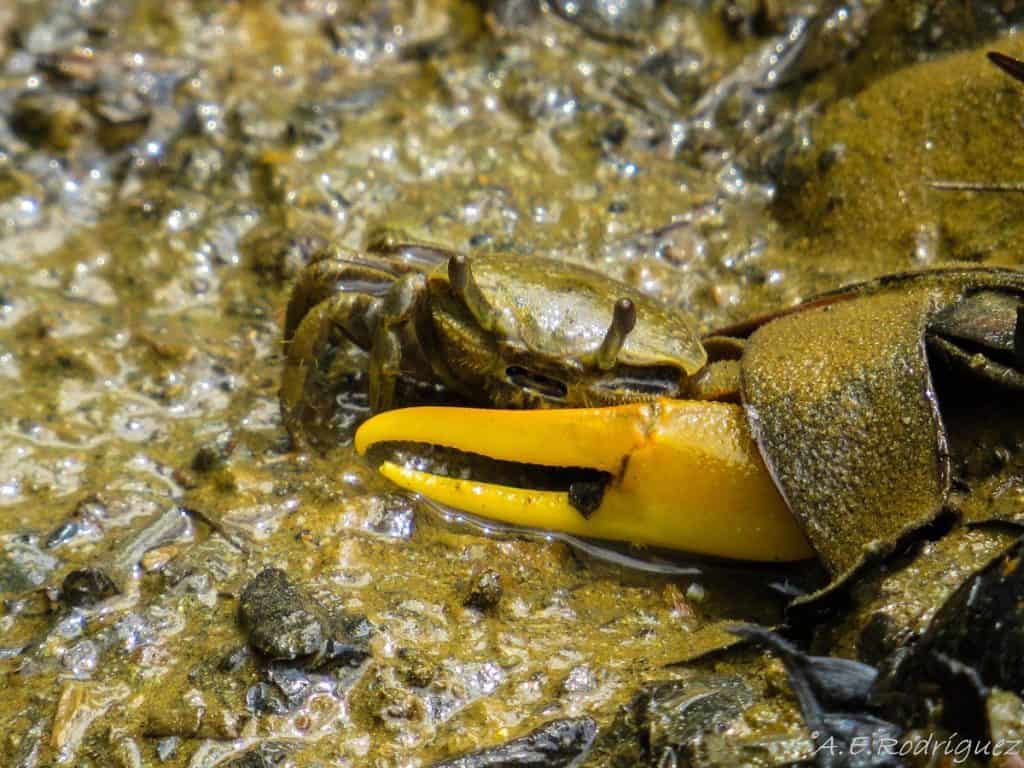
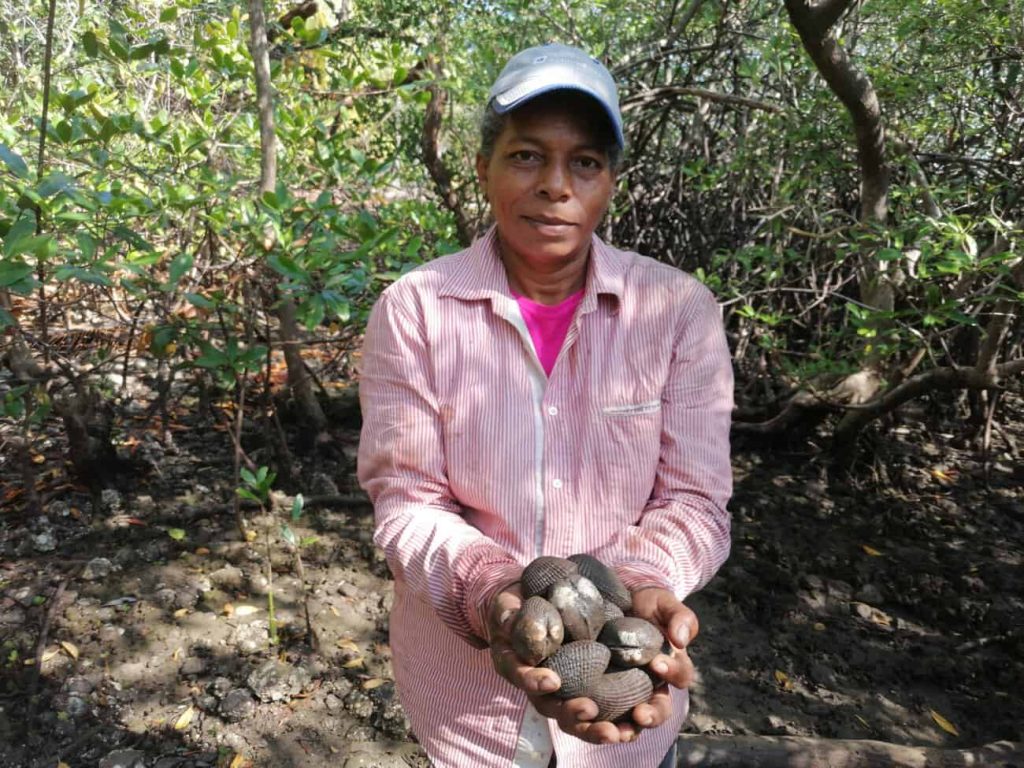
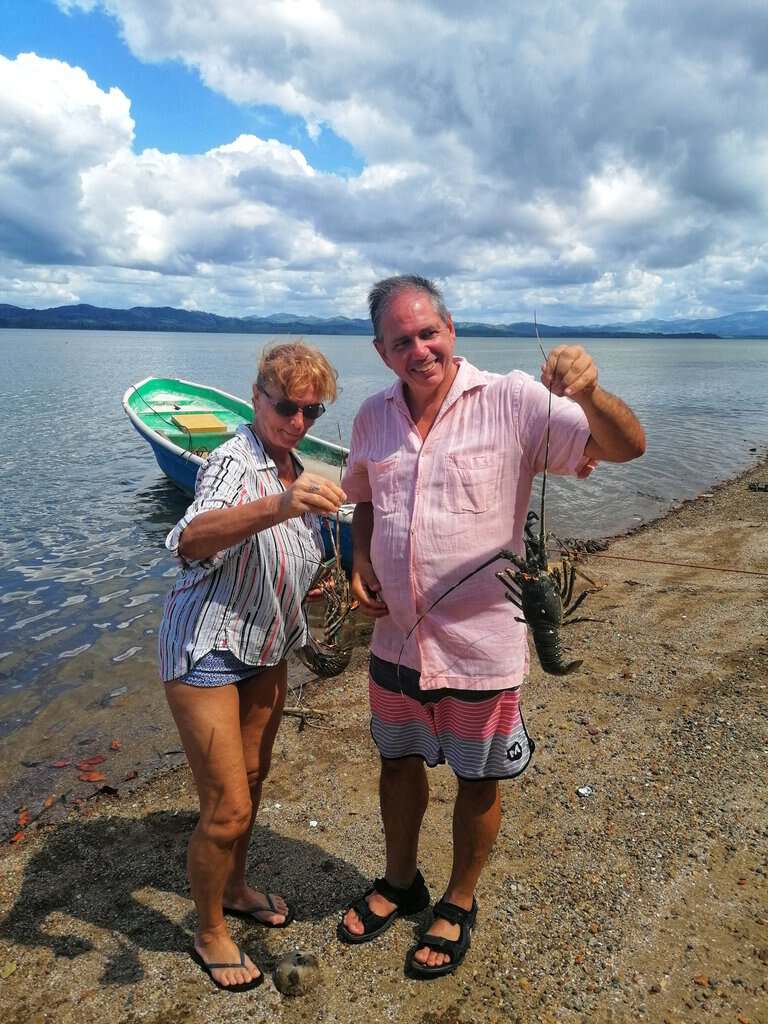
Do Sharks Swim in Estuaries?
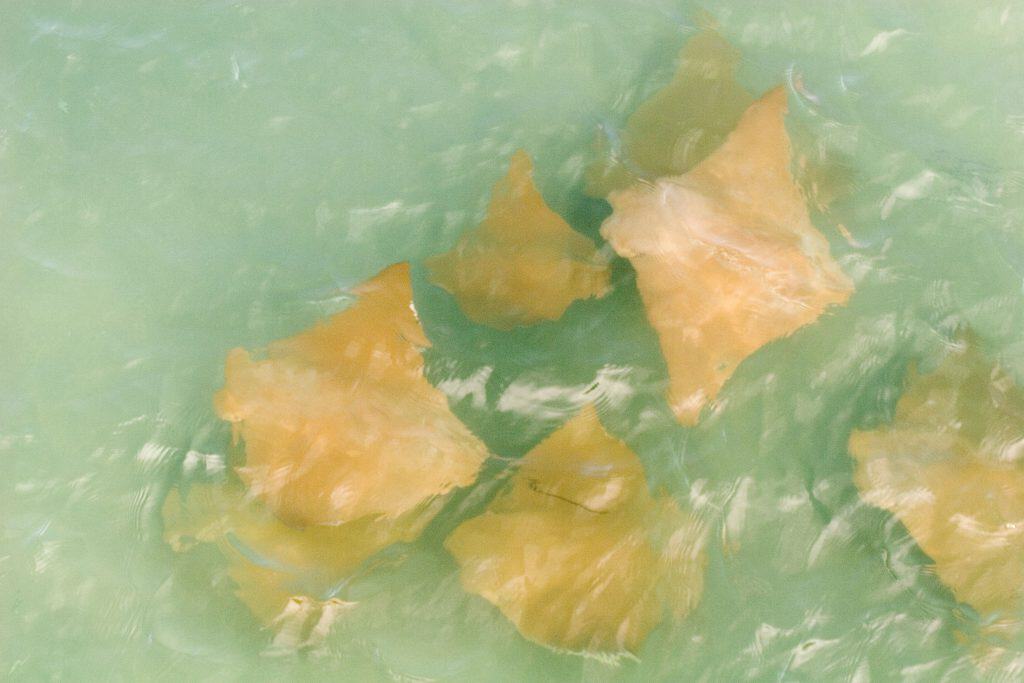
Yes. Many sharks and rays use estuaries, mostly as nurseries, because the murky, shallow water keeps their young away from bigger predators. The Gulf of Montijo is one of the best examples in the Pacific: it is a recognized birthing area for hammerhead sharks. The full story is in the ocean’s nursery.

Estuary Birds: Who Fishes From Above
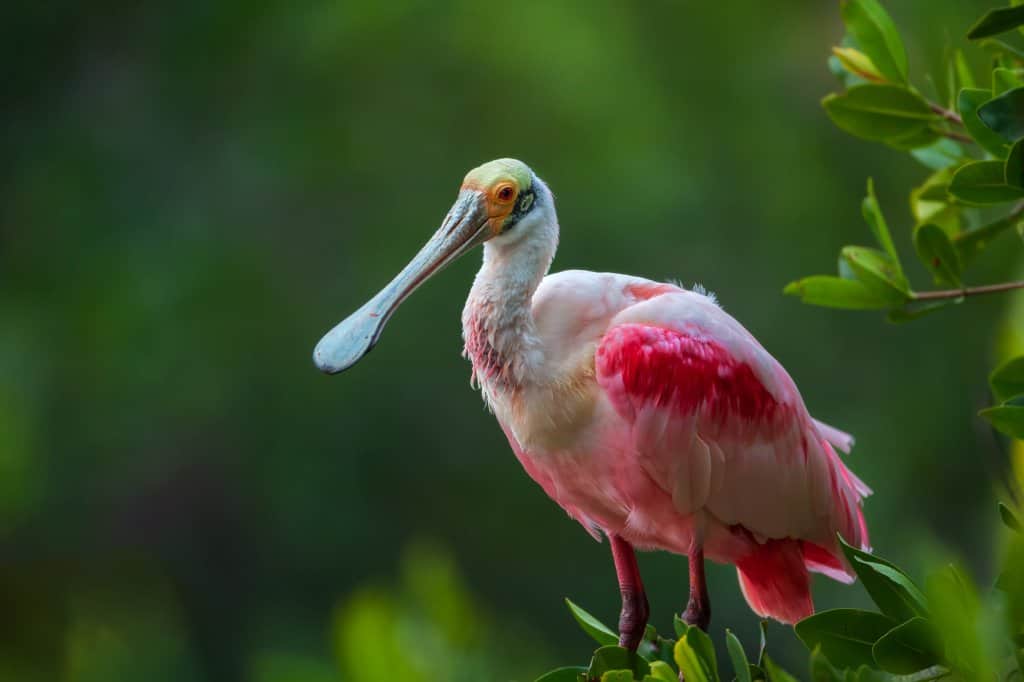
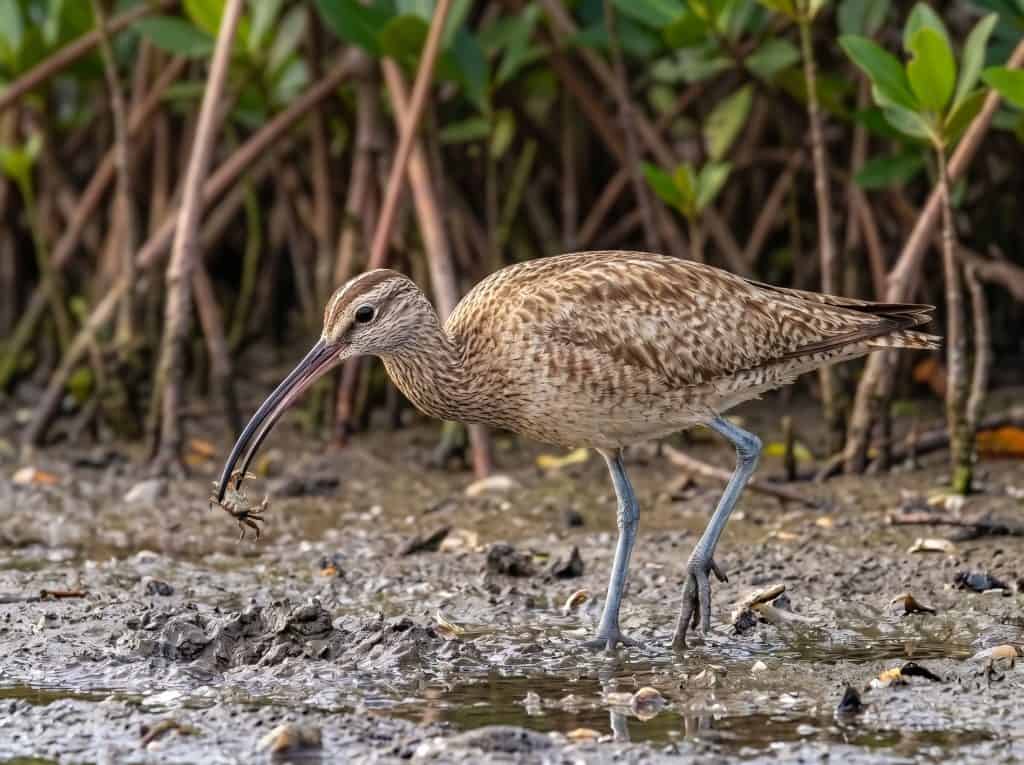
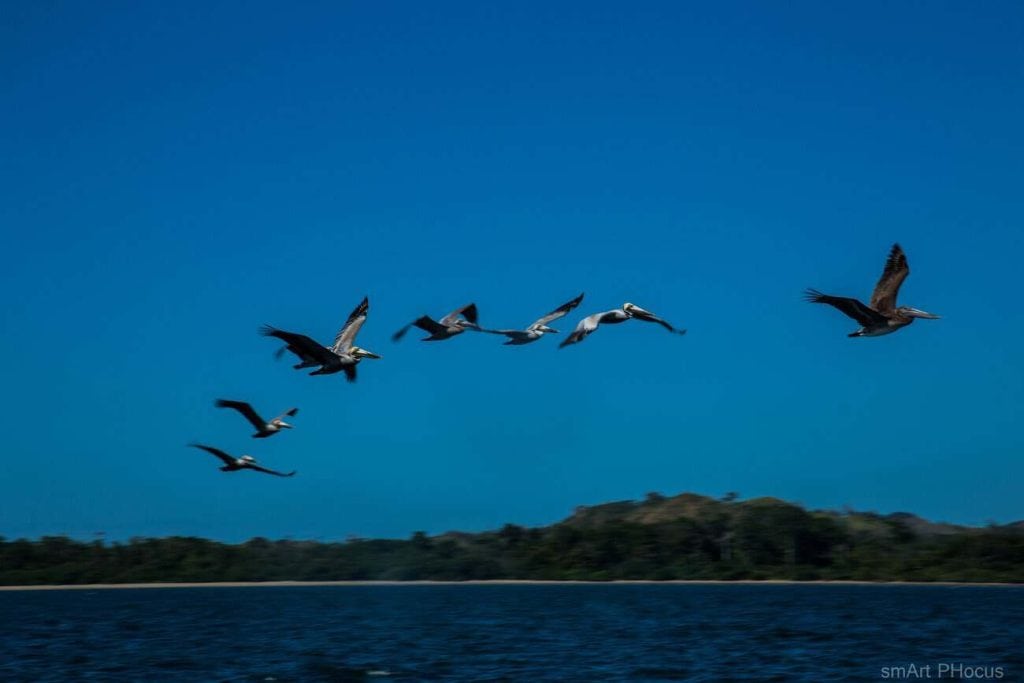
Every low tide opens a buffet of exposed mud, and the birds know the schedule better than anyone. The gulf has resident birds that never leave and winter visitors that fly in from North America. It also shelters a rarity: the yellow-billed cotinga, a near-threatened white bird found only in the Pacific lowlands and mangroves of Costa Rica and Panama. For Isla Perdomo, the island where the gulf’s seabirds sleep, read our guide to the Gulf of Montijo wetlands.
Reptiles and Mammals of the Mangrove Estuary
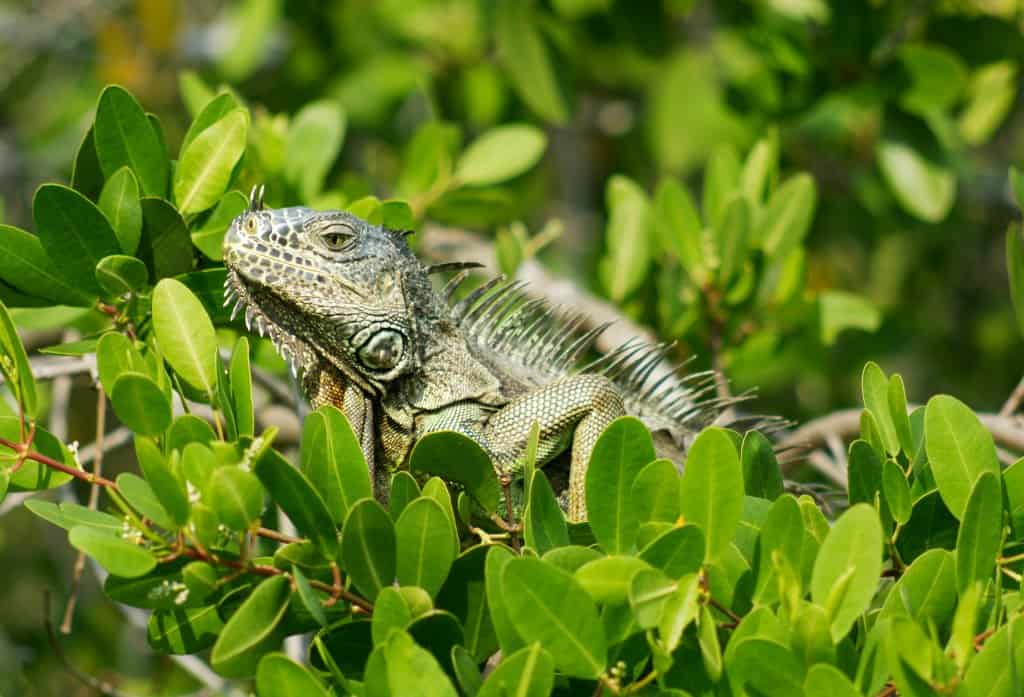
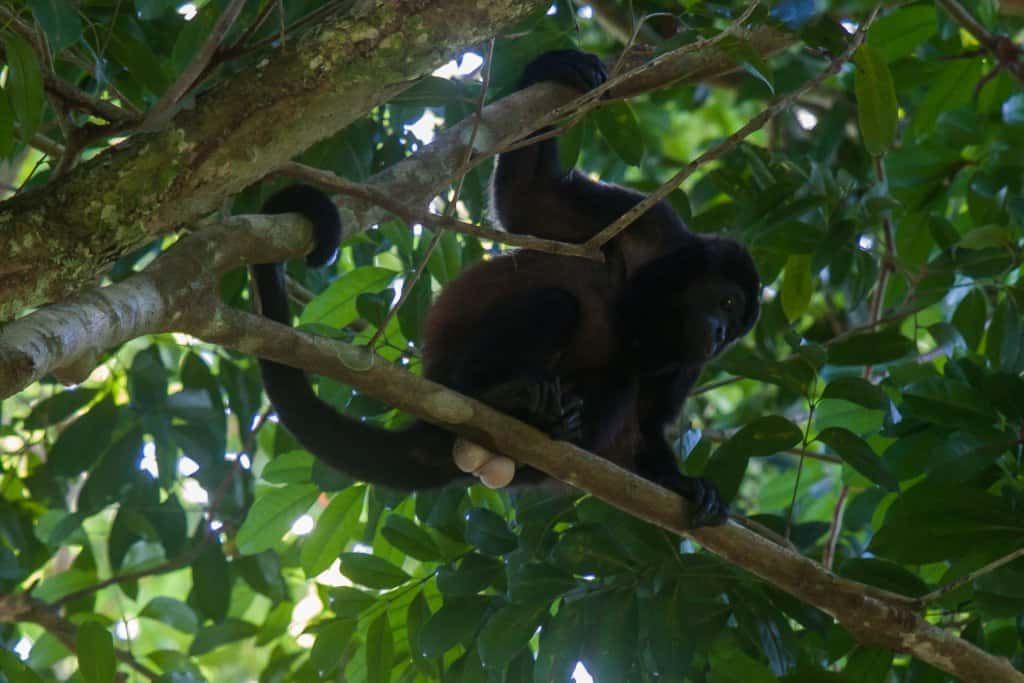
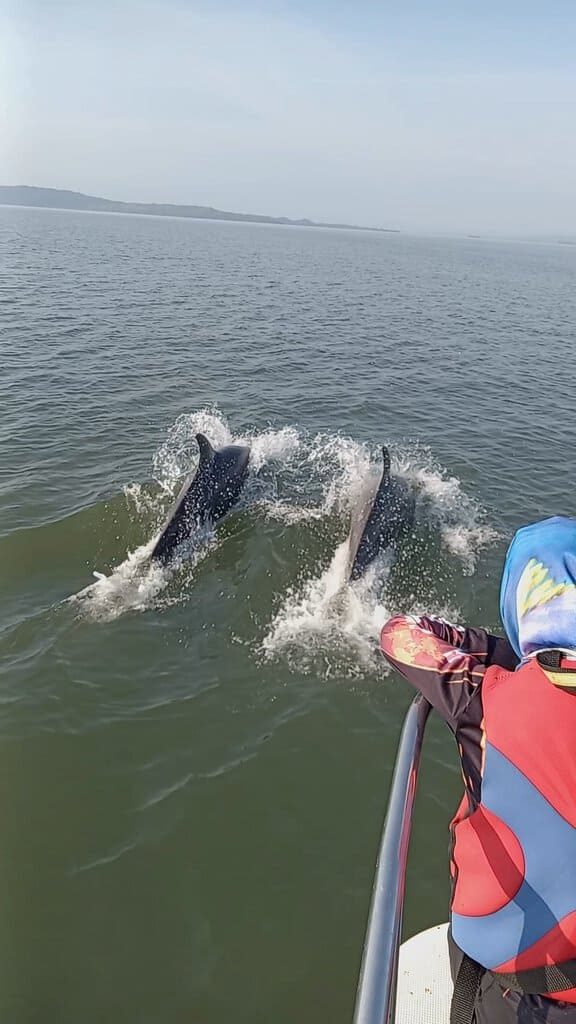
The biggest animals of the estuary live on its edges: in the trees, on the mud banks and at the river mouths where fresh and salt water meet.

The Estuary Food Web
The estuary food web starts with a falling leaf and ends with a dolphin. Every animal in this guide has a place in the chain:
Why Are Estuaries Important?
Estuaries are important because they are the nurseries of the sea, they feed coastal towns and they protect the shore. In the Gulf of Montijo, about 800 artisanal fishermen live off snapper, corvina, snook and shrimp that start their lives in its mangroves. The forest also filters the water and softens waves and floods, which we explain in why mangroves are important.
When an estuary is damaged, the loss shows up far away: fewer fish on the reefs, fewer shrimp at the market and fewer birds on the next winter’s mudflats.
Where to See Estuary Animals in Panama
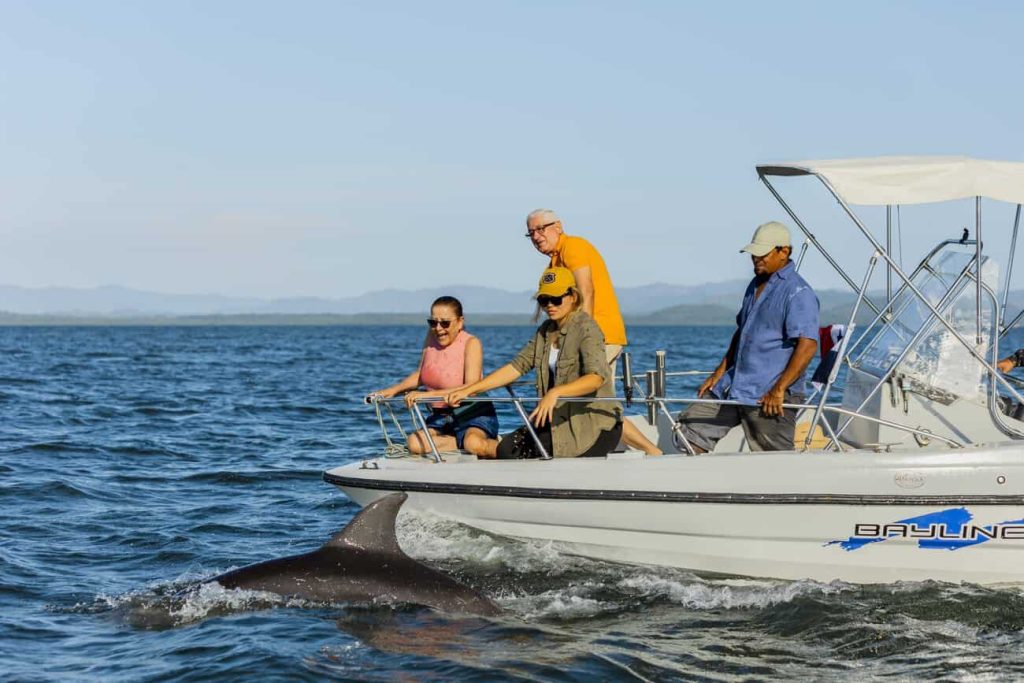
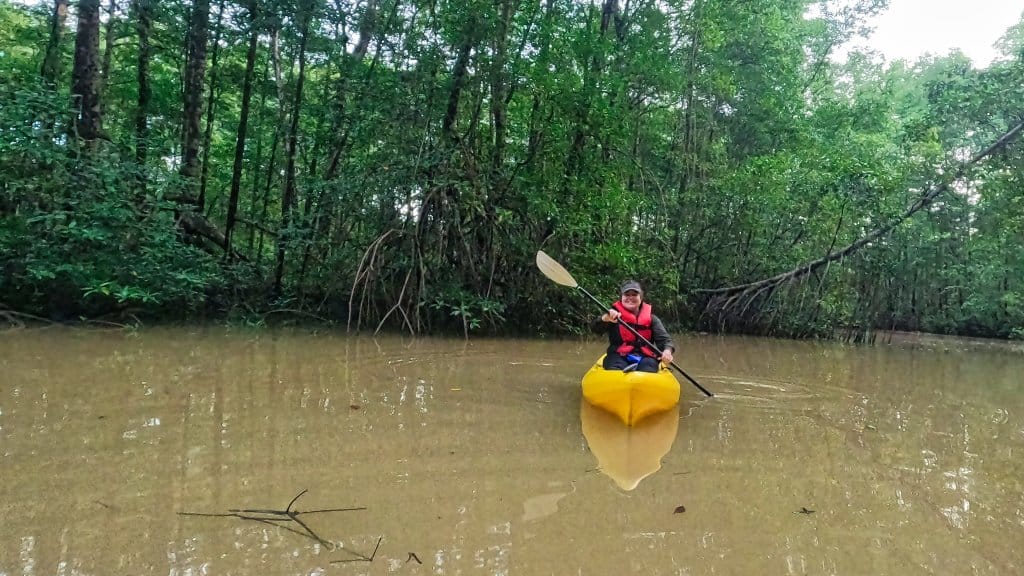
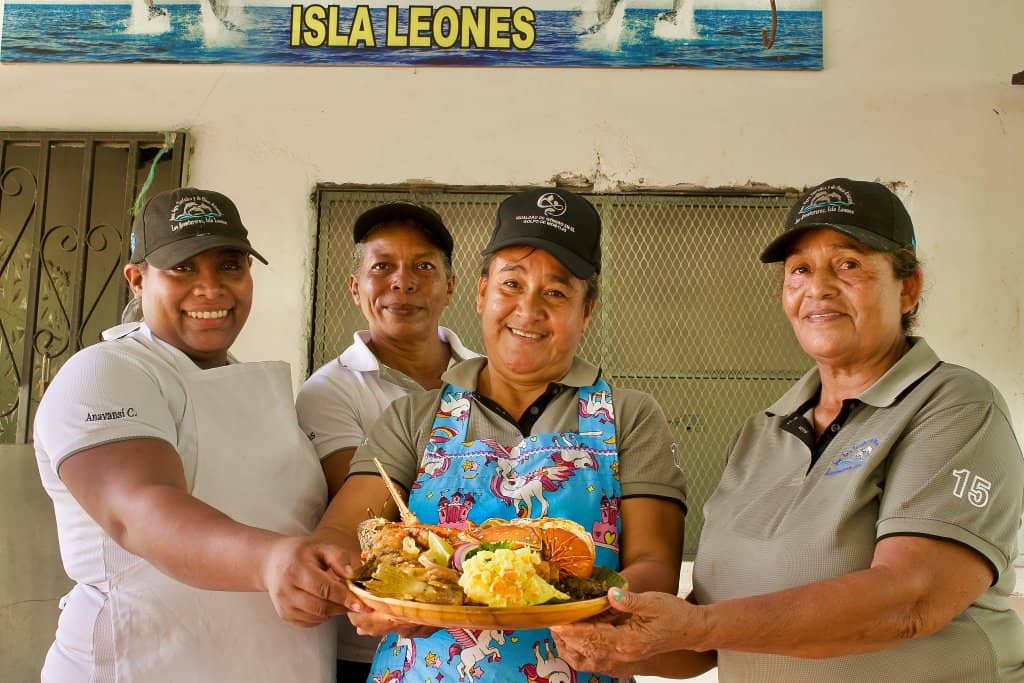
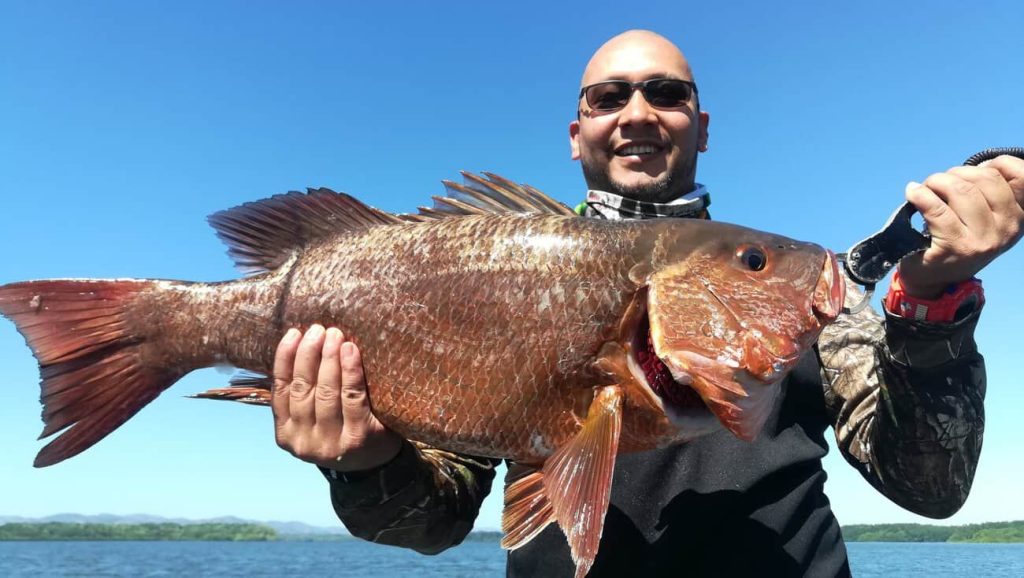
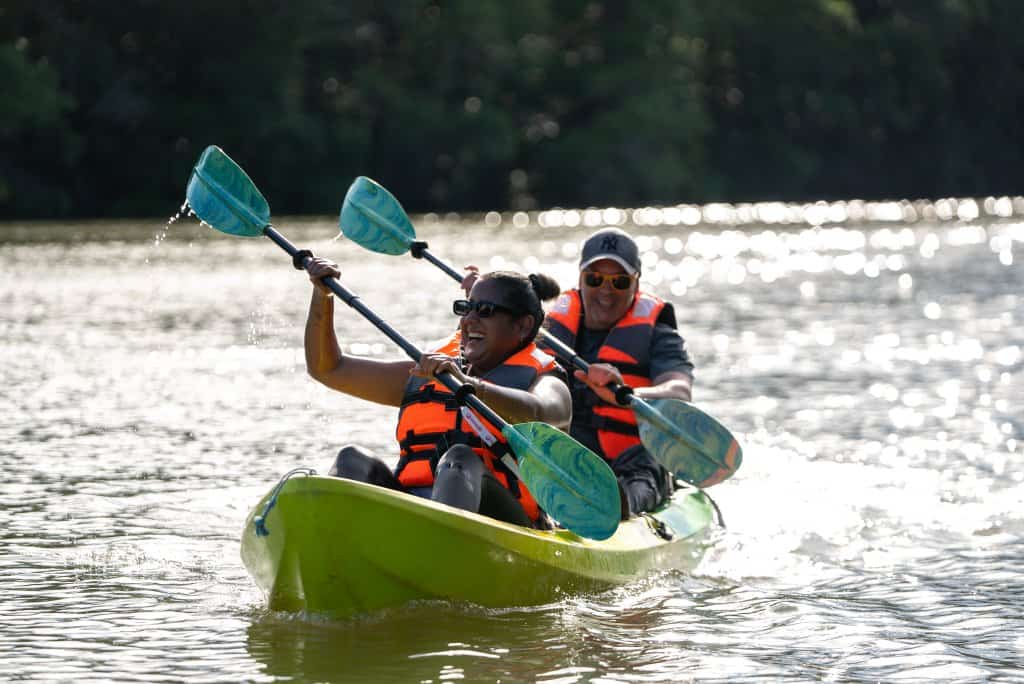
The easiest way to meet the animals in this guide is to go out with the tide, quietly, with someone who knows the channels. These are our three ways to do it in the Gulf of Montijo, all leaving from El Bongo:
We had a wonderful morning exploring the mangroves and watching the crocodiles.
Jill Muth, Google review after a mangrove morning in the Gulf of Montijo
Bring reef-safe sunscreen, a long-sleeved shirt and a reusable bottle, and leave the single-use plastic at home. Here is our full list of what to wear and bring on a boat tour.
Frequently Asked Questions
What animals live in an estuary?
Estuaries are home to fish such as corvina, snapper, snook and jacks; crabs, shrimp, clams and lobsters; young sharks and stingrays; wading birds like herons, spoonbills and whimbrels; and larger animals like crocodiles, iguanas, howler monkeys and dolphins. In Panama, the Gulf of Montijo estuary has all of them.
What fish live in an estuary?
In a Pacific estuary like the Gulf of Montijo the most common fish are yellow corvina, croaker corvina, red snapper, cubera snapper, snook, grouper, Pacific crevalle jack and pompano. Many of them spend only their early years in brackish water and move out to sea as adults.
Do sharks swim in estuaries?
Yes. Many sharks use estuaries as nurseries. In Panama, female scalloped hammerheads give birth in the Gulf of Montijo, south of Isla Leones, and the pups stay in the estuary until they are big enough for the open ocean.
What is the difference between an estuary and a mangrove?
An estuary is a body of water where a river meets the sea and fresh and salt water mix. A mangrove is a type of tree, and a forest of those trees, that grows along the edges of many tropical estuaries. The Gulf of Montijo is an estuary lined with about 23,000 hectares of mangroves.
Where can you see estuary animals in Panama?
The Gulf of Montijo in Veraguas, the largest Ramsar wetland in Panama, is one of the best places. Kayak tours, boat tours to Isla Leones and inshore fishing trips leave from El Bongo, 5 minutes from Puerto Mutis.